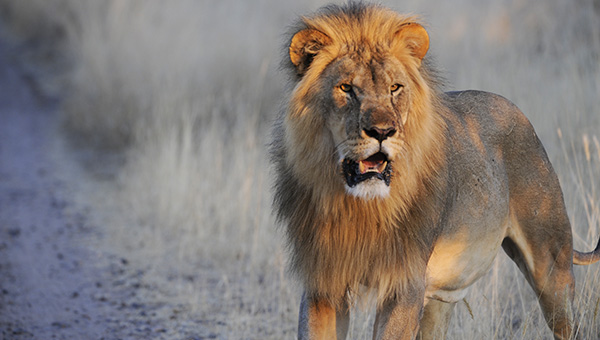
Planning · Ideas · costs
First Time Visitors
Is Namibia Safe? Do I need a 4x4? How many days do I need? When should I visit? Where should I go? How much does it cost? All these questions answered in our first time visitors guide.
Answers here →
Land of contrast and beauty · Travel & accommodation guide
Deserts that teem with life, skeletons on the coastline, and sunrises that take your breath away — a country four times the size of the UK with entire horizons to yourself. Here's every area, honestly described, and how to string them into a road trip.
Explore Namibia
Namibia is a land of beautiful contrasts, abundant wildlife, dramatic pristine remote landscapes, friendly people and amazing diversity. It is an adventure waiting to happen. Once visited never forgotten.
Planning · Ideas · costs
Is Namibia Safe? Do I need a 4x4? How many days do I need? When should I visit? Where should I go? How much does it cost? All these questions answered in our first time visitors guide.
Answers here →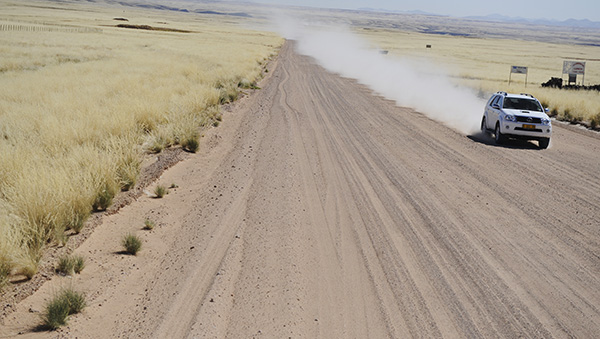
Ready-made routes · 7 to 21 days
Proven routes you can take as they are or tweak to suit — the classic 10-day loop, the 14-day full circle, the deep south, the far north-east. Day-by-day distances, driving times and where to sleep each night.
See the itineraries →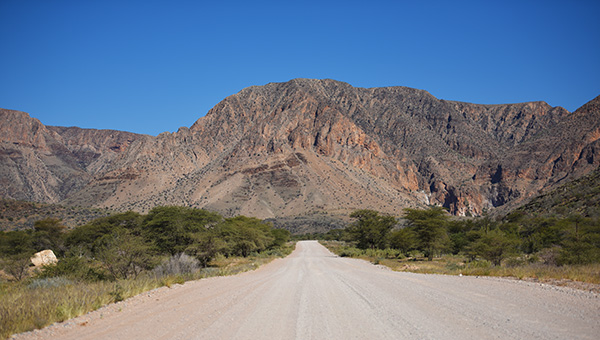
Road trips, done for you · camping or accommodated
Plot your own route with our automated route planner, put in start & finish points, where you want to visit and let the planner recommend a route, with distances and times.
Free route planner →The guide
So where to start? Our expert guides cover everything you need, from where to visit to what to look for in a rental car.
Read the guidesSossusvlei for the dunes, Swakopmund for the coast, Damaraland for elephant and rock art, Etosha for the wildlife. Start from a trip we know works.
See ready-made tripsOur trip planner plots your route on the map and gives real driving times and distances from roads we've driven. Free, and rather good fun.
Open the plannerSend us your trip and we'll do the legwork. The further ahead the better, especially between May and October when the good places fill early.
Send us your tripFrom the first enquiry to the last night, we're on hand to keep it easy and pleasant — making sure you get the trip of a lifetime. Our experience, your comfort.
Talk to a real personOh, Namibia! We fell in love with its barren, harsh beauty — deserts that teem with life, skeletons on the coastline, sunrises and sunsets that take your breath away. It changed our lives; we'd genuinely like to help it change yours.
Explore the areas of Namibia ↓Explore Namibia
Tap any area to see what it’s like and what there is to do. Add the ones you fancy to your trip as you go, and when you’re done we’ll plot the route and work out a day-by-day itinerary.

Tap an area to explore it
Namibia divides neatly into a handful of very different places — dune sea, wild coast, rock-art desert, big-game park, river country. Tap one on the map to see it, and add the ones you like to your trip.
The capital
A melting pot of the tribes and backgrounds that make Namibia so diverse — and where almost every trip begins and ends.
Windhoek is a melting pot of all the different tribes and backgrounds that make Namibia such a diverse culture, mixed in with tourists from all over the world. You can easily enjoy a couple of hours wandering the main centre before relaxing at a street cafe for a drink and a snack.
Remember to be safe: like all capitals, petty crime can be a problem, and Windhoek's amiable laid-back feel can make you less careful with your belongings. There is a good selection of quality places to eat in the evening too, with traditional local and modern cuisine sitting comfortably side by side.
Although small, Windhoek has a thriving nightlife — ask any local where to go and they will point you in the right direction for a good night out on the town.
Should you add a day for the city? Most people fly in and out of Windhoek and wonder whether to build in extra time. Honestly: while it is a pleasant city, it does not hold a lot of attention for tourists. There are a couple of historic buildings, a pleasant shopping centre and a few nice places to eat, but nothing demanding real exploration. So don't worry if you spend all your time seeing the rest of Namibia and never look around Windhoek — you haven't missed anything special.
The central plateau
A green mountain full of life in the middle of dry cattle country — no crowds, no traffic at the waterholes.
Towering some 200 metres above the surrounding landscape, with sheer cliffs and wonderful rock formations, the Waterberg does its work quietly: no crowds, no traffic at waterholes, just a green mountain full of life in the middle of dry cattle country.
Underground water rising at the plateau's foot feeds lush vegetation that supports over 200 bird species — including Namibia's only breeding colony of Cape vultures — while the summit is run as a breeding sanctuary for some of the country's rarest animals.
It's the thinking traveller's stop: a half-day's drive from both Windhoek and Etosha, which makes it a perfect first or last night in the country, or a two-night pause that turns a transit day into a highlight.
The deep south
The earth simply gives way — half a kilometre straight down, with no warning at all.
In the far south of Namibia the earth simply gives way. The Fish River Canyon drops vertically by half a kilometre out of a flat, arid plateau without any warning — you have no idea it's there until you're standing on the rim.
Around 160 km long and up to 550 m deep, it's the largest canyon in Africa and generally ranked second in the world after the Grand Canyon, carved over roughly 500 million years by water erosion and the collapse of the valley floor through movements in the earth's crust.
It suits two kinds of visitor. Road-trippers come for the rim: five viewpoints over the meandering gorge and Hell's Bend, plus the hot-spring pools at Ai-Ais. Hikers come for one of Southern Africa's most famous trails: the 86 km, five-day Fish River hike from Hobas to Ai-Ais — remote, tough, unsupported, and for many people genuinely life-changing.
The diamond coast
Squeezed between the Atlantic and the Namib, with colourful colonial buildings above a rugged coastline.
People visit Lüderitz because it offers a completely different atmosphere from most other places in Namibia. The town sits between the Atlantic Ocean and the edge of the Namib Desert, creating a striking landscape where colourful historic buildings overlook a rugged coastline. When you walk through Lüderitz, you'll quickly notice its strong German colonial influence, from the architecture to the street names and local culture.
Most people come here to explore nearby attractions such as Kolmanskop, the famous abandoned diamond mining town slowly being reclaimed by desert sand. Others visit for the dramatic coastal scenery, wildlife viewing, and the chance to experience one of Namibia's most historic and character-filled towns.
Lüderitz is also known for its fresh seafood, windswept beaches, and a quiet charm that feels very different from Namibia's busier tourist hubs.
The dune sea
The heart of the Namib and Namibia's best-known sight — red dunes, a white pan, and 900-year-old trees.
This is what it's all about: the heart of the Namib Desert and Namibia's best-known attraction — spectacular, gently curving red sand dunes under a blistering sun, a white salt-and-clay pan where a river gives up its journey to the sea, and 900-year-old tree skeletons standing like statues at Deadvlei.
It suits self-drivers, road-trippers, photographers, dune climbers and anyone who wants to watch first light flood over the biggest sand sea on earth.
At a glance: one entrance only, at Sesriem, just over 300 km from Windhoek; stay two nights minimum; the whole area is accessible in a normal 2WD (the last 5 km is deep sand — take the shuttle or a real 4x4); permits are bought at the Sesriem office; and everything worth seeing — Sossusvlei, Deadvlei, Dune 45, Elim Dune, Big Daddy and Sesriem Canyon — sits behind that one gate.
The coast town
Cold Atlantic waves on one side, the golden dunes of the Namib rolling in on the other.
The appeal announces itself on arrival: cold Atlantic waves on one side, the golden dunes of the Namib rolling in on the other. No other town in Namibia — few anywhere — sits on a border like it, and it makes Swakopmund two holidays in one.
Mornings are for the seafront: coffee, the pier, the fog burning off. Afternoons are for the desert next door: sandboarding, quad bikes, or a skydive over the meeting point of sand and sea.
It's earned its title as Namibia's adventure capital, but the town is just as good at the opposite — slow food, gallery browsing, and some of the best coastal sunsets in the country. Most visitors arrive planning one night and wish they'd booked two.
The wild coast
Long empty beaches, cold Atlantic water and old shipwrecks resting in the sand.
The Skeleton Coast is a good destination for travellers who enjoy quiet places, fishing, open landscapes, and nature that feels raw and natural. The coast is known for its long empty beaches, cold Atlantic waters, and old shipwrecks that rest in the sand.
The area is protected inside Skeleton Coast National Park, which helps keep the environment clean and wild. You can see large seal colonies, especially at Cape Cross, and sometimes desert-adapted elephants and lions in certain areas.
The scenery is unique because the desert meets the ocean. There are no big cities, no crowds, and very little noise — except the wind and waves. It is a place where you can slow down, enjoy the silence, and experience a different side of Africa that many people never see.
The north-west
Rare desert-adapted wildlife, 6,000-year-old rock art, and a sense of space and silence you rarely find anywhere.
One of the main reasons you visit Damaraland is its rare desert-adapted wildlife. This is one of the few places in the world where large animals have learned to survive in an almost waterless environment. Seeing wildlife here feels different — more raw, more resilient.
But Damaraland is not just about wildlife. It is also incredibly rich in ancient cultural history, and the entire region feels like an open-air museum carved into stone. At Twyfelfontein, a UNESCO World Heritage Site, you'll find more than 2,500 rock engravings and paintings, some over 6,000 years old, showing animals, human figures and even early forms of mapping.
Nearby, Brandberg Mountain, Namibia's highest peak, is famous for the “White Lady” rock painting in the Tsisab Ravine. And if you want a deeper understanding of local heritage, the Damara Living Museum offers insight into traditional crafts, medicine and daily life of the Damara people.
Damaraland is also loved for its sense of space and silence. There are no major towns and very few people, which creates a feeling of true isolation. At night the Milky Way stretches clearly across the sky, brighter than many people have ever seen.
The landscape is just as impressive. Much of the region looks lunar, shaped by ancient volcanic activity and erosion over millions of years — and you're going to love Spitzkoppe if you're a photographer or a climber. The Petrified Forest showcases massive tree trunks turned to stone over hundreds of millions of years. The Organ Pipes, volcanic rock columns, look like something from another planet. Burnt Mountain glows red and purple at sunset, while Vingerklip (Finger Rock) stands alone as a tall limestone pillar and one of the most striking landmarks in the area.
The red desert
Soft rolling red dunes under golden grasses, and the quiet that modern life almost never offers.
One of the most compelling reasons to visit is its unique beauty. The Kalahari's red sand dunes, shaped by iron-rich soil, glow in shades of copper and amber at sunrise and sunset. Unlike steeper desert landscapes, these dunes are soft and rolling, often covered in golden grasses that ripple in the wind. The light here is extraordinary — photographers and nature lovers quickly realise that every hour of the day paints the land differently.
The wildlife is another powerful draw. The Kalahari may appear sparse at first glance, but it is a thriving ecosystem. Antelope such as gemsbok and springbok move confidently across the plains, predators roam these open spaces perfectly adapted to the harsh environment, and birdlife is abundant. During the rainy season the desert briefly transforms, becoming greener and more vibrant than many expect.
Culturally, the Kalahari holds deep significance. It has been home to the San people for thousands of years, one of the oldest continuous cultures in the world. Visiting offers an opportunity to learn about traditional tracking skills, survival techniques, and a way of life rooted in profound respect for nature.
Most importantly, visit the Kalahari for the sense of perspective it offers. Modern life rarely gives us true quiet or open space. Here there are no city sounds, no crowds and no distractions — only wind, sky and earth. It is a place that encourages slowing down, breathing deeply, and appreciating the simplicity of raw nature.
The great game park
One of the world's great game parks — sit at a waterhole and watch life unfold in front of you.
One of the world's largest game parks, Etosha National Park is a unique wildlife experience where you will see a great many animals.
It has not been developed in the same way as, say, Kruger in South Africa, and access is controlled by keeping vehicles exclusively on roads. This keeps the animals more relaxed — you won't find them surrounded by a ring of cars. Instead you head to a waterhole and watch life unfold in front of you as animals and birds interact around the essential life that is water in a desert environment.
The main environment is flat and open, making spotting animals quite easy even at a distance, and all life goes to the waterholes at some point. So there is less need to drive around, and more reason to sit quietly at a waterhole and wait to see what arrives and how it behaves around the other animals. Some camps have waterholes you can view from inside the camp.
It is quite easy to drive yourself around the park and get great sightings — which means you can go where you want and spend as long as you like at each one. There is also the option of a guided game drive, worth doing if you want to gain some knowledge about the wildlife and relax a bit more.
The roads in Etosha are mostly gravel and can get bumpy, but you can still enjoy the park in a 2WD car. Larger vehicles — 4WDs, minibuses and bakkies — have a higher viewpoint, so often get a better view at sightings.
The far north-west
One of Namibia’s last true wilderness areas — the home of the Himba, and of elephants that walk between waterholes a hundred kilometres apart.
Kaokoland is one of Namibia's last true wilderness areas: a remote and rugged region of towering mountains, dry river valleys and endless open landscapes stretching to the border with Angola. Reaching it is part of the adventure, with gravel roads leading through some of the country's most spectacular scenery. The region rewards travellers with a rare sense of solitude and freedom, where vast horizons, dramatic sunsets and star-filled night skies create an unforgettable safari experience. Unlike Namibia's more visited destinations, Kaokoland remains wild, untamed and wonderfully uncrowded.
The region is best known as the home of the Himba people, one of Africa's last semi-nomadic pastoral communities. Many Himba families continue to follow traditional customs, herding cattle and goats while living in scattered settlements across the region.
Kaokoland is also one of the few places in the world where you may encounter desert-adapted elephants — remarkable animals that have evolved to survive in one of Africa's harshest environments by travelling vast distances between water sources. Other wildlife includes giraffe, mountain zebra, springbok, oryx and, in the remote mountains, the elusive desert-adapted lion.
For adventurous travellers, Kaokoland offers experiences found nowhere else in Namibia. The spectacular Epupa Falls, where the Kunene River cascades over a series of rocky ledges beneath ancient makalani palms, provides a striking contrast to the surrounding desert. Further south, the remote settlement of Purros and the dramatic Marienfluss and Hartmann's Valley are among Namibia's most scenic and least-visited destinations.
A visit requires careful planning and a capable 4x4 vehicle — but for those seeking untouched landscapes, unique cultures and authentic wilderness, it is one of southern Africa's most rewarding adventures.
River country
Namibia’s green paradise — permanent rivers, lush woodland and wetlands teeming with wildlife, instead of dunes.
The Kavango and Zambezi regions — formerly known as the Caprivi Strip — offer a completely different side of Namibia. Instead of vast deserts and red sand dunes, you'll discover permanent rivers, lush woodlands and rich wetlands teeming with wildlife and birdlife. Fed by the mighty Okavango, Kwando, Linyanti, Chobe and Zambezi rivers, this fertile corner of the country is often called Namibia's green paradise. Its slower pace, beautiful waterways and spectacular sunsets make it one of the country's most peaceful and rewarding destinations.
The region is home to some of Namibia's finest wildlife reserves, including Bwabwata, Mudumu and Nkasa Rupara national parks, where elephants, buffalo, hippos, crocodiles, antelope and predators roam freely. More than 450 bird species have been recorded here, making it one of southern Africa's premier birdwatching destinations.
Boat safaris and guided river cruises provide a unique perspective on the wildlife, while the nearby Mahango Core Area is renowned for its excellent game viewing along the Okavango River. The region is also rich in culture, with local communities maintaining traditions closely connected to the rivers that have sustained life here for generations.
For many visitors this is the perfect contrast to Namibia's deserts. Whether you're watching elephants cross the Chobe River at sunset, drifting quietly past pods of hippos on a boat cruise, or listening to the calls of African fish eagles echo across the water, this is a place where nature feels abundant and alive.
The region forms part of the vast Kavango–Zambezi (KAZA) Transfrontier Conservation Area, the world's largest transboundary conservation area, spanning five countries. Easily combined with Botswana's Chobe National Park or Victoria Falls, it adds a memorable and completely different dimension to any Namibian adventure.
The far east
Namibia’s lush north-eastern corner — the only part of the country where water is abundant all year round.
The Zambezi Region, once known as the Caprivi Strip, is Namibia's lush north-eastern corner, where winding rivers, fertile floodplains and dense forests create a landscape unlike anywhere else in the country. Bordered by Botswana, Zambia, Angola and Zimbabwe, it is the only part of Namibia where water is abundant throughout the year. It offers a slower pace of travel, with peaceful river lodges, spectacular sunsets and the chance to experience one of southern Africa's richest natural environments.
The Zambezi is a haven for wildlife and birdlife. Bwabwata, Mudumu and Nkasa Rupara national parks protect vast areas of wilderness where elephants, buffalo, hippos, crocodiles, lions and numerous antelope species roam freely. More than 450 species of birds have been recorded, making it one of Africa's premier birdwatching destinations.
Unlike most of Namibia, where game drives dominate, visitors here can enjoy boat safaris, canoe excursions and sunset cruises, offering close encounters with wildlife along the region's life-giving rivers. The Zambezi also forms part of the internationally important Kavango–Zambezi (KAZA) Transfrontier Conservation Area, the world's largest cross-border conservation area.
A visit here reveals a completely different side of Namibia. Morning mist drifts across quiet rivers, African fish eagles call from towering trees, and elephants frequently cross waterways between neighbouring countries. The bustling town of Katima Mulilo is the region's gateway, while the nearby Chobe River and Victoria Falls are within easy reach — making the Zambezi an ideal addition to a longer Namibian self-drive holiday.
For travellers seeking wildlife, river adventures and a greener, more tropical landscape, the Zambezi provides an unforgettable contrast to Namibia's famous deserts and open plains.
Every region & service
Each one links to a full guide with all the places to stay in that area.
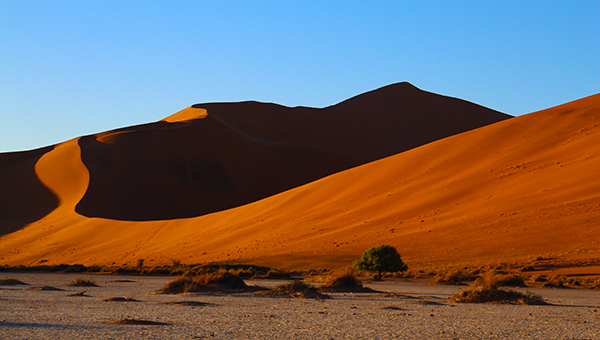
Sesriem · Sossusvlei · Deadvlei
The world's highest sand-dunes and the dead trees of Deadvlei. One of the great sights of Africa — enter at Sesriem and discover desert life.
Explore Sossusvlei & Sesriem →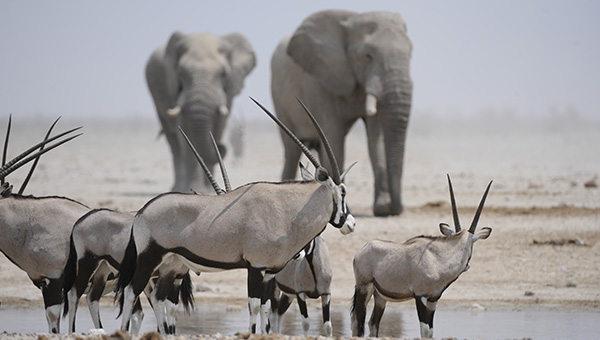
Northern Namibia · Four gates
African wildlife in a dramatic setting around a vast salt pan — never a dull moment by the waterhole. All the places to stay, in and around the park.
Explore Etosha Park →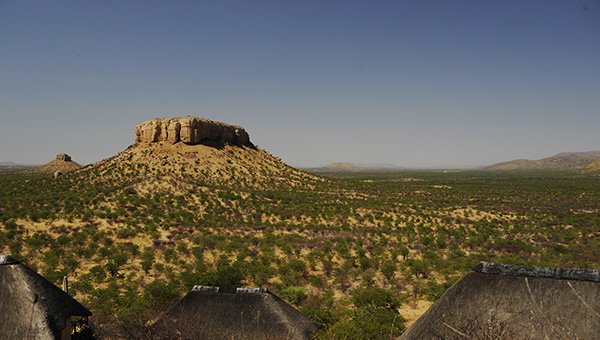
Twyfelfontein · Brandberg · Palmwag
Mountains, plains, desert-adapted elephants and ancient rock art — a remote area you will never forget.
Explore Damaraland →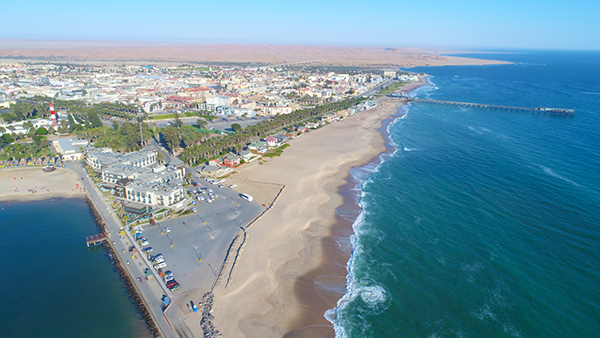
West coast
The adventure capital of Namibia: cafés, desert, ocean, birds and boards — where the dunes run into the Atlantic.
Explore Swakopmund →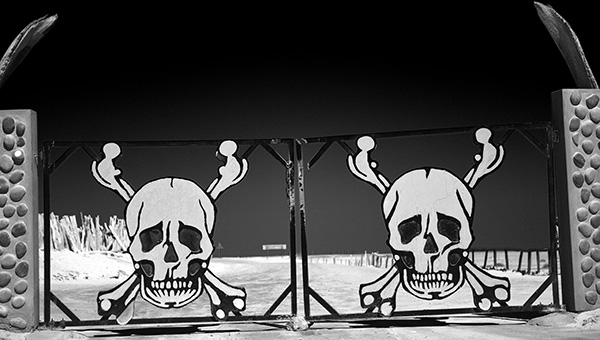
Mile 14 · Cape Cross · Torra Bay · Terrace Bay
From Swakopmund towards Angola sweeps this dramatic shore of shipwrecks, seal colonies and fog — beautiful desolation.
Explore Skeleton Coast →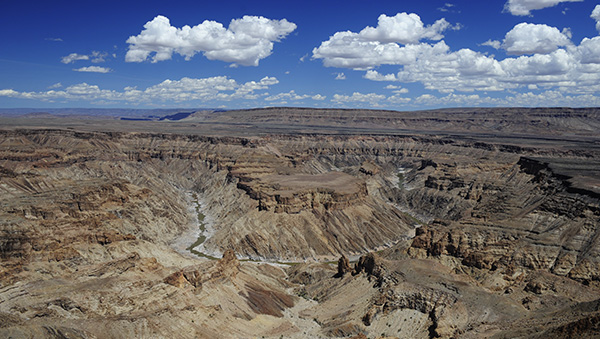
The deep south
Africa's largest canyon, deep in the south — make the famous multi-day hike or take in the scale from the rim.
Explore Fish River Canyon →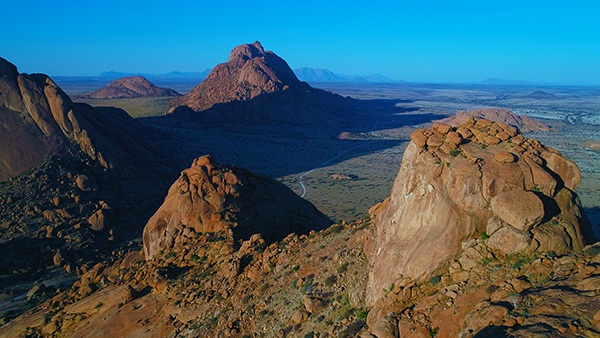
Granite peaks · Rock art · Star skies
The Matterhorn of Namibia — 700-million-year-old granite domes glowing orange at sunrise, ancient San rock art and some of the darkest night skies you'll ever camp under.
Explore Spitzkoppe →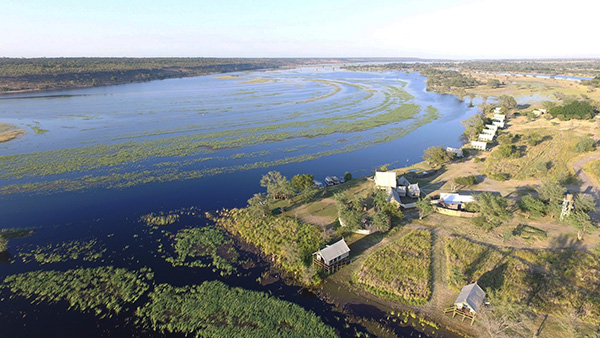
Zambezi Region · Rivers & wetlands
Namibia's green corner: perennial rivers, riverine forest, hippo and elephant — the lush north-east that surprises everyone, and the road towards Botswana and Victoria Falls.
Explore Caprivi, Kavango, Zambezi →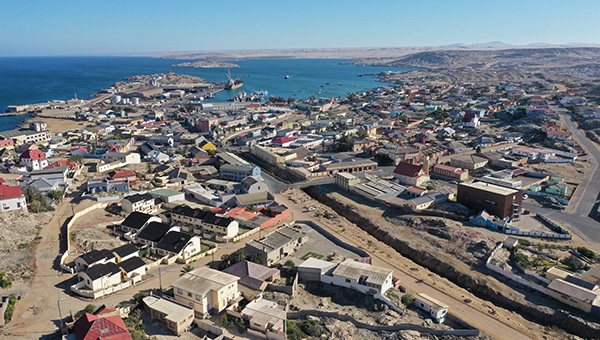
Kolmanskop · Tsau ǁKhaeb · Diaz Point
Diamonds, ghost towns and seafood on the Atlantic — with the sand-swallowed houses of Kolmanskop next door.
Explore Luderitz →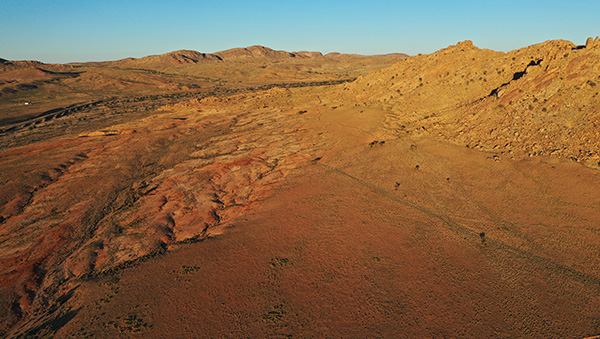
Wild desert horses
Where the desert meets the hills and the famous wild horses roam — beauty in emptiness, peaceful and quiet.
Explore Aus →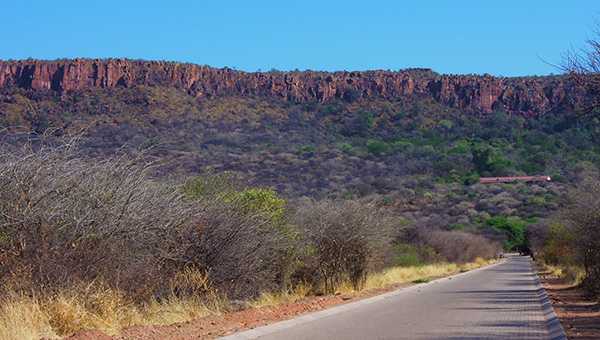
Central Namibia
A dramatic massif towering over the plains — birds, buffalo, braais and more, an easy stop between Windhoek and Etosha.
Explore Waterberg →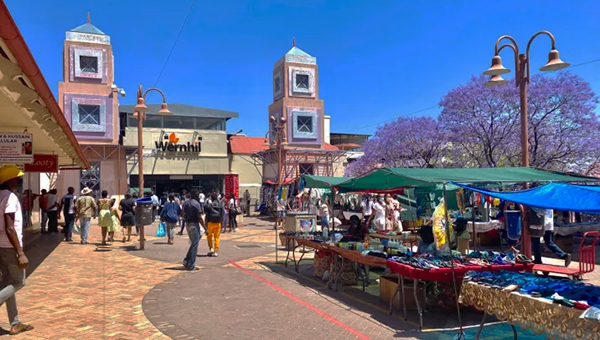
Centre of Namibia
Namibia's small, friendly capital welcomes you — enjoy Joe's Beerhouse, get supplies, and hit the road.
Explore Windhoek →
Sesriem · Etosha · Skeleton Coast
The state-run camps inside Namibia's national parks — the only beds behind the gates, bookable through us like everything else.
All NWR camps →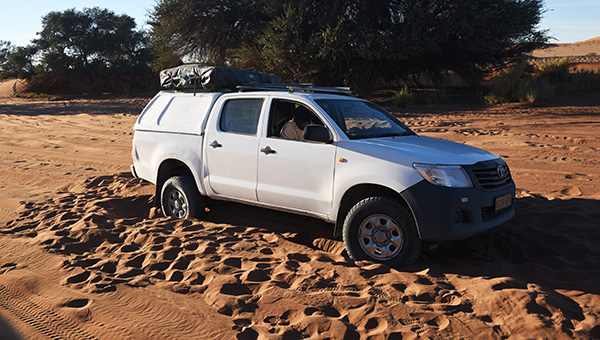
Sedans · 4x4 · Fully equipped campers
The right vehicle changes the whole trip. We arrange everything from a simple sedan for the classic loop to a fully kitted 4x4 camper with rooftop tents, fridge and recovery gear — with the insurance explained properly.
Vehicles & rates →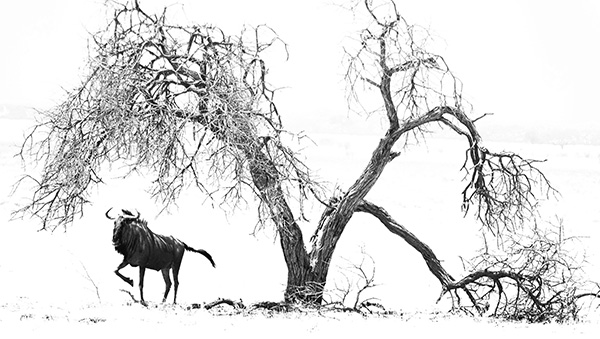
Best spots · Best light · Practical tips
Namibia is a photographer's country. Where to stand at Deadvlei for first light, which Etosha waterholes deliver at dusk, how to shoot the Milky Way at Spitzkoppe — and the gear that survives the dust.
Photography guide →
Free · Written first-hand
Our full travel guides: Sossusvlei, Fish River Canyon, Kolmanskop, the Red Line vet fence and more. Everything we know about gate times, permits, packing and timing — free to read, no sign-up.
Browse the guides →Nothing matches that search.
Read before you go
Everything we know about the places that need a bit of planning — gate times, permits, packing, timing and the mistakes people make. Free to read, written first-hand, no sign-up.
Everywhere else
Places to stay in every town and waypoint in the country — including the small ones nobody else bothers to cover. If you're overnighting somewhere between the highlights, it's here.
Questions we answer every week
It's arguably the best self-drive country in Africa: quiet, well-signposted roads and graded gravel that a 2WD handles with care. Distances are long — plan fuel stops, carry water, and never drive at night when kudu are on the roads.
Not for the classic loop — Windhoek, Sossusvlei, Swakopmund, Etosha are all 2WD territory. A 4x4 adds comfort on gravel and opens the remote north-west (Kaokoland, parts of Damaraland), and a 4x4 camper is the great Namibian way to travel if you like your bed on the roof.
Ten days covers the classic loop; fourteen covers it without rushing. Three weeks lets you add the Fish River Canyon and Lüderitz in the deep south, or the green Zambezi strip in the north-east en route to Victoria Falls.
Year-round. Dry winter (roughly June–October) is prime Etosha game viewing and cool desert mornings; summer brings dramatic skies, green landscapes and baby animals, with real heat in the day. The desert is spectacular whenever you arrive.
Yes. Tell us your dates, budget and what you want to see; we'll build the route, book every night, and sort the right rental vehicle — from sedans to fully equipped camping 4x4s — all at the properties' own rates with no booking fee.
Plan with a person
Dates, days, budget, and what you dream of seeing. A real person who has driven every road on this page replies — usually the same day — with a route, exact prices, and honest advice.
You pay the lodge's rate — our service costs you nothing on top.
Every enquiry is answered by someone who has driven these roads first-hand.
Namibia, Botswana and South Africa, put together properly since long before online travel agents.