Waterberg Plateau visitors guide · updated 2026
A red sandstone plateau rising some 200 metres out of the central Namibian bush, its spring-fed slopes green where everything around is dry — and its summit a fenced sanctuary breeding black and white rhino, sable, roan and buffalo for the whole country. Half a day from both Windhoek and Etosha, and the quietest great sight in Namibia.
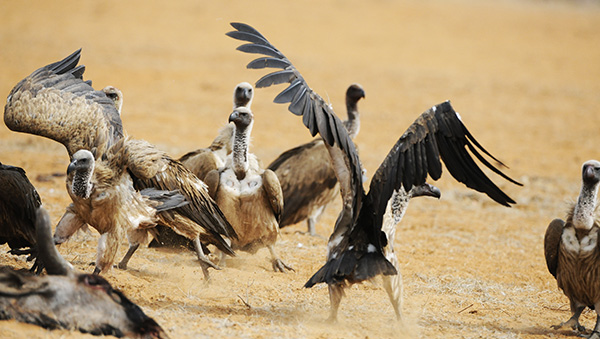
Because it's Namibia's gentle one. Towering some 200 metres above the surrounding landscape, with sheer cliffs and wonderful rock formations, the Waterberg does its work quietly: no crowds, no traffic at waterholes, just a green mountain full of life in the middle of dry cattle country. Underground water rising at the plateau's foot feeds lush vegetation that supports over 200 bird species — including Namibia's only breeding colony of Cape vultures — while the summit is run as a breeding sanctuary for some of the country's rarest animals.
It's the thinking traveller's stop: a half-day's drive from both Windhoek and Etosha, which makes it a perfect first or last night in the country, or a two-night pause that turns a transit day into a highlight.
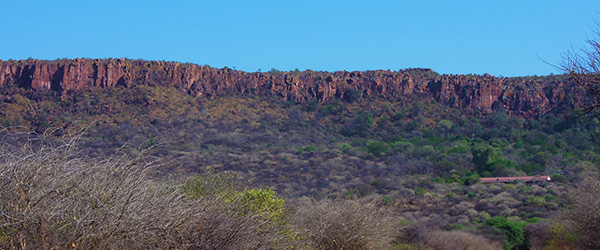
Waterberg means "water mountain," and the name is the story: a natural spring rises beneath the plateau and surfaces on the lower slopes, giving this one mountain a permanence of water and greenery the surrounding country never gets. People, animals and birds have gathered around it for as long as any of them have been here.
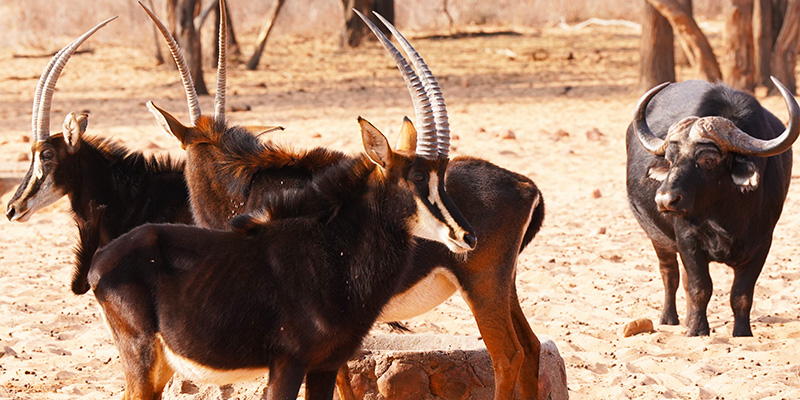
The modern chapter began in 1972, when the plateau top was proclaimed a nature reserve and stocked with species then considered endangered elsewhere in Namibia — sable, black rhino, white rhino, eland, buffalo, giraffe and roan among them. The natural fortress of the cliffs made it ideal: a 405-square-kilometre ark whose surplus animals have been restocking reserves across the country ever since.
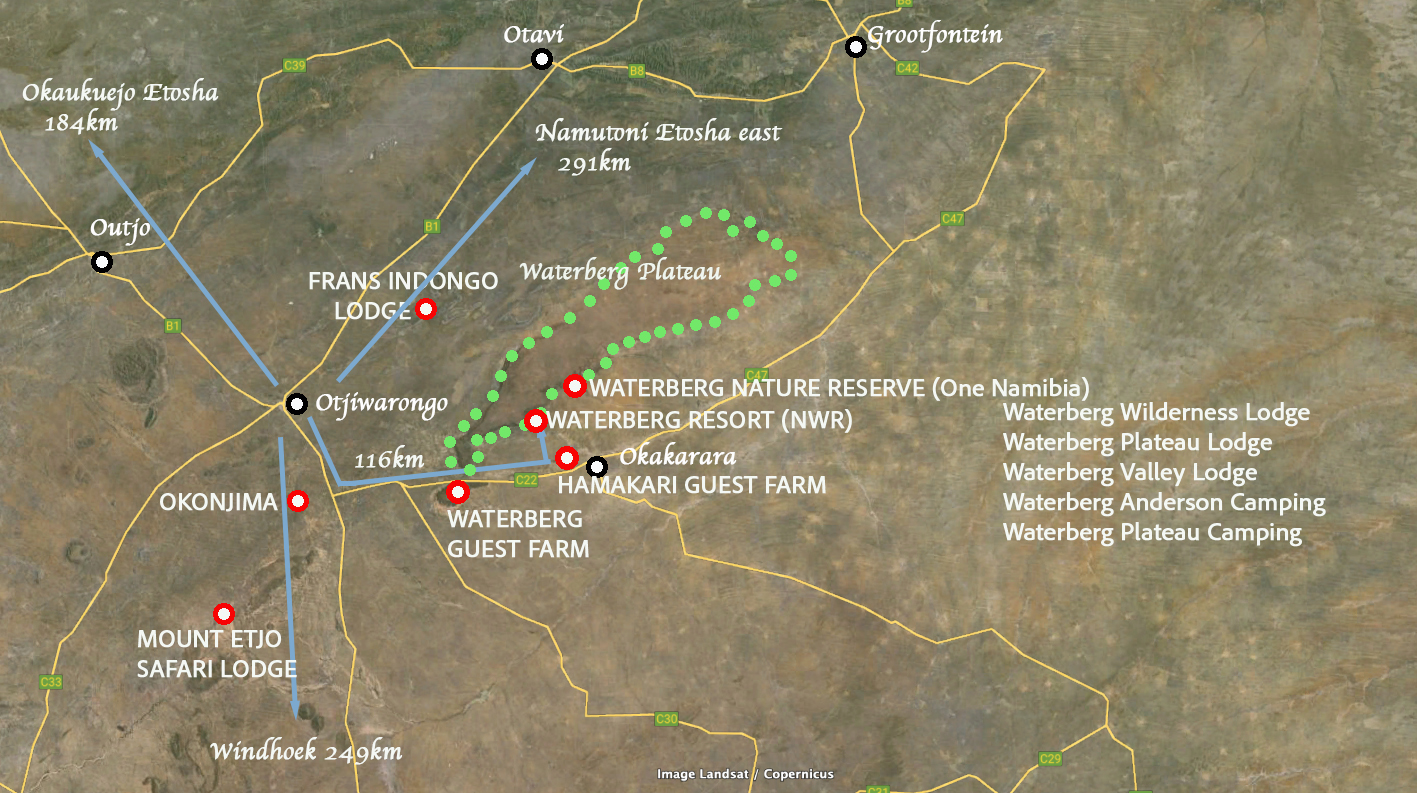
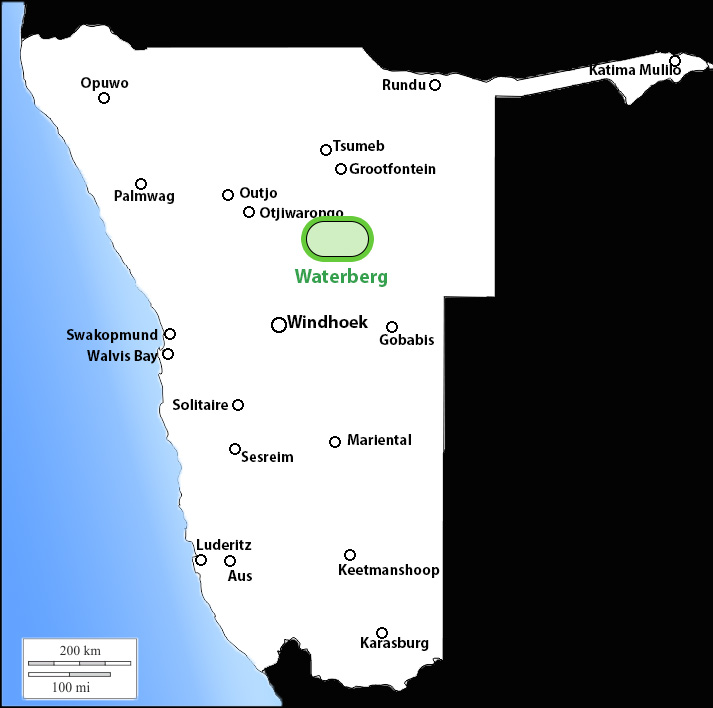
In central Namibia near Otjiwarongo, roughly 300 km — about three hours on good tar — northeast of Windhoek, and a similar half-day from Etosha's southern gates. The park and its animals are on top of the plateau; the lodges, camps and guest farms sit around its foot and on the private reserve along its eastern side.


Self-driving is simple: tar north from Windhoek on the B1 past Okahandja towards Otjiwarongo, then east on good district roads to the mountain — allow around three hours, and any 2x4 manages it in the dry. Coming from Etosha, it's a comfortable half-day south. The final approach roads to some lodges are gravel; nothing dramatic, just take them gently.
No self-driving happens on the plateau itself — you park at your lodge or the resort and join guided drives up top. Which, honestly, is part of the charm.
The Waterberg rewards slowing down — its four best activities all happen at walking pace or from a game-viewer seat:
From the Waterberg Plateau Resort, guided drives take you up onto the plateau itself — the only way in, since self-driving isn't permitted on top. That's where the sanctuary's rhino, buffalo, sable and roan live. The private lodges around the mountain also run drives on their own reserves for guests.
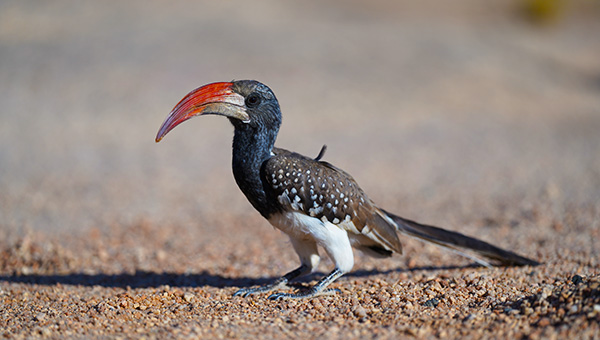
The Waterberg is one of central Namibia's best birding areas — walk the paths around the lodges and the mountain's foot, ear first, binoculars second. The headline act wheels overhead: Namibia's only breeding colony of Cape vultures, riding the thermals off the crags.
Marked walking trails wind beneath the cliffs and up through the boulders — an hour's leg-stretch or a proper morning out, with the sandstone glowing redder the closer you get. The vulture viewpoint walks are the classics.
Surrounded by nature and far from any city, the Waterberg is the ideal first or last night in Namibia — a place to land softly after the flight, or to let the trip settle before it ends. A stoep, a sundowner, a mountain turning red: that's the activity.
Nine places serve the mountain: the state-run NWR resort inside the park, the lodges and terraced campsites of the private Waterberg Wilderness reserve (including chalets up on the plateau rim), and the warm guest farms around its foot — from about NAD 600 camping to full farm-table hospitality.
They're all on our dedicated page, with photos, price guides and direct booking: Waterberg hotels & accommodation. Or tell us your dates and we'll shortlist honestly — no booking fees.
Year-round, genuinely — the mountain's own water keeps it alive in every season. The dry winter months (May–October) bring cool, clear hiking weather and easier game viewing as animals concentrate near water. Summer (November–April) is hotter with afternoon thunderstorms that turn the plateau country vividly green — the best months for birding, when migrants join the residents. Photographers get their money's worth at either end of any day: the sandstone cliffs burn red at sunrise and sunset all year.
The Waterberg rarely travels alone — it slots beautifully into a bigger Namibian loop, half a day from the capital and from Etosha. Browse our ready-made self-drive routes for ideas, or simply send us your wishes and we'll put the trip together around you — Waterberg nights included where they fit.
Some more ideas for road trips through Namibia — browse and see what takes your fancy, or email us your wishes and we'll build it for you.
Browse road trips
Every bed at the mountain — park resort, private-reserve lodges, guest farms and camping — with honest price guides and direct booking.
See places to stayThree from us. Book the guided plateau drive for the morning after you arrive rather than the day you leave — it's the heart of the visit and deserves unhurried time. Walk the foot trails early, before the heat, and take more water than feels necessary; the sandstone radiates warmth by mid-morning. And give it two nights if your route allows: one makes the Waterberg a pit stop, two make it the pause that improves the whole trip.
Guide read — now the good part
A rim-top chalet, a guided drive into the sanctuary, or the mountain folded into your bigger Namibian loop — one message with your dates and a real person takes it from there. No booking fees.
Browse places to stay Plan it with us or WhatsApp us directly
You pay each place's own rate — nothing on top.
We know where the value hides at every gate.
First-hand — we've walked these trails and taken these drives.
Real people, replies usually the same day.