madbookings
Real people · No booking fees · 30+ years in Southern Africa

The complete guide · Vehicles · Insurance · Cross-border · Costs

Car hire
Namibia 

Renting the right vehicle is the single most important decision you'll make before you leave home. Namibia rewards self-drivers with vast quiet distances, dramatic scenery and excellent gravel roads — but only if you show up in the right car with the right insurance and the right paperwork. Thirty years of arranging it later, here's everything we've learned.

WHERE ARE YOU GOING? TAR ONLY · CITIES → SEDAN FROM ±N$1,500/DAY WINDHOEK, WALVIS BAY ONLY MAIN CORRIDOR → SUV / BAKKIE FROM ±N$2,200/DAY SOSSUSVLEI · ETOSHA MAIN · SWAKOPMUND REMOTE / GRAVEL → 4×4 FROM ±N$2,200–2,500/DAY DAMARALAND · KAOKOLAND · SKELETON COAST CAMPING · TOTAL FREEDOM → 4×4 + ROOFTOP TENT FROM ±N$2,500+/DAY FULL KIT · FRIDGE · DUAL BATTERY 80% OF NAMIBIA'S ROADS ARE GRAVEL — HIGHER CLEARANCE MATTERS MORE THAN 4×4 ON MOST TRIPS

The vehicle decision tree — pick your route, land on your class

The most-rented
Toyota Hilux & Ford Ranger 4×4 double-cabs
The gravel share
Only 20% of Namibia's roads are tar
The insurance rule
Zero-excess cover is almost always worth it
The golden rule
Slow is smooth, smooth is fast

01Which vehicle should you rent?

Four classes cover almost every Namibia trip. The decision tree above sorts by route; here's the detail on each class, with the models we book most often. All models mentioned are the ones Namibian rental fleets actually stock — same body, sometimes different rental-company badging.

City use only · Tar only

Economy sedan

Fine around Windhoek, Swakopmund and Walvis Bay and for short tar routes. Not for gravel — low clearance and light bodies punish corrugation, and a puncture in the middle of nowhere in a hatchback isn't a story you want.

Toyota Corolla · VW Polo · Kia Rio (or class equivalent)

From ±N$1,500/day

Most-popular pick · Main corridor

Mid-range SUV or bakkie

The comfortable answer for Sossusvlei, Etosha's main roads and Swakopmund — high ground clearance, room for luggage and camera gear, stable on gravel. If your trip stays on the well-travelled tourist loop, this is enough car.

Toyota Fortuner · Toyota Hilux · Ford Ranger

From ±N$2,200/day

Serious touring · Remote areas

4×4 without camping kit

Our recommendation for travellers who are more experienced and want to wander off the main tourist route  : same body as the SUV/bakkie but with proper 4×4 for Damaraland, Kaokoland, the Skeleton Coast interior and remote riverbeds. Even on gravel-only routes the extra capability is peace of mind you can't retrofit.

Toyota Hilux 4×4 · Ford Ranger 4×4 · Land Cruiser 79

From ±N$2,200–2,500/day

Full independence · Camping

4×4 with rooftop tent & full kit

Total freedom — sleep in a roof tent, cook whatever you can carry. Dual battery system, decent fridge, two spare tyres, rooftop tent(s), plates, pots, chairs, table. We recommend the double-cab even for two people; the extra space makes every camping night easier.

Ford Ranger 4×4 double-cab · Toyota Hilux 4×4 double-cab

From ±N$2,500+/day

Groups & families · Limited off-road

Minibus (6–9 pax)

The right answer when you're six-plus travelling together on the main corridor. Not for gravel-heavy remote routes — bigger vehicles are slower on corrugation and less comfortable off-tar.

Toyota Quantum · VW Kombi (or equivalent)

From ±N$3,500/day

The niche · Longer trips, less setup

Campervan / motorhome

With only limited availability in Namibia. Comfort is higher, camping-setup time near zero, but off-road ability and access to remote sites is more limited. Best paired with tar-heavy itineraries and established campsites.

Small VW-based to larger 4×4 conversions

Varies widely — ask for a comparison

Why larger vehicles win on gravel: safety (more stable at speed), comfort (better suspension over corrugations), strength (fewer breakages), grip (bigger wheels, more traction) and space (room for gear, snacks and picnic stops). None of these come from a low-slung sedan.

02Do you actually need a 4×4?

It depends entirely on your route — and higher clearance matters more than 4×4 on most trips. Only about 20% of Namibia's roads are tar; the rest is gravel of varying condition, some of it excellent, some corrugated for days.

2WD (with good clearance) is fine for:

  • Windhoek, Swakopmund, Walvis Bay and the tar corridors between them
  • Sossusvlei tar road to the 2WD parking (the last 5 km sand needs 4×4 or the shuttle)
  • Etosha's main tourist roads
  • Waterberg, Fish River Canyon (main viewpoints)

4×4 strongly recommended for:

  • Damaraland's rocky tracks and desert-elephant country
  • Kaokoland and the far north-west
  • The Skeleton Coast interior and remote riverbeds
  • Palmwag, Marienfluss, Van Zyl's Pass and similar 4×4 trails
  • Any camping-equipped trip (higher clearance, tyre-pressure flexibility for sand)

Our rule of thumb: if your itinerary crosses into "remote" at any point, take the 4×4. You can't retrofit capability at a puncture in the middle of Damaraland, and the price gap between a mid-range SUV and a comparable 4×4 is usually smaller than a single recovery bill.
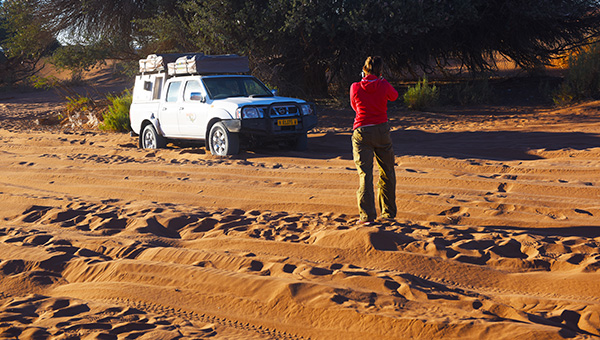
A vehicle stuck in deep sand near Sesriem showing why 4x4 with sand experience matters
The price of the wrong vehicle — deep sand at Sossusvlei

03What to look for when comparing rentals

Not all Namibia car hire packages are equal. Two rentals at the same headline price can be very different once you read the fine print. Here's what to check before signing anything.

  • Two spare wheels — flat tyres are near-inevitable on gravel. Two spares mean you can puncture in Etosha or Damaraland and continue your trip. One spare after 800 km of gravel is a leap of faith
  • Extra fuel tank — Namibian fuel stations can be 200 km apart. An auxiliary tank buys you range and peace of mind. Still, top up whenever you can
  • Unlimited mileage — always confirm. Distances here are enormous and mileage caps punish long trips financially
  • Ground clearance — avoid low front spoilers, even on tourist-corridors. A single embedded rock at 80 km/h can total a bumper
  • Tyre & windscreen insurance — usually optional, always worth it. Gravel throws stones; stones crack glass
  • Roadside assistance — 24-hour, national coverage, with a real number that gets a real person. Ask what "assistance" actually means for a breakdown 400 km from Windhoek
  • Satellite phone (optional) — genuine peace of mind in national parks and remote areas with no cell signal. Most 4×4 hire companies rent them by the day
  • GPS / offline maps — Google Maps is unreliable in Namibia. Download Maps.me or OsmAnd with offline Namibia before you fly. A dedicated GPS unit earns its rental fee only in central Kaokoland
  • Camping kit demonstration — if you're renting a camping-equipped 4×4, a good rental company will insist on showing you how the rooftop tent, gas, dual battery and fridge work. That insistence is a sign you chose well

04One-way hire & cross-border into Botswana & SA

One-way rentals

Popular for travellers who want to avoid backtracking. Pick up in Windhoek, drop off in Swakopmund, Walvis Bay, or even Cape Town or Johannesburg. One-ways save time but always cost significantly more than returning to the pick-up point — sometimes doubling the daily rate. Always compare the total price before assuming one-way is the better option.

Crossing into Botswana or South Africa

As standard, rental cars in Namibia are not allowed to cross any border without prior written approval from the rental company. That approval takes the form of a cross-border letter (sometimes called a Section 49 authorisation or vehicle-transfer letter) issued in advance — border officials will refuse entry to a rental car without it, no matter how convincing your story is at the boom.

  • Cross-border fee — a one-off charge per border, arranged with the rental company at booking
  • Extra insurance — some rental companies extend cover to Botswana / SA, others don't; check the terms rather than assume
  • Countries typically permitted: Botswana and South Africa are routine; Zambia usually possible; Zimbabwe and Mozambique are more restricted. Angola is generally not permitted
  • Lead time: the letter takes a few working days to issue — you cannot arrange it at the border

Multi-country itineraries through Namibia, Botswana and South Africa are one of the trips we book most — the routing, vehicle, borders and paperwork all interlock, and getting a real person to sort it once at the start saves days of stress later.

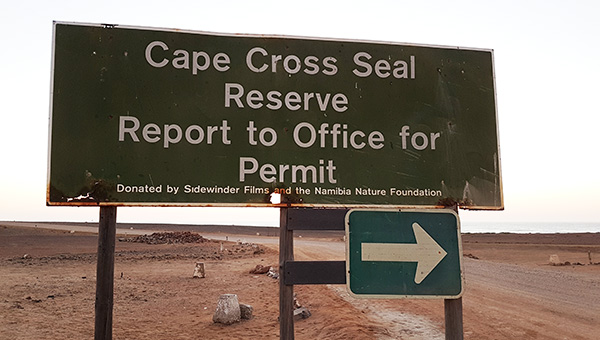
A remote road sign in Namibia illustrating cross-border logistics
Cross-border paperwork gets sorted at the desk, not the boom gate

05How much does car hire cost?

Namibia car rental prices vary by season, vehicle type and insurance level. The table below is indicative — for a real quote on your dates, send us the trip outline.

Vehicle classFrom (per day)Best for
Economy sedanN$1,500+City use only — not recommended for gravel
Mid-range SUV / bakkieN$2,200+Main tourist routes, comfortable on gravel
4×4 (no camping kit)N$2,200–2,500All Namibia routes, remote areas
4×4 + rooftop tent + full kitN$2,500+Camping trips, total independence
Minibus (6–9 pax)N$4,000+Groups & families, main-corridor routes

What else to budget

  • Fuel — distances are vast; expect 300–500 km between major highlights
  • Insurance excess reduction — the daily fee that drops your risk to zero
  • Tyre & windscreen cover — small extra, big value on gravel
  • Camping equipment — sometimes included, sometimes a separate line
  • Cross-border letter & fee — if leaving Namibia
  • One-way drop-off fee — if not returning to Windhoek
  • Park entry fees — separate, paid at the gate

Peak season is May to October — book 5 to 8 months ahead. Long-term rentals often unlock discounted rates. Unlimited mileage is standard on most 4×4 hires but always confirm.

06Documents you need to collect the car

  • Valid full driving licence — a learner's licence is not accepted. If your licence is in English you generally do not need an International Driving Permit. If it isn't in English, you must have an IDP with an English translation printed on it, obtained in your home country before travel
  • Passport — bring the original and keep copies. Rental companies photograph or copy the ID page
  • Credit card in the renter's name — required by every Namibia rental company to block the excess deposit. Debit cards are usually not accepted; check in advance. The card must belong to the person whose name is on the rental contract
  • Rental contract & insurance papers — issued at pickup; this is your legal authority to drive the car. Keep it in the glovebox for the whole trip
  • Cross-border letter — for any trip into Botswana, South Africa, Zambia etc; arranged in advance
  • Vehicle condition report — issued at pickup. Photograph every existing scratch and dent yourself before you leave the lot. This is the single most-forgotten step that catches travellers out at return

07Insurance & excess — the confusing bit, explained

Insurance is the aspect of Namibia car hire that surprises travellers most. Here's the plain-language version.

You must take rental-company insurance

Your home travel insurance and your own car insurance will not be accepted by any Namibian rental company. They only rent vehicles with their own Namibian-issued cover, designed for the country's specific road conditions. This isn't a sales tactic — it's how the local system works.

How the excess works

Basic insurance covers damage minus the excess. Example: if the vehicle is damaged and repairs cost N$100,000 with a N$20,000 excess, you pay the N$20,000 (blocked on your credit card at pickup) and the insurance covers the remaining N$80,000. That excess is your worst-case financial exposure.

Reducing the excess

Most companies let you pay an additional daily fee to reduce the excess — often right down to zero. It looks like a price bump on the quote but it's usually the smartest single spend on the whole rental. A cracked windscreen or a broken door mirror can cost more than the entire excess-reduction fee for a two-week trip.

When insurance becomes void

Even with zero-excess cover, insurance is voided if you're found to have been: driving recklessly, speeding, under the influence of alcohol or drugs, driving in excluded areas (some rentals exclude specific 4×4 trails), or driving at night if excluded by the contract. In any of these cases you become fully liable for all repair costs.

Our recommendation: compare quotes that include zero-excess cover. Some companies only rent with full cover — the headline price looks higher but your worst-case risk is zero. When the whole trip is in the car, that peace of mind is worth every cent.

08Namibia's roads — what to expect

Only 20% of Namibia's roads are tar. The rest is gravel of varying condition, and to reach most tourist areas you will drive on it. Understanding what to expect makes self-driving far less daunting.

Dust

Namibia is a desert country. Vehicles kick a dust trail that reduces visibility for anyone following. Keep a large following distance and slow down when visibility drops.

Loose stones

Small rocks cover gravel roads and fly up under passing vehicles, hitting windscreens regularly. Windscreen and tyre insurance is worth the small daily premium.

Corrugations

Gravel roads develop a washboard surface. There's often a sweet-spot speed (around 60–80 km/h) where the ride smooths out — Namibians know each road; tourists don't. Stay cautious.

Dips & dongas

When Namibia's rare rains come, small rivers cut V-shaped dips across gravel roads. These can wreck suspension at speed. Slow right down for any visible dip or depression.

Sandy patches

Shallow sand forms on gravel roads and can cause loss of traction — especially if you brake sharply. Steer gently and slow down gradually. Don't fight the sand; ride through it.

Animals on roads

Wild and domestic animals cross constantly, especially dawn and dusk. Never drive at night outside towns. A kudu at 120 km/h on a tar road is a fatal collision — for both of you.

09Five golden rules for driving in Namibia

  • Maximum 80 km/h on gravel — even if locals pass you. Stone chips and loss of control are the biggest risks, and speed multiplies both
  • Keep a large following distance on gravel — a car length per 10 km/h is a good rule of thumb. Stones fly furthest from close-following
  • Never drive at night outside towns — wildlife on unlit roads is an extreme hazard. Plan every day to be off the road by sunset
  • Carry water — 5 L per person per day, and top up in every town. In a breakdown, your vehicle is shelter and your water is life
  • Slow is smooth, smooth is fast — Simons Namibia driving mantra. Gentle inputs on gravel; sudden anything is what breaks trips

One more, informal: the first flat is not "if" but "when". Know how to change a wheel before you need to — practise once in the rental lot, in daylight, with the tools in your hands. The one place you don't want to learn tyre-changing is on the C39 in Damaraland at 40°C.

10Is self-drive safe in Namibia?

Generally, yes — and refreshingly so. Roads are quiet, rural crime is very low, signage is clear, and the country is well-set-up for independent travellers. The main risks aren't malicious; they're the sheer distances, the gravel, and animals on the road at dawn or dusk.

Drive slowly on gravel — especially around corners — keep back from other vehicles to avoid stone chips through the windscreen, rest often, and never drive at night outside towns. Carry plenty of water, tell someone your day's route, and top up fuel at every station rather than trusting the next one to be open. These aren't dramatic precautions; they're the small habits that make Namibian self-drive one of the world's great road-trip experiences.

"Slow is smooth, smooth is fast" — as Simon puts it — sums up everything else on the page.

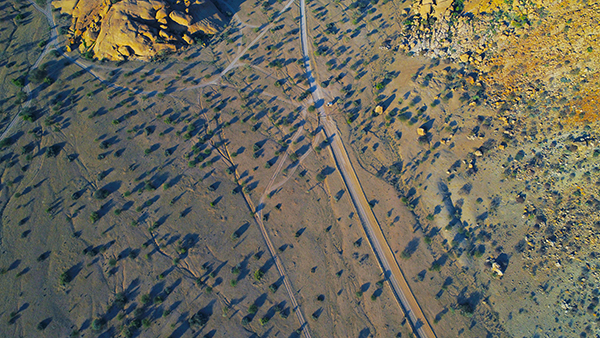
A quiet gravel road stretching to the horizon in Namibia
The office for the next two weeks — quiet, empty, and yours

11Car hire FAQs

Do I need a 4×4 for Namibia?

Route-dependent. The main tourist corridor (Windhoek → Sossusvlei → Swakopmund → Etosha main roads) can be done in a high-clearance SUV or bakkie. For Damaraland, Kaokoland, the Skeleton Coast interior and remote riverbeds, take the 4×4 — and camping-equipped trips are 4×4 by default. Only 20% of Namibia's roads are tar; higher clearance matters more than 4×4 on most trips.

How much does car hire cost?

Indicative per-day rates: sedan from N$1,500 (city only), mid-range SUV from N$2,200, 4×4 from N$2,200–2,500, fully-equipped 4×4 with rooftop tent from N$2,500. Peak season May–October; book 3–6 months ahead. Prices depend on season, insurance level and specific model.

Can I cross into Botswana or South Africa?

Usually yes, but only with prior written approval from the rental company — a cross-border letter arranged in advance. Rentals from Namibia are not permitted to cross any border without one; you cannot arrange it at the boom. Cross-border fees apply, and insurance terms may change.

What documents do I need?

Full driving licence (learner's not accepted; IDP with English translation if your licence isn't in English), passport, and a credit card in the renter's name for the excess deposit — debit cards usually aren't accepted. Cross-border letter as well if leaving Namibia.

Should I take zero-excess insurance?

Almost always, yes. Standard insurance leaves you liable for a large excess (often N$20,000+) blocked on your credit card. Paying the daily fee to reduce that to zero — or renting only with full cover — is usually worth it, particularly on gravel where a single stone can crack a windscreen.

Can I rent with a debit card?

Usually no. Namibia rental companies require a credit card in the renter's name for the excess deposit. Always confirm this before booking a flight, particularly if you rely primarily on debit cards at home.

How far in advance should I book?

For peak season (May–October) book three to six months ahead — vehicles do run out, especially 4×4s with camping kits. Green-season travellers can often book six to eight weeks out.

Section 12 · Tick it off

The car hire checklists

Before you book

Pickup day

The glovebox & the road

The one-line rule for happy Namibia self-drive: zero-excess insurance, two spare wheels, and unlimited mileage — nail these three and the rest is holiday.

↑ Back to contents

30+ years arranging Southern African car hire

Let a real person build the whole rental for you

Send us your route, dates and group size — we'll compare vehicles from the companies we know and trust, arrange zero-excess cover, sort the cross-border letter if you need one, and match the whole thing to your itinerary. Same price you'd pay direct, no booking fees, and someone at the end of a WhatsApp if anything goes sideways on the road.

Get a car hire quote    or WhatsApp us directly

No extra fees

You pay the rental company's own rate — nothing on top.

Best matches

The right vehicle for your route, not the cheapest quote.

Expert advice

First-hand, from people who drive these roads.

Friendly, fast service

Real people, replies usually the same day.