
Spitzkoppe visitors guide · updated 2026
The Matterhorn of Namibia, properly explained: what it costs at the gate, how the famous first-come campsites actually work, the arch, the rock art, the rock pools that sometimes exist — and the tyre pressures, offline maps and fuel rules that keep a gravel-road trip fun. From the people who book it every day.
You come for the granite and stay for the silence. Spitzkoppe is not a crowded place: it's space, stillness and a very old mountain doing spectacular things with light. Walk among the boulders, photograph obsessively, or simply sit — it suits self-drivers, road-trippers, stargazers, photographers and anyone who finds comfort in simplicity.
At a glance: central Namibia between Usakos and Swakopmund; stay one night, ideally two; a 4x4 isn't required in dry weather but helps at some campsites; camping is the recommended way to do it (day visits work too); entry fees are paid at the gate in cash; and facilities are deliberately minimal — basic ablutions, no shops, no fuel.
In the Erongo Region of the Namib Desert, between Usakos and Swakopmund — roughly 150 km northeast of Swakopmund and about 270 km northwest of Windhoek. It's an easy detour off the main Windhoek–coast corridor, which is exactly why so many road trips fold it in.
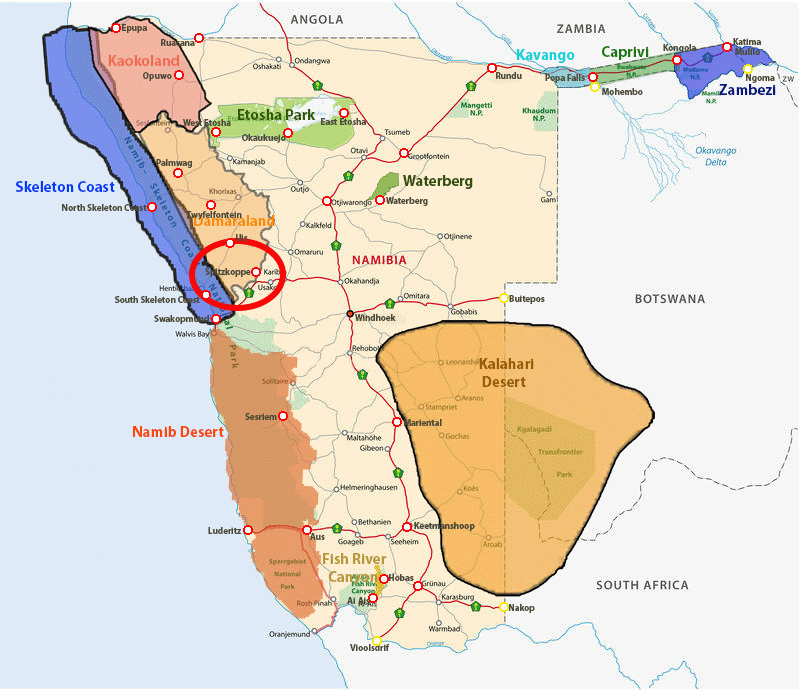
It's a road destination — no public transport reaches the reserve — and the drive is part of the trip.
Self-driving is the most popular and flexible option. The highways are tar; the final stretch is gravel. A standard 2WD sedan usually manages the well-maintained gravel to the main camp in the dry season, but a high-clearance vehicle or 4x4 makes it more comfortable and opens up the deeper campsites.
Prefer not to drive? Day tours run most commonly from Swakopmund (its proximity makes an 8-hour outing practical) and include guided walks to the rock art and the famous Arch. Shuttle companies running the Windhoek–Swakopmund corridor can often arrange a tailor-made drop-off for a fee, and some safari operators offer direct transfers from Hosea Kutako International straight to the Spitzkoppe lodges. Ask us — arranging this is what we do.
Spitzkoppe is a community-run conservancy, so your fee directly protects the area and supports local livelihoods — paying it isn't just necessary, it's a good thing. All prices in Namibian Dollars; pay at the gate, and bring cash (card machines and remote deserts don't always get along).
| Fee | Rate |
|---|---|
| Day visitors — adults | N$180 per person |
| Day visitors — children (4–11) | N$120 per child |
| Camping — adults | N$300 pp per night |
| Camping — children (4–11) | N$200 per child per night |
Camping fees include VAT and the Conservancy Levy, and the day-visitor fee is already included when you camp — no need to pay it twice. These rates are valid 1 November 2025 – 31 October 2026; 2027 rates on request. The main southern gate has reception, ablutions with showers, and a small restaurant.
Spitzkoppe isn't a destination you check into — it's one you settle into. The real decision is simple: sleep inside the reserve, surrounded by granite and stars, or stay outside and visit by day. Here's the full picture.
The classic Spitzkoppe experience and by far the most popular option. If you're even slightly comfortable with camping, this is what makes the place unforgettable. Details & booking here.
There are 31 individual sites spread across the reserve, tucked between massive boulders and open plains — unfenced, widely spaced, and genuinely private. You're not camping next to nature; you're in it. Each site feels different: some open to big-sky views, others nestled in rocks that glow orange at sunset. Choosing yours is part of the magic.
Sites are first-come, first-served. Even with a confirmed booking you aren't assigned a specific site — on arrival you get a map and drive around to claim an available one. In high season (June–September) the popular sites go fast, which is one more reason to arrive earlier in the day.
Basic but functional, shared between campsites: simple toilets and showers, with water pressure and hot water that can be inconsistent, and some dry or eco systems depending on water availability. Lighting is minimal — bring a headlamp. Not luxury camping, but clean, practical and completely in keeping with the place.
Absolute silence once the day visitors leave. Stargazing with almost zero light pollution. Sunsets and sunrises that feel private. If you've ever wanted to sit by a fire and hear nothing but wind, this is the place.
No electricity at the campsites, no shops or fuel inside the reserve, and patchy-to-nonexistent cell signal — bring all food, drinking water, firewood and supplies. Wildlife is present (not in Etosha densities), so treat the area with respect.
The Community Camp gets very busy June–September; book ahead for those months — we'll handle it, no fees.
Cabins in the heart of the reserve, ringed by the peaks — a step up from camping with all the Spitzkoppe atmosphere intact. Details & booking here.
The stylish, privately run lodge on the mountain's northern side: 15 generously spaced chalets, each with a private bathroom and covered viewing deck. It sits among the iconic formations but is administratively separate from the Community Conservancy, with its own entrance gate. Details & booking here.
A rustic bush camp about a kilometre from the reserve, on the banks of the dry Spitzkoppe River — rocky landscape, panoramic views, exotic sunsets. Details & booking here.
Guest farms and private camps within a 30–60 minute drive offer modern amenities, suiting families with young children, travellers without camping kit, and anyone on a tight schedule. The trade-off is honest and simple: you'll experience Spitzkoppe only by day and miss the golden hours — sunset, starlight and early-morning calm — which many people consider the entire point.
All options, with price guides, information and photos, are on our Spitzkoppe accommodation page.
Refreshingly simple, with one requirement: come prepared. This is a community-run conservancy, not a commercial lodge setup. Most visitors self-drive; stock up on fuel, food and drinking water before arriving — Swakopmund is your best supply stop. Book ahead in the busy months, and plan at least one night. Two gives you the hike, the rock art, and time to properly soak in the silence.
Spitzkoppe isn't something you admire from the road — it's a place to wander, climb, occasionally swim, photograph obsessively, and stare at the sky until you forget the time. Here's how to do it properly.
There are no formal trails with neat signage — just informal paths, open desert and granite that invites curiosity. Less "follow the route," more "let's see what's behind that rock." The loop walks between formations suit most visitors: no guide needed, just a sense of direction, decent shoes, and more water than seems reasonable. The Namib sun does not believe in mercy.
Let's be very clear: the summit routes are unmarked, technical, and not something to "just try." If you want to summit, you need a local guide, proper equipment and real experience — booked at the gate or in advance through an operator, with fees varying by route. Expect climbing gear, sturdy shoes, lots of water, and honestly earned bragging rights.
After good rains, natural pools appear in the granite — seasonal, unpredictable, and finding one feels like winning a small desert lottery. No bookings, no signs, no guarantees. If they exist: swimwear, water shoes (granite is not gentle), and no soap or sunscreen in the water — this is wild water, not a hotel spa.
If Spitzkoppe had a profile picture, this is it. Easily accessible, wildly photogenic — especially sunrise and sunset when the granite runs through every shade of orange. No booking required; just try not to block everyone else's photo for too long.
Smaller, quieter and often overlooked, the Pontoks deliver the same granite drama with fewer people — perfect for wandering, wide angles, and silence.
A sacred site of ancient San rock art that requires a local guide — non-negotiable, and rightly so. Book at the gate or in advance; guide fees are paid directly. No touching, no flash, no rushing: the stories behind the paintings are as powerful as the art.
Sunrise brings soft shadows, cool tones and fewer people; sunset brings drama and movie-poster silhouettes. Midday is harsh and will test your patience — use it for textures, black-and-white, or a nap.
After dark, Spitzkoppe becomes something else entirely: near-zero light pollution and a sky that simply explodes. No telescope needed — just look up. For astrophotography, aim for a new moon, bring a tripod, a wide-angle lens and warm clothes; desert nights get properly cold, and shivering ruins the romance.
If you can, stay the night. Unfenced, widely spaced sites, basic facilities — and waking up to sun hitting the granite domes is worth every minor inconvenience. Bring everything: there are no shops, no fuel, no last-minute supply runs.
Basic but functional, by design: pit toilets scattered around the camping areas, simple braai stands and shade at some sites, no electricity at the campsites and no private bathrooms. A small reception at the entrance handles check-in and arranges local guides for hikes and the San rock paintings. Bring your own firewood, plenty of drinking water and rubbish bags — everything you carry in goes back out with you.
There is no public Wi-Fi at the campsites — no café routers, no lodge lounges, just you and the desert — though basic, erratic Wi-Fi exists at the reception area by the entrance. Honestly, disconnection is part of the charm. Handle downloads, bookings and messages before you arrive, ideally in Swakopmund where connections are reliable.
Patchy to non-existent, depending on your provider and where you are in the reserve. Elevated spots sometimes catch a weak signal, but don't rely on it, and assume you'll be offline. For safety: tell someone your travel plans in advance and make sure your vehicle is in good shape before you turn off the tar.
Namibia runs on two seasons, and "winter" here isn't a European freeze.
Dry, sunny days, clear skies, almost zero rain, with daytime temperatures around 18–25°C — ideal hiking and sightseeing weather. But mornings and evenings turn genuinely cold in the desert: at Spitzkoppe, nights between June and August can drop close to freezing. Pack accordingly.
Summer and the rainy season: days often 30–40°C, with heat most intense inland. Rain arrives as short, dramatic afternoon thunderstorms rather than washouts, and the landscape transforms — green grass, flowers, migratory birds. Beautiful for photography; harder on midday hikers.
It's a balancing act: heat versus golden light, wind versus crowds. Summer (December–February) brings brutal 40°C days and harsh, washed-out light — quiet, but hiking suffers. The dry winter flips the script with crisp light and comfortable days, at the price of peak crowds (June–September is busiest, and the best campsites go early).
Best months for camping: May–September — cooler nights, calmer winds, predictable conditions. Better for short or day visits: the shoulders, April–May and September–October, when you get magical light and manageable temperatures without winter's cold nights or summer's heat. The short answer: aim for April–May or September for the best all-round experience. And regardless of season, early morning and late afternoon always beat midday.
Pack for extremes: hot sun, cold desert nights, and dust in between. Essentials first — more drinking water than you think you need, all your food, and firewood if you're braaing; there are no shops inside the reserve, so stock up in Swakopmund or Usakos. Then power and light: a headlamp or torch (no electricity at the campsites), charged power banks, spare camera batteries — the sunsets and stars will empty them. Then layers: fleece, windproof jacket, something properly warm for evenings, plus wide-brim hat, sunglasses and high-SPF sunscreen — all non-negotiable. Round it out with a basic first-aid kit, a reusable water bottle, and rubbish bags for leave-no-trace. Spitzkoppe is remote and undeveloped: if you need it, bring it.
Your shoes matter more than you'd think. The terrain mixes sand, loose gravel and smooth granite that turns slippery in spots — sturdy closed walking shoes or light hiking boots with real grip are ideal, especially for scrambling around the arch. Flip-flops are fine at the campsite but useless for exploring. In hot months, breathable footwear helps (granite heats up fast), and photographers chasing sunrise angles on the rocks will be glad of solid grip.
Bring cash. Spitzkoppe is a community-run conservancy: fees and guide services are paid in Namibian Dollars or South African Rand (accepted 1:1), smaller notes preferred, and there are no ATMs in the reserve or card machines at the campsites. Withdraw enough in Swakopmund before you leave the tar — small towns, fuel stations, craft markets and conservancy camps across Namibia often prefer or require cash, and ATMs get scarce fast outside the main towns.
Roughly 150 km from Swakopmund and 270 km from Windhoek, with the final stretch on gravel — generally manageable but sometimes corrugated. A 4x4 helps, particularly for easier access to some campsites within the reserve, but in dry conditions a regular vehicle copes with careful driving.
Three things nowhere else combines. The rock arch — a bucket-list photograph that earns the cliché. The night sky — near-zero light pollution, the Milky Way frequently visible to the naked eye. And the human depth: guided walks reach ancient San paintings sheltered in the rock faces, thousands of years of history in ochre. Underneath it all runs the silence — no traffic, no city glow, just wind across open desert.
The conservancy model means your entrance fee directly funds protection and local livelihoods. Pay at the gate (cash, per person); day visitors don't need to book — arrive, pay, explore. Camping should be booked ahead in peak season: sites are limited and beautifully spread out, which means few neighbours but also few second chances if it's full. Guided activities — rock art, summit routes — are arranged at the gate or in advance through operators; we'll pre-book them with your stay.
Magical for the right children. The boulders are a natural playground — climbing gentle slopes, spotting lizards, exploring passages — and adventurous kids remember it forever. But this is not a fenced resort: no playgrounds, no pools, basic pit toilets, limited shade, and real drop-offs around the higher formations, so close supervision is essential. Older kids and outdoor-loving teens: unforgettable. Toddlers: doable with careful planning, serious sun protection and constant watching. In short — child-friendly for adventurous families comfortable with rustic settings.
The beauty survives because the rules are respected. It's a protected conservancy, so no off-road driving — stick to designated tracks to protect the fragile desert ecosystem. Open fires only in the designated braai areas, with firewood you brought (never collect wood from the reserve). And littering is strictly prohibited: waste facilities are minimal, so everything you bring in leaves with you. Around the rock art, the guide's rules apply absolutely — no touching, no flash.
Think of Spitzkoppe as a place to experience nature, not to shop. Bring almost everything: there are no grocery stores in the reserve, and the nearest well-stocked supermarkets are at least an hour away — stock up properly in Swakopmund or Windhoek, especially drinking water (lots), meals, cooking fuel and ice for cold drinks. The one convenience: a small restaurant and bar near the entrance reception, serving breakfast, lunch, dinner and cold drinks in a relaxed lapa-style space — basic menu, simple portions, and a lovely way to skip cooking after a long day. Otherwise, the plan is the classic one: sunset braai, cold drink, stars.
Namibia is safe, but the distances are vast and self-sufficiency is part of the deal. Drive gently once you leave the tar — gravel corrugates, livestock wanders, and steady beats fast (most self-drive accidents here are speed on gravel). Time your arrival for daylight, ideally mid-afternoon, so you can check in, claim a campsite and set up before the sunset show starts.
Good tyres matter more than horsepower out here. All-terrain tyres are strongly recommended — highway tyres struggle on gravel and sand — and drop your pressures once you leave the tar: roughly 1.8–2.0 bar on gravel, 1.4–1.6 bar on the sandy tracks near Spitzkoppe. Lower pressure means better grip, less corrugation damage and a far more comfortable ride. Beginner tip: drive slower than you think you should.
Signal is unreliable to nonexistent, so download offline maps before you leave (Maps.me, Gaia GPS or Google Maps offline), grab GPX tracks for campsite access roads if you can, and keep a paper map as backup. Pro tip: drop pins for fuel stops, campsites and exit routes while you still have signal.
Spitzkoppe has no fuel station. Fill up in Usakos or Swakopmund and treat it as your last chance; plan with a buffer for detours, soft sand and backtracking; and carry a jerry can if your range is tight. Rule of thumb: never let the tank drop below half in remote areas — and pack for a delay, not just for the drive.
Guide read — now the good part
A boulder-side campsite booked before the June rush, a cabin, a tent or the lodge — plus guides for the rock art or a summit route arranged in advance. One message with your dates, and a real person takes it from there. No booking fees.
You pay each place's own rate — nothing on top.
We know where the value hides at every gate.
First-hand — we've slept under these rocks and aired down these tyres.
Real people, replies usually the same day.