Search all Namibia Accommodation


Popular places in NamibiaNamib Desert Area Etosha National Park Fish River Canyon Accommodation GuidePlaces to stay around Namibia South Namibia Central Namibia Northern Namibia Coastal Namibia |

Namibia Essential
|
Travel Guide to
|


Luderitz - Namibia
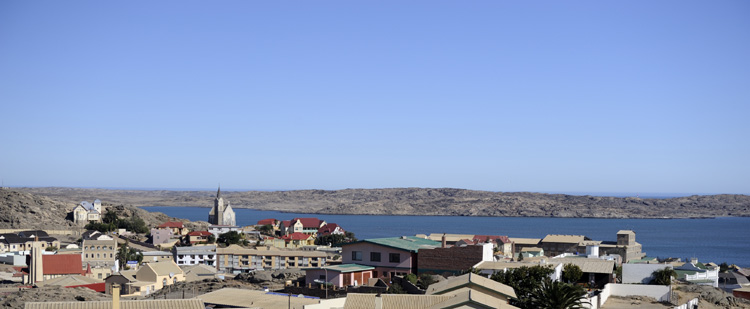
Lüderitz is a surreal colonial relic – a 19th century Bavarian village on the barren, windswept Namib Desert coast, seemingly untouched by the 20th century. It has everything you’d expect of a small German town – delicatessens, coffee shops and Lutheran churches. Here, the icy but clean South Atlantic is home to seals, penguins and other marine life and the desolate beaches support flamingoes and ostriches.
 Luderitz
was founded in 1883 when Heinrich Vogelsang purchased Angra Pequena and
some of the surrounding land on behalf of Adolf Lüderitz, a Hanseat
from Bremen in Germany, from the local Nama chief. Lüderitz began
its life as a trading post, with other activities in fishing and guano-harvesting.
In 1909, after the discovery of diamonds nearby, Lüderitz enjoyed
a sudden surge of prosperity. Today, however, diamonds are mostly found
elsewhere and offshore, and Lüderitz has lost a lot of this interest.
Luderitz
was founded in 1883 when Heinrich Vogelsang purchased Angra Pequena and
some of the surrounding land on behalf of Adolf Lüderitz, a Hanseat
from Bremen in Germany, from the local Nama chief. Lüderitz began
its life as a trading post, with other activities in fishing and guano-harvesting.
In 1909, after the discovery of diamonds nearby, Lüderitz enjoyed
a sudden surge of prosperity. Today, however, diamonds are mostly found
elsewhere and offshore, and Lüderitz has lost a lot of this interest.
The harbour has a very shallow rock bottom, making it unusable for modern ships; this led to Walvis Bay becoming the centre of the Namibian shipping industry. Recently, however, the addition of a new quay has allowed larger fishing vessels the dock at Lüderitz. To town has also re-styled itself in an attempt to lure tourists to the area, which includes a new waterfront area for shops and offices.
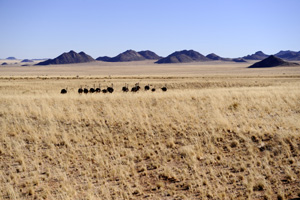
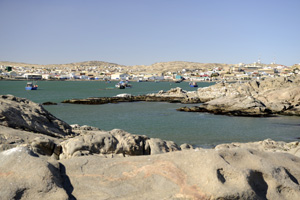
The town is known for its colonial architecture, including some Art Nouveau work, and for wildlife including seals, penguins, flamingos and ostriches. It is also home to a museum and to the Lüderitz Speed Challenge, and formerly lay at the end of a railway line to Keetmanshoop.
Lüderitz was the starting point for explorer and sailor Amyr Klink's successful solo crossing of the Atlantic Ocean, rowing for 101 days all the way to the Brazilian coast with no other form of propulsion, in 1984.
Ghost towns
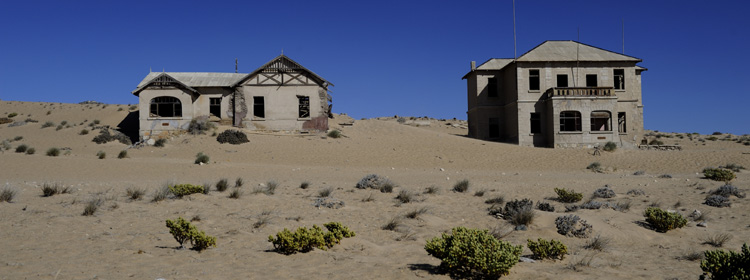
Just outside of Lüderitz lies the ghost town of Kolmanskop.
This previously bustling diamond town is now abandoned, and fights a constant
struggle against being buried under the shifting sand dunes of the Namib
desert.
Another ghost town called Elizabeth Bay lies 30 km to the south.
Sights
There is a lot to see in and around Luderitz. On a tour of the town you
can visit the Lutheran Felsenkirche, also from the inside (Tel 063-202381)
and the Goerke Haus with its beautiful sun-dial, only on weekdays from
2 to 3 pm.
A visit to the Luderitz Museum in Diaz Street is a very worthwhile experience. The museum illustrates the history of the town, informs about diamond mining, the indigenous population, about life in the desert as well as on fishing and marine life. Open on weekdays from 10h00 to 12h00 and from 15h30 to 17h00. Entrance fee: N$3.
The new Luderitz Waterfront is an ambitious project, inspired by the successful Cape Town Waterfront. At present it is still lacking tenants who can afford the rent, and the offers for tourists are limited.
Of great interest is the ghost town of Kolmanskop, which once formed the centre of the diamond industry in Namibia. One-hour guided tours take place only in the mornings at 9h30 and 10h45.
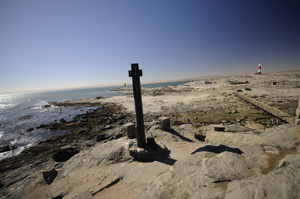
Those who can afford the time, should take a trip around the lagoon, the Sturmvogel Bay and Big Bay to Diaz Point or even further to the Bogenfels. There are many sea birds and flamingos to be sveen here.