Search all Namibia Accommodation

Caprivi AccommodationWest - Rundu
Central - Bagani & Divundu
Kongola / Mudumu Area
East - Katima Mulilo
Botswana Shakawe Kasane / Kazungula
|

Popular places in NamibiaNamib Desert Area Etosha National Park Fish River Canyon Accommodation GuidePlaces to stay around Namibia South Namibia Central Namibia Northern Namibia Coastal Namibia |

Namibia Essential
|
Travel Guide to
|


Caprivi Strip - Namibia
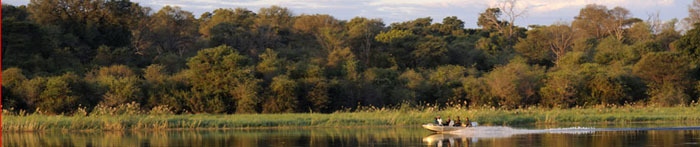
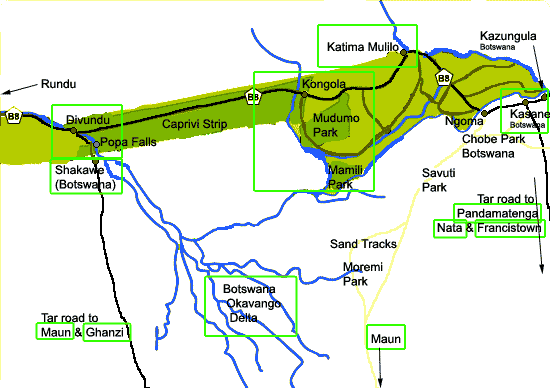
The Caprivi is a heavily tropical area, with high temperatures and much rainfall during the December-to-March rainy season, making it the wettest region of Namibia. The terrain is mostly made up of swamps, floodplains, wetland, and woodland.
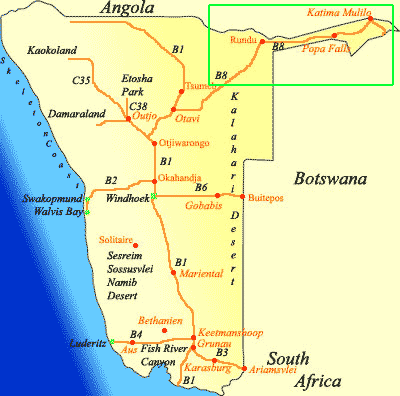
Described as Namibia's answer to the Okavango Delta, Caprivi is a game-rich area. More than 400 bird species inhabit the area, which contains three game reserves. Other attractions include the Popa Falls (more a series of rapids than a waterfall, but still a remarkable sight) and Katima Mulilo, the pleasant capital of the region.
 It
also is home to 450 animal species, including elephants, making Caprivi
a popular game-watching spot. The wildlife is protected by several nature
reserves, such as Bwabwata, Mudumu, Lizauli, West Caprivi Game Park, Mahango
Game Reserve, and Mamili National Park; animals travel freely across the
unmarked border with Botswana, where the Chobe National Park lies. The
strip is also a prime bird-watching area, with almost 70 percent of bird
species found in Namibia being recorded here. Katima Mulilo is the largest
city, with other notable towns including [[Kongola,],Chinchimane]], Bukalo,
Sibinda, and Impalila.
It
also is home to 450 animal species, including elephants, making Caprivi
a popular game-watching spot. The wildlife is protected by several nature
reserves, such as Bwabwata, Mudumu, Lizauli, West Caprivi Game Park, Mahango
Game Reserve, and Mamili National Park; animals travel freely across the
unmarked border with Botswana, where the Chobe National Park lies. The
strip is also a prime bird-watching area, with almost 70 percent of bird
species found in Namibia being recorded here. Katima Mulilo is the largest
city, with other notable towns including [[Kongola,],Chinchimane]], Bukalo,
Sibinda, and Impalila.
In addition to the Zambezi River, the strip also holds the Cuando and Kwando River, which marks the border with Botswana. Tributaries of the river here go by different names, including the Linyata and the Chobe. The province's far eastern is where the Cuando meets the Zambezi.
Highlights of the Caprivi Area:
•Lush flood plains, reed-filled swamps and a sub-tropical wilderness
•Spectacular birdwatching and game viewing opportunities
•Tranquil and unfussy tented camp near Opuwo
•Five en suite rooms, swimming pool, bar, lounge
•Excursions to Chobe National Park, Okavango Delta and Victoria
Falls
There are three game parks in the Caprivi region. The Caprivi Game Park
or Bwa bwata is 5715 square kilometers and extends for about 180km from
the Kavango River in the west to the Kwando River in the east. Deciduous
woodlands are dominated by trees such as wild seringa, copalwood and Zambezi
teak. While the park is sanctuary to 35 large and numerous small game
species, visitors are not likely to see many of these animals as vehicles
are restricted to the road between Kavango and Eastern Caprivi. Animals
likely to be seen are elephant, roan and kudu, buffalo occur towards the
west. As many as 339 bird species have been recorded in west Caprivi.
The wild and little visited Mamili National Park is Namibia's equivalent of the Okavango Delta, a watery wonderland of wildlife rich islands, river channels and wetlands. The focal points of the 320km2 national park are Nkasa and Lupala, two large islands in the Kwando/Linyati river. During the dry season the islands can be reached by road but after the rains 80% of the area becomes flooded, cutting them off from the mainland.
Mudumu National Park is a vast 100,959 hectare expanse of dense savannah and mopane woodland with the Kwando River at its western border. The park is home to small populations of sitatunga and red lechwe while spotted neck otter, hippo and crocodile inhabit the waterways. Animals to be encountered are elephant, buffalo, roan, sable, kudu, impala, oribi, zebra, wild dog as well as some 430 species of birds.