Yukon
map places & hotels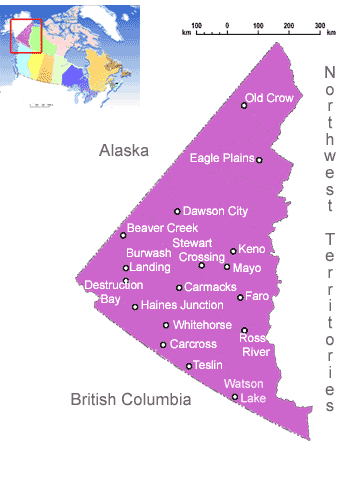
Places to stay
|

Search
all Canada Accommodation
Return to Home Page
Places to stay Yukon
Beaver
Creek |
Burwash
Landing |
Carcross |
Carmacks |
Dawson
City |

Destruction
Bay |
Eagle
Plains |
Faro |
Haines
Junction |
Keno |
Mayo
City |
Old
Crow |
Ross
River |
Stewart
Crossing |
Teslin |
Watson
Lake |
Whitehorse |
Welcome to Yukon TerritoryThe Yukon is no longer the frontier society of gold rush legend, but neither is it exactly like southern Canada. If you want to live, work, or simply do business in the Yukon, it's useful to know something about the nature of the place and the people who live there. In terms of population, the Yukon is small. The average annual population for 2003 was 29,967, and by June 2004, the population had increased to 30,469. From 1997 to 2002 more people moved out of the territory than into it. This shift in migration was an exception, however, and the latest population numbers reflect a return to positive net in-migration to the Yukon. Although the Yukon population has fluctuated historically, usually in response to changes in the mining industry, today the population is relatively stable. Many people were born in the Yukon or are long-term residents. Another stabilizing factor is the large local First Nations population: 23 percent of the total population, according to the 2001 Census, compared to 3.3 percent for Canada as a whole. People living in the Yukon, whether born in the Yukon or who moved to the Yukon because of the lifestyle, are closely connected to the territory. Even when they move away for careers or training, they often return when the opportunity arises. The Yukon population is a little younger than the Canadian average: there are proportionately more children, and adults of working age. There are also comparatively few people over 65 years of age. In some smaller communities the proportion of younger adults of working age is a little lower than the Yukon average. This reflects some movement out of these communities to take further education, establish careers or look for work. People who have moved remain closely attached to their home community; they return frequently and often for long periods of time. When the opportunity arises, they will sometimes return to live in the community. As First Nations further develop economic activity in these smaller communities the population will likely be augmented by returning community members. |
Map of the Yukon Territory |