
Namibia highlights guide · 2027 edition
The world's oldest desert, Africa's greatest canyon, a ghost town half-swallowed by sand, and waterholes where elephants queue at sunset. Namibia rewards travellers like nowhere else — but it's a big country, and choosing where to spend your nights matters. Here's every place worth the drive, why it earns its spot, and how to string them together. From the people who book Namibia every day.
Namibia is the road trip Africa was made for. It's one of the least densely populated countries on earth — vast, safe, and startlingly varied. In a single loop you can climb the highest dunes on the planet, watch lions at a floodlit waterhole, wander a diamond-rush ghost town being swallowed by the desert, stand on the rim of Africa's largest canyon, and eat fresh oysters in a German-flavoured seaside town. The roads are quiet, the distances are honest, and the light — photographers will tell you — is unlike anywhere else.
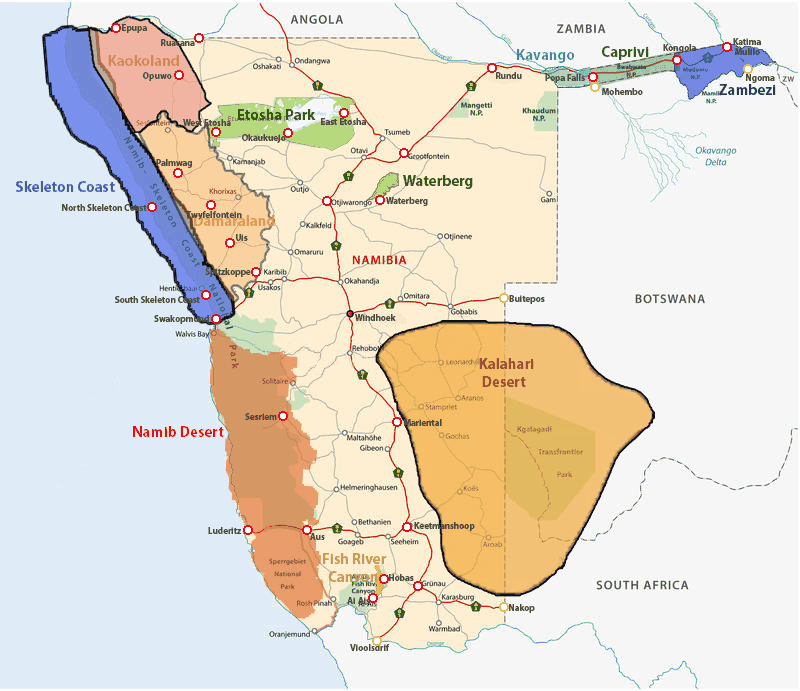
What makes it special is the combination: dramatic landscapes and genuine wilderness, but with good roads, well-run lodges and guest farms, and a tourism culture built around independent travellers. You don't need to join a group or be driven everywhere (though we can arrange that too) — most visitors hire a car in Windhoek and simply go. The sections below cover every destination we believe earns a night or three of your trip, and exactly why.
There are so many beautiful and unique areas of Namibia but here are the top 3 every visitor should experience
The world's tallest dunes and the dead trees of Deadvlei. One of the great sights of Africa — enter at Sesriem and discover desert life. Watch the desertncolours change as the sun rises and gaze up at a myriad of stars each night.
Read more →One of Africa's greatest wildlife parks. Self-drive safari at its best: park at a waterhole for an hour and the bush delivers a slow procession of elephant, giraffe, zebra, springbok, oryx and, if you're lucky, lion.
Read more →A vast, rust-red landscape of flat-topped mountains, dry riverbeds and boulder fields that turns molten at sunset — where Namibia's famous desert-adapted elephants roam. Ancient rock paintings in an ancient landscape.
Read more →If Namibia has one image the world knows, it's this: towering apricot-red dunes against a deep blue sky, and the bone-white clay pan of Deadvlei studded with black, centuries-dead camel thorn trees. Sossusvlei sits deep in the Namib-Naukluft Park — part of the oldest desert on earth — and no photograph quite prepares you for the scale. Big Daddy, the tallest climbable dune here, rises around 325 metres; the reward for the slog up its spine is a sand-run straight down into Deadvlei itself.
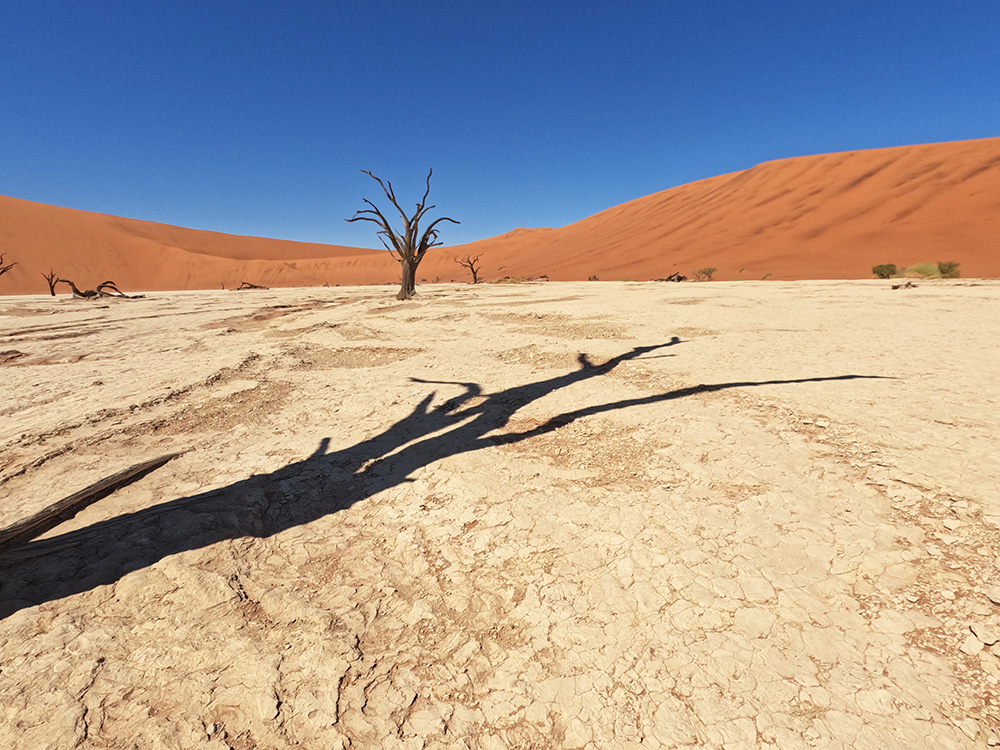
Why visit: this is the landscape that justifies the flight. Sunrise is everything here — the low light sets one face of each dune glowing orange while the other falls into shadow, and the park gates at Sesriem open at sunrise for exactly this reason. Stay inside or right beside the park the night before so you're first through the gate. Don't skip Sesriem Canyon, a narrow gorge carved by the Tsauchab River just minutes from the gate, or Dune 45 on the drive in.
The final stretch to the vlei is thick sand — take the shuttle or engage 4x4. Everything you need on where to stay, park fees and timing is on our Sesriem & Sossusvlei page.
Etosha is one of Africa's great game parks, built around a salt pan so vast it's visible from space. In the dry season the logic of the place is beautifully simple: water is scarce, so the animals come to the waterholes — and so do you. Park at a waterhole for an hour and the bush delivers a slow procession of elephant, giraffe, zebra, springbok, oryx and, if you're lucky, lion and the endangered black rhino Etosha protects so well.
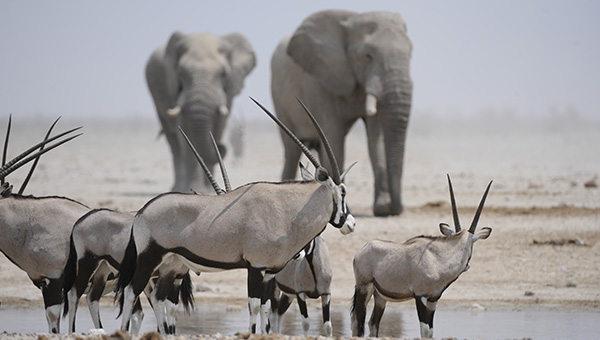
Why visit: it's self-drive safari at its best. The roads are good gravel, the sightings are democratic — no guide required, though guided drives are available — and the rest camps inside the park have floodlit waterholes where rhino and elephant drink metres away while you watch from a bench after dinner. Okaukuejo's waterhole is rightly famous for exactly this.
Give Etosha at least two nights, ideally three, entering one gate and exiting another as you traverse the park. Camps inside book out months ahead in high season; excellent lodges cluster just outside each gate. All options are on our Etosha page.
Halfway through a dusty desert loop, Swakopmund arrives like a mirage: palm-lined streets, German colonial architecture, a cold Atlantic rolling in beside coffee shops and seafood restaurants. This is Namibia's holiday town and adventure capital — the place to sleep in, eat well, do laundry, and then throw yourself down a dune.
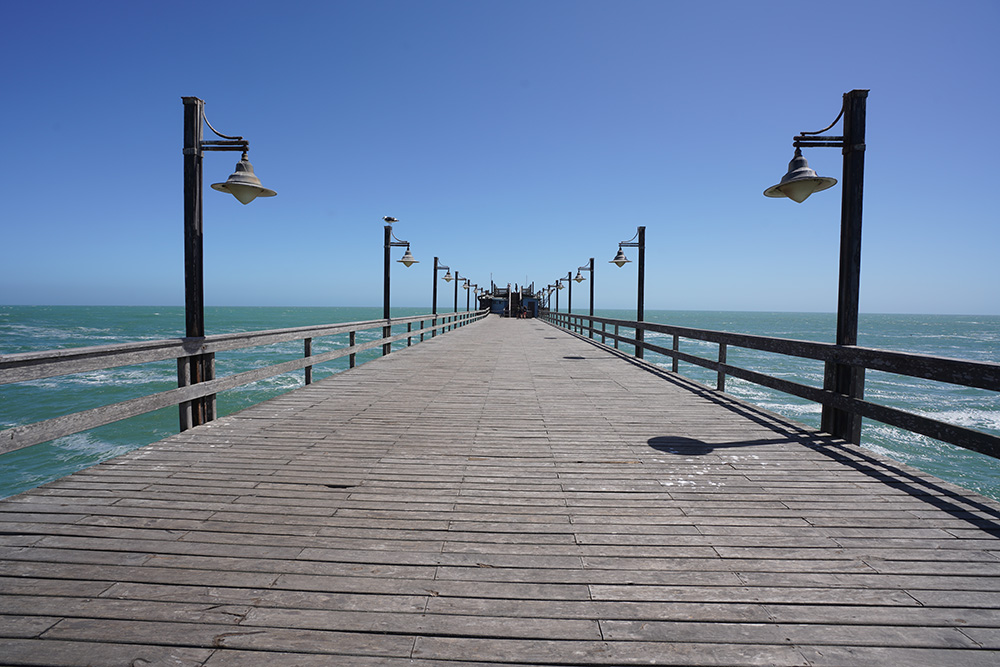
Why visit: the contrast, and the activities. Quad-biking and sandboarding in the dune belt, scenic flights over the Skeleton Coast and Sossusvlei, skydiving over the desert, township tours, and the fascinating 'Little Five' living-desert tours that find chameleons, geckos and sidewinder snakes hiding in apparently empty sand. It's also the natural mid-point of every Namibian circuit — two nights here breaks the driving perfectly and most visitors wish they'd stayed three.
The cool sea air is a genuine relief after the interior heat (bring a jacket for evenings, whatever the season). Where to stay, from seafront hotels to self-catering, is on our Swakopmund page.
In the early 1900s Kolmanskop was one of the richest little towns in Africa — a German diamond settlement with a ballroom, casino, ice factory and the southern hemisphere's first X-ray station. Abandoned in the 1950s, it's now being eaten by the Namib, room by room. Walking through elegant houses knee-deep in rippled dune sand, sunlight slicing through broken windows, is one of travel's genuinely surreal experiences.
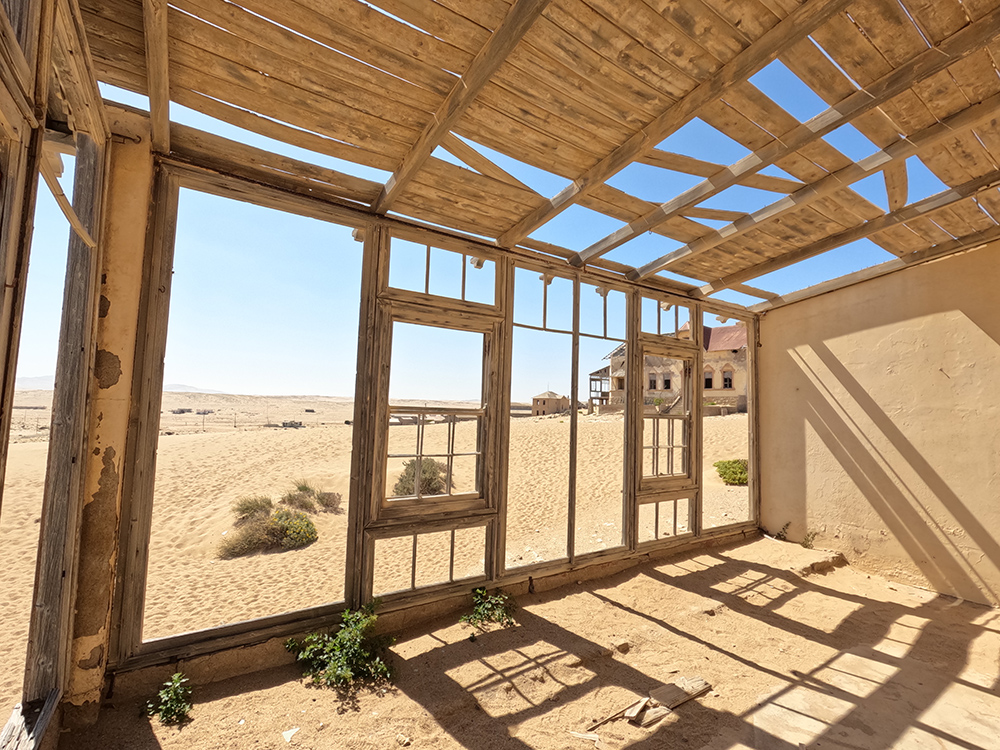
Why visit: nowhere else combines history, decay and desert this photogenically — it's arguably the most photographed interior in Africa. Photographers should buy the sunrise-to-sunset day pass a day ahead; everyone else can join the included morning guided tour, which brings the diamond-rush story vividly to life. Ten minutes away, Lüderitz adds colonial architecture, a wild rocky peninsula and famously fresh seafood — crayfish and oysters are the local pride.
It's a long drive south, which keeps the crowds away — pair it with Aus, the desert horses and Fish River Canyon to make the southern loop count. We've written a complete Kolmanskop travel guide, and accommodation is on our Lüderitz page.
The Fish River Canyon is the largest canyon in Africa — roughly 160 km long, up to 27 km wide and about 550 metres deep — and standing on its rim at Hobas as the late light rakes across the switchbacks below is one of southern Africa's great moments. It's older than dinosaurs, quieter than any famous canyon has a right to be, and often you'll share a viewpoint with nobody at all.
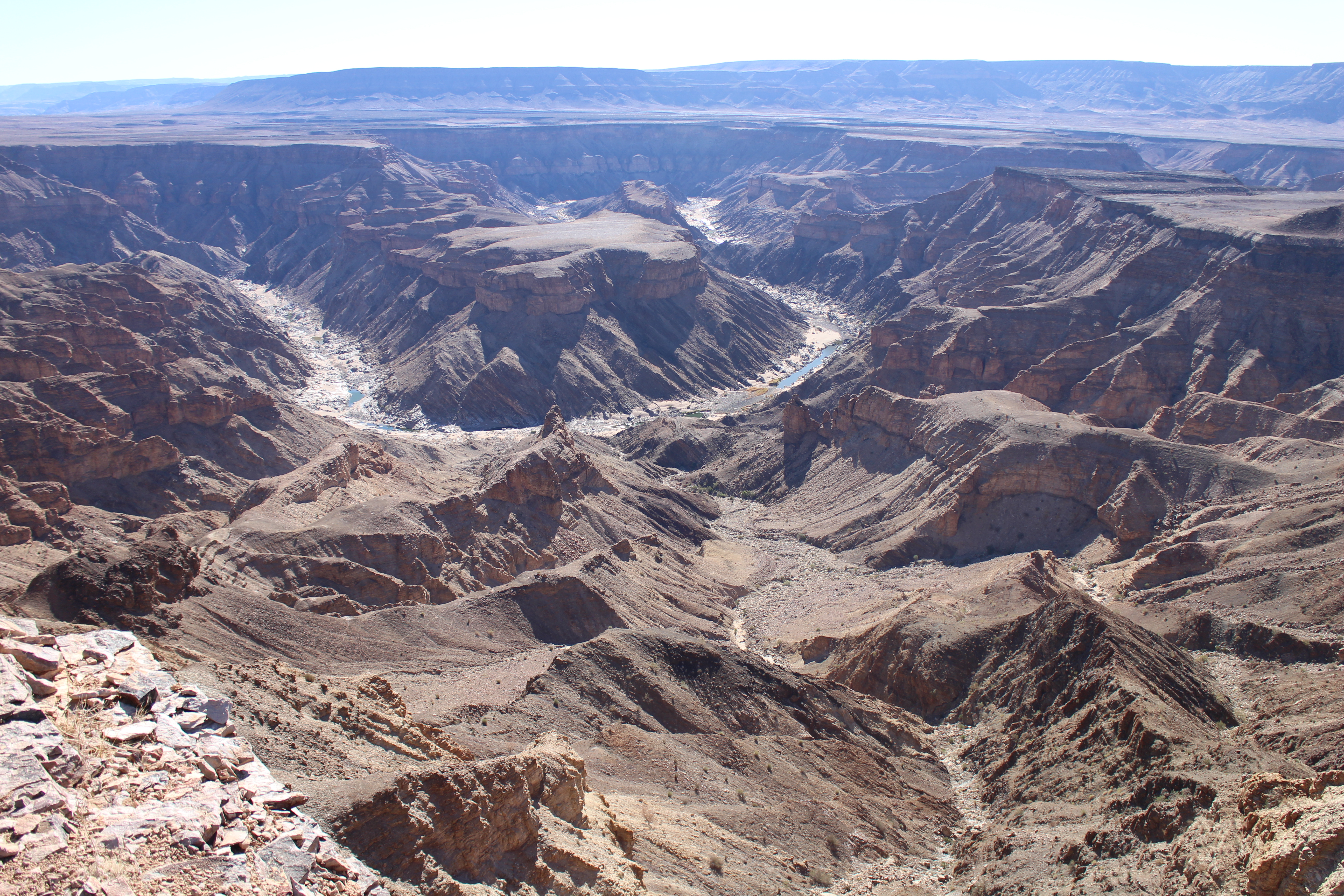
Why visit: pure geological drama, and the anchor of any southern circuit. Casual visitors drive the rim viewpoints; serious hikers tackle the legendary multi-day Fish River hiking trail (winter only, permits required, genuinely tough). At the canyon's southern end, Ai-Ais hot springs offer a soak beneath the cliffs — a fine reward after a dusty day.
Time your rim visit for late afternoon; midday light flattens the canyon completely. Lodges and camps near Hobas and Ai-Ais are on our Fish River Canyon page.
The Bushmen called this shore 'the land God made in anger'; Portuguese sailors called it the Gates of Hell. Fog rolls off the cold Benguela Current onto bone-dry desert, and the coastline is littered with the rusting wrecks that give it its name. It's bleak, hypnotic, and utterly unlike anywhere else you'll ever drive.
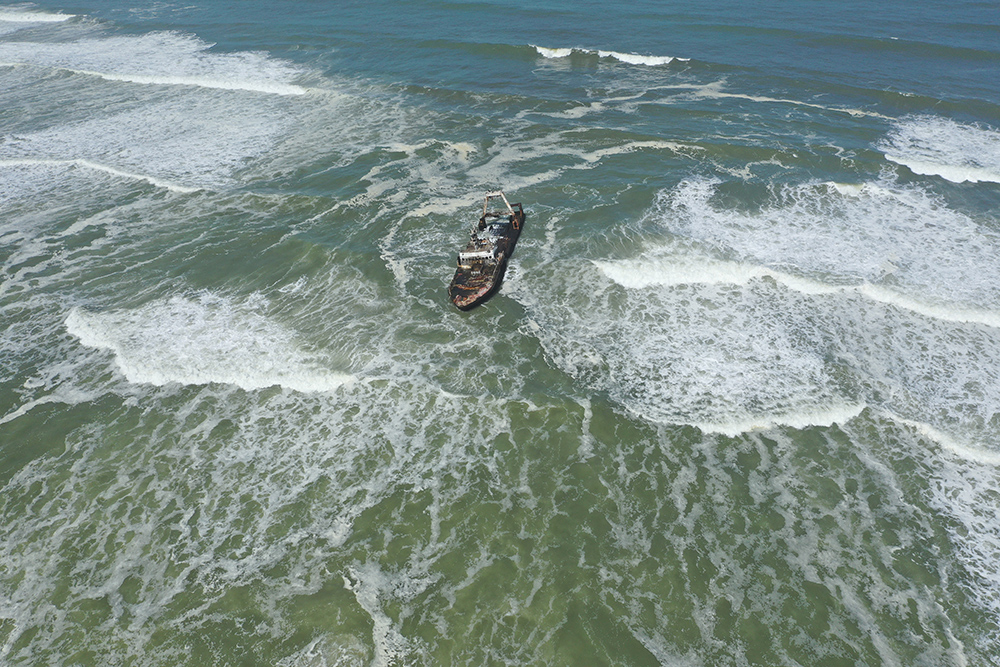
Why visit: the atmosphere, and the seals. At Cape Cross, one of the world's largest Cape fur seal colonies — often more than 100,000 animals — heaves, barks and bickers along the shore; the noise and the smell are unforgettable in equal measure. Further north, the wrecks, whale bones, salt pans and endless empty beaches of the Skeleton Coast Park reward travellers who like their landscapes stark. The far northern reaches are fly-in territory only, among the most exclusive wilderness in Africa.
Most visitors do the coast as a day's drive north from Swakopmund, or en route to Damaraland via the Springbokwasser gate. Details on our Skeleton Coast page.
Between the coast and Etosha lies Damaraland: a vast, rust-red landscape of flat-topped mountains, dry riverbeds and boulder fields that turns molten at sunset. This is where Namibia's famous desert-adapted elephants roam the ephemeral rivers, and where desert-adapted black rhino survive in one of their last free-ranging strongholds — tracking them with local conservancy guides is a bucket-list morning.
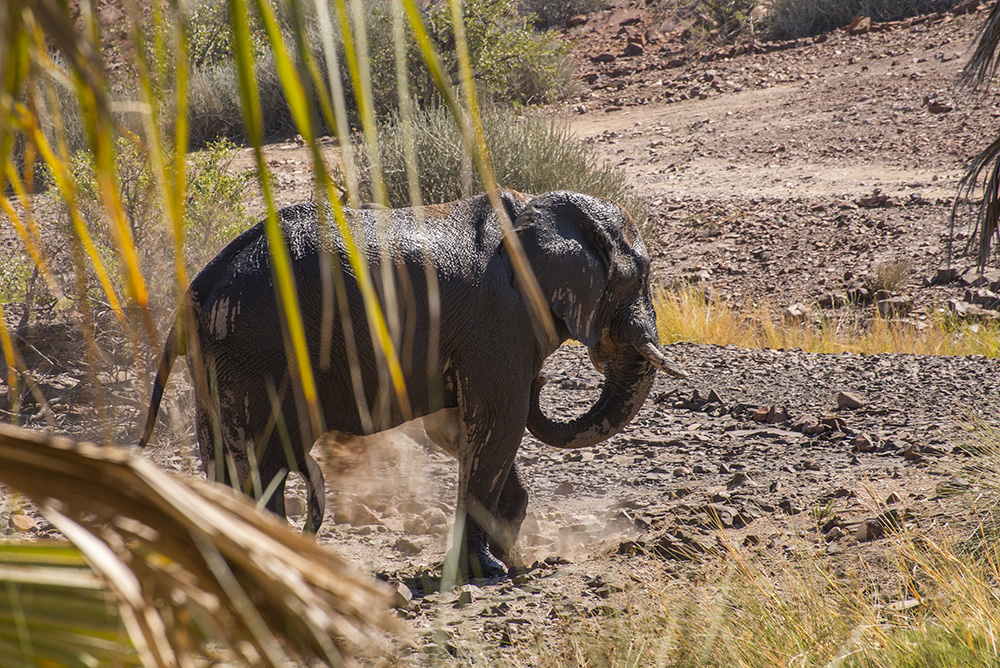
Why visit: wilderness with meaning. At Twyfelfontein, a UNESCO World Heritage Site, thousands of rock engravings — some over 6,000 years old — record the animals and rituals of the hunter-gatherers who lived here; local guides walk you through lions, giraffes and the famous 'Lion Man'. Nearby sit the Organ Pipes dolerite columns, Burnt Mountain, and the strange Petrified Forest. And the night skies out here are staggering.
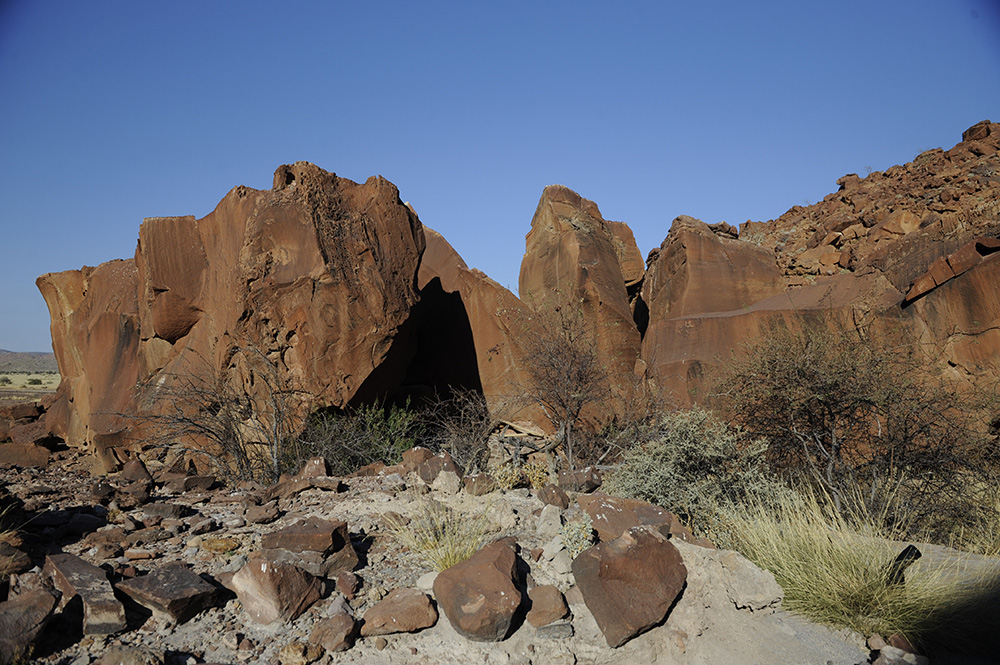
Damaraland slots naturally between Swakopmund and Etosha — give it two nights. Lodges and campsites are on our Damaraland page.
Rising sheer out of a dead-flat plain, the granite peaks of Spitzkoppe are visible for a hundred kilometres — a 1,728-metre island of smooth, ancient rock that glows deep orange at first and last light. Climbers, photographers and campers treat it as sacred ground; everyone else simply stands and stares.
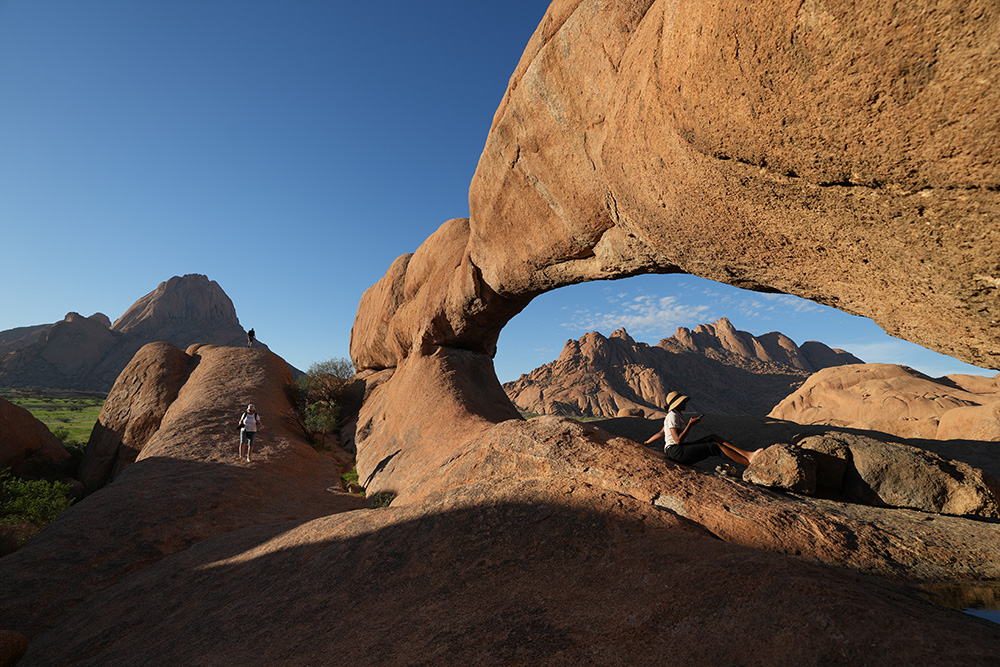
Why visit: the most beautiful campsites in Namibia, scattered among the boulders with the mountain as your bedroom wall, and some of the darkest night skies on the planet — the Milky Way here is genuinely bright enough to walk by. Scramble to the natural rock arch for sunset, take a guided walk to the Bushman rock paintings, and let the silence do its work. Community-run and refreshingly simple, it's an easy detour between Swakopmund and Damaraland or Etosha.
Even if you're not camping, it's worth routing past for a few hours. Ask us about lodges nearby, or explore more of Namibia here.
Half an hour south of Swakopmund, Walvis Bay wraps around a lagoon so rich in birdlife it's protected as a Ramsar wetland — tens of thousands of flamingos feed here, turning the shallows pink, alongside pelicans and migrant waders. Offshore, dolphins ride the bows of catamaran cruises while seals haul themselves aboard for a fish.
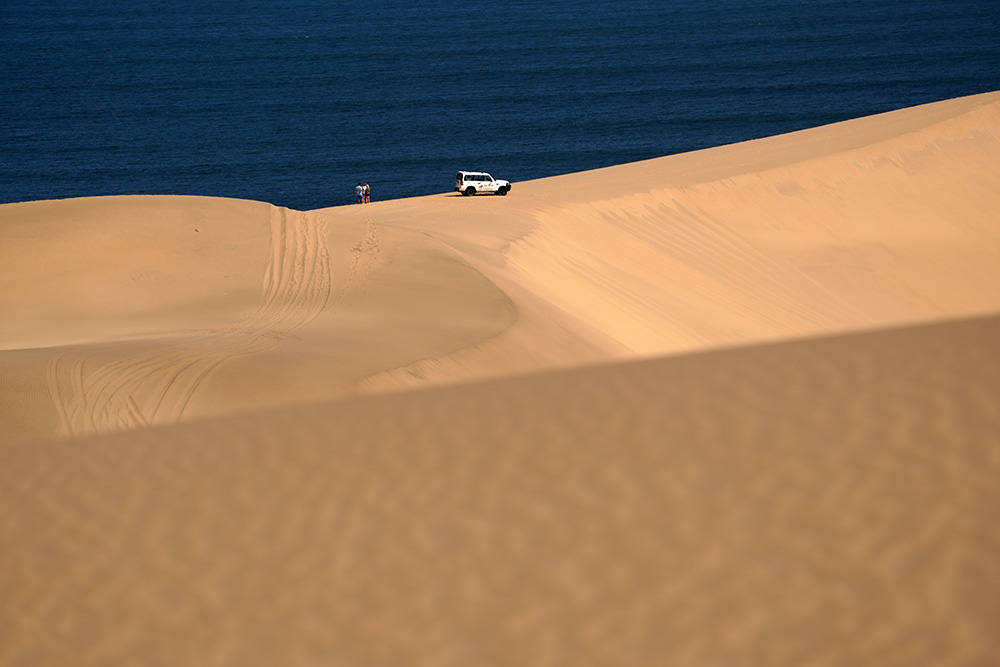
Why visit: Sandwich Harbour. South of the lagoon, giant dunes plunge directly into the Atlantic surf — a collision of desert and ocean found almost nowhere else on earth. Guided 4x4 excursions time the tides, roller-coaster along the dune faces and beach, and usually pair the trip with oysters and sparkling wine among the sand mountains. Combine a morning marine cruise with an afternoon Sandwich Harbour drive and you've had one of Namibia's best full days.
Walvis Bay works as a day trip from Swakopmund or a base in its own right — waterfront guesthouses overlook the lagoon and its flamingos. Ask us to arrange the combo tours with your coastal stay.
Namibia's south-east belongs to the Kalahari: long, grass-flecked red dunes rolling to the horizon, camel thorn trees full of sociable weaver nests the size of haystacks, and evenings that end with an oryx silhouetted on a dune crest against a violent orange sky. It's a gentler, greener desert than the Namib — and conveniently, it sits right on the route between Windhoek and the deep south.
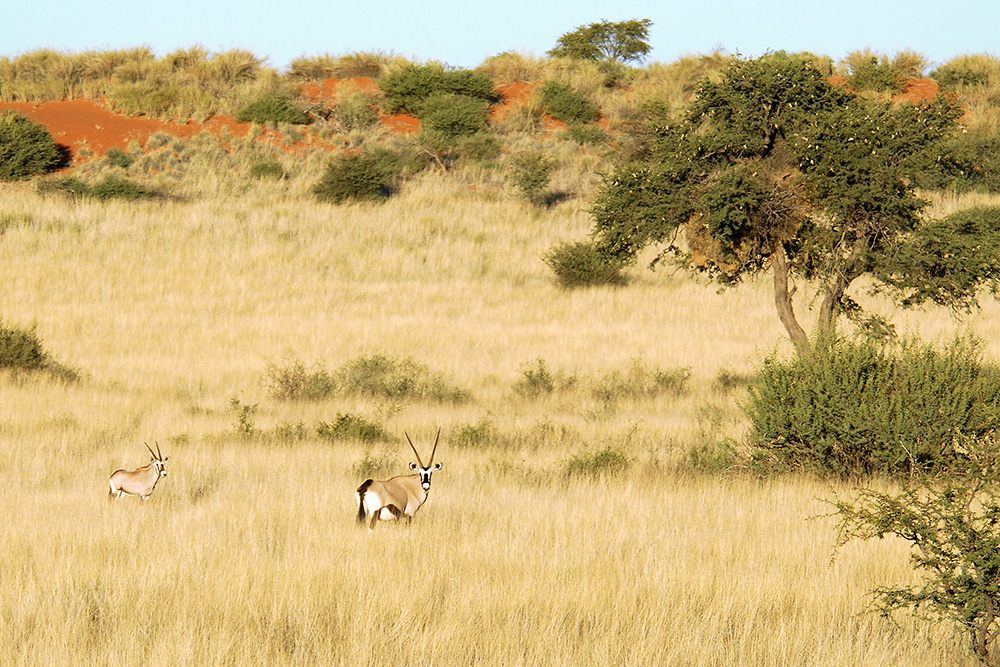
Why visit: it's the perfect first or last night of a Namibian circuit. Guest farms and lodges here offer sundowner dune drives, cheetah and giraffe sightings, walks with San Bushman guides sharing tracking skills and desert lore, and — a firm favourite — habituated meerkat colonies standing to attention in the morning sun. After a long flight or before one, a Kalahari lodge is exactly the soft landing you want.
Most Kalahari lodges sit an easy 2–3 hour drive from Windhoek on good roads. Tell us your route and we'll slot the right one in — or start on our Explore Namibia page.
The long, narrow panhandle in Namibia's far north-east feels like a different country: four great rivers — the Okavango, Kwando, Chobe and Zambezi — thread through woodland and floodplain, hippos grunt through the night, and lodges sit on stilts above the water. If the rest of Namibia is about sand, the Zambezi Region is about water.
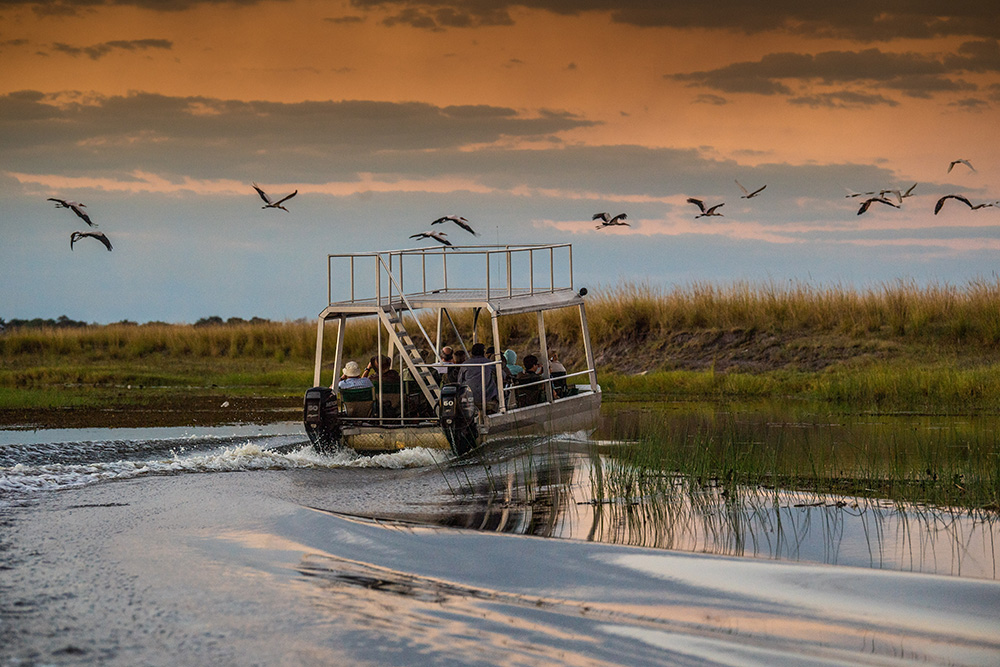
Why visit: boat-based safaris and superb birding. The parks here — Bwabwata, Mudumu and Nkasa Rupara — hold big elephant herds, buffalo, crocodile and red lechwe, best watched from the water at golden hour with a drink in hand. Over 400 bird species make it Namibia's richest birding territory. It's also the natural corridor onward to Victoria Falls, Chobe in Botswana, or the Okavango — many travellers end a Namibian circuit by driving the Caprivi Strip east and finishing at the Falls.
It's a long way from Windhoek (fly-in options exist), so it suits longer itineraries — but those who make the effort rank it among their favourite stops. Ask us how to build it in, or see our Namibia trips.
The Waterberg is a brick-red sandstone plateau rising 200 metres above the acacia plains, its cliffs glowing at sunset and its summit — protected as a park — serving as a sanctuary where rare species like sable, roan antelope, buffalo and both black and white rhino were re-established in safety. Springs seep from the porous rock, keeping the foot of the mountain unexpectedly green and full of birdsong.
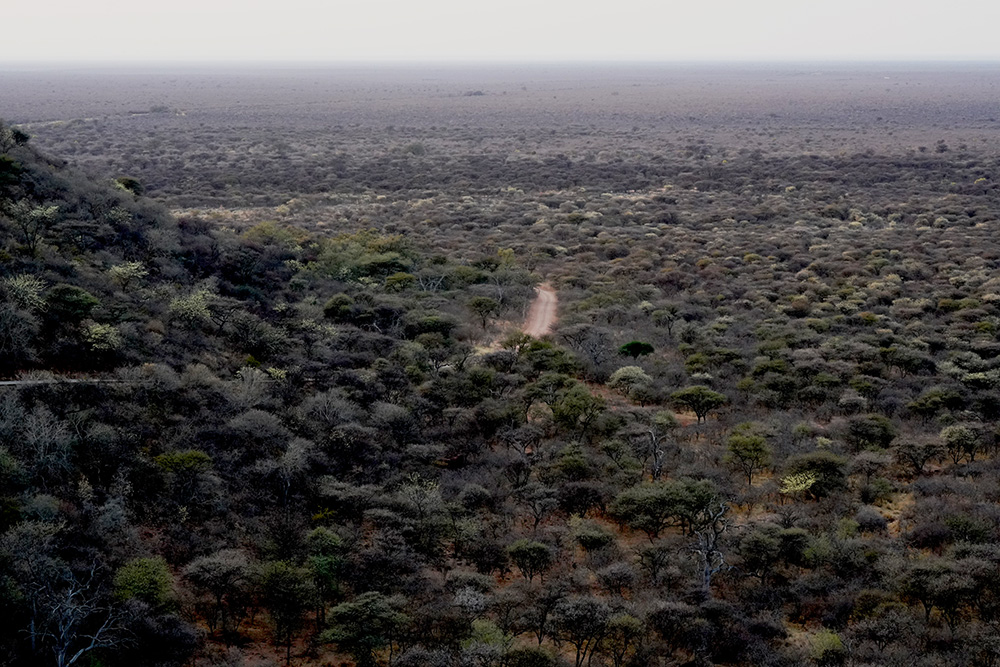
Why visit: it's the walker's stop. Unlike most Namibian parks you explore Waterberg on foot — short marked trails wind through the boulders and fig forests to viewpoints on the cliff edge, and guided drives head onto the plateau to find the rare game. History is here too: the site of the 1904 Battle of Waterberg is a sobering, important chapter of Namibia's past. It breaks the Windhoek–Etosha drive beautifully.
One night is enough; two lets you slow down properly. Lodging around the plateau is on our Waterberg page.
Almost every Namibian journey begins and ends in Windhoek, the small, orderly capital tucked among hills in the centre of the country. It's less a destination than a launch pad — but a pleasant one, with a distinctly German accent: the 1907 Christuskirche, the Alte Feste fort, street cafés, craft markets and legendary steakhouse-brauhaus dinners where game meat and cold draught lager set the tone for the trip ahead.
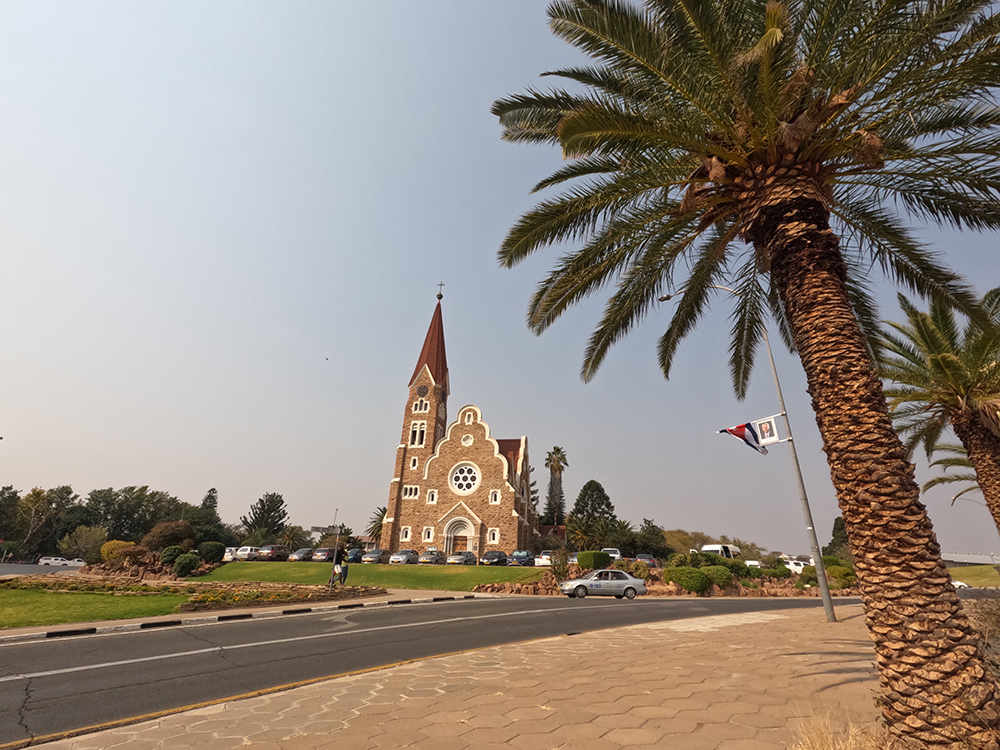
Why visit: practicality, mostly — and it does practicality well. Collect your hire car, stock the cooler box, draw cash, buy a local SIM, and get a proper night's sleep before the distances begin. The Independence Memorial Museum gives valuable context on the country you're about to drive through, and the craft market on Independence Avenue is the best one-stop souvenir hunt in the country — better done here than hoped-for later.
One night at the start and one at the end is the classic pattern. Guesthouses and hotels are on our Windhoek page.
Namibia's highlights arrange themselves into a natural anti-clockwise circle from Windhoek. This is the route we book more than any other — unhurried enough to enjoy, complete enough that you miss nothing essential. Distances look modest until you factor in gravel; the drive times below are realistic, not optimistic.
| Day | Where you sleep | Drive | The point of the day |
|---|---|---|---|
| Day 1 | Windhoek | Arrival | Land, collect the car, stock up, brauhaus dinner |
| Day 2 | Kalahari | ±3 hrs | Soft landing — sundowner dune drive, meerkats at dawn |
| Day 3 | Fish River Canyon | ±5 hrs | Sunset at the rim viewpoints near Hobas |
| Day 4–5 | Lüderitz | ±4 hrs | Kolmanskop ghost town (sunrise pass!), wild horses of Aus, seafood |
| Day 6–7 | Sesriem / Sossusvlei | ±5–6 hrs | Dawn at Deadvlei, climb Big Daddy, Sesriem Canyon |
| Day 8–9 | Swakopmund | ±4–5 hrs | Rest, restaurants, Sandwich Harbour 4x4 & marine cruise from Walvis Bay |
| Day 10–11 | Damaraland | ±4 hrs | Spitzkoppe en route, Twyfelfontein rock art, desert elephants |
| Day 12–13 | Etosha | ±3–4 hrs | Full days of game viewing, floodlit waterhole at night |
| Day 14 | Windhoek | ±5 hrs | Return via Waterberg or Okahandja craft market, fly out |
Have more time? Add the Skeleton Coast drive between Swakopmund and Damaraland, two nights at Waterberg after Etosha, or continue east through the Zambezi Region to finish at Victoria Falls. Have less? A 10-day version drops the deep south (Fish River and Lüderitz) and runs Windhoek – Sossusvlei – Swakopmund – Damaraland – Etosha – Windhoek. Tell us your dates and we'll shape it — see our ready-made Namibia trips or enquire directly.
The honest answer: Namibia works year-round, but the seasons change what you get.
Cloudless skies, cool nights, warm days and virtually no rain. Wildlife viewing in Etosha is at its best because animals concentrate at the waterholes, the light is crisp for photography, and there are no mosquitoes to speak of. June to August nights can drop near freezing in the desert — pack warm layers for early game drives. This is high season: the best lodges at Sossusvlei, Etosha and Swakopmund book out months in advance.
Afternoon thunderstorms (mostly January–March, and mostly in the north) transform the land: the Kalahari greens over, dramatic cloudscapes fill the sky, newborn antelope arrive, and migrant birds pour in — the best months for the Zambezi Region's birding. Rates drop, roads are quieter, and midday heat in the interior is serious (regularly above 35°C at Sossusvlei). Wildlife disperses in Etosha, but sightings remain good and the pan occasionally floods, drawing flamingos.
Swakopmund and the Skeleton Coast are kept cool and often foggy year-round by the Benguela Current — expect 15–25°C whatever the calendar says, and pack a windproof jacket for the coast even in midsummer.
Our shorthand: for a first trip focused on wildlife and comfortable temperatures, aim for May, June or September–October — peak-season quality with slightly easier availability than July–August.
Namibia is one of the easiest countries in Africa to travel independently — but the distances and the gravel deserve respect. The essentials we tell every traveller:
Namibia rewards preparation with freedom: quiet roads, extraordinary places, and day after day where the landscape does the entertaining. Plan the route, respect the distances, and the country takes care of the rest.
Guide read — now the good part
The dune-view room at Sesriem for that dawn start, the Etosha camp beside the floodlit waterhole, the sunrise pass at Kolmanskop already arranged — and the whole route paced so you're never rushing. One message with your dates, and a real person takes it from there. No booking fees.
You pay each place's own rate — nothing on top.
We know where the value hides at every gate.
First-hand — we've driven every road in this guide.
Real people, replies usually the same day.