
Kolmanskop visitors guide · 2027 edition
Africa's most famous ghost town, properly explained: what the permits cost and when the gates open, how the photography day pass gets you in for sunrise, the story of the diamond town the desert is swallowing — plus the wind, the sand, the packing list and the honest tips that make a visit unforgettable. From the people who book Namibia every day.
The main reason to visit Kolmanskop is to see one of the most famous ghost towns in Africa. In the early 1900s this was a wealthy diamond mining town built by German settlers — it had a hospital, ballroom, school, casino, butcher shop, ice factory, and even the first X-ray station in the southern hemisphere (used to prevent diamond theft). Abandoned in the 1950s, the desert is slowly reclaiming it: rooms filled with dunes, broken windows, and old walls that tell the story of the past.

What makes Kolmanskop special is this combination of history and nature. You're not just looking at ruins — you're watching time and environment change a place. The quiet atmosphere and empty buildings make it completely different from other tourist destinations, and it's one of the most photogenic locations in Namibia: a must for photographers, history lovers, and anyone curious about the diamond mining era.
Kolmanskop is in southern Namibia, about 10 km inland from the coastal town of Lüderitz. It sits in the Namib Desert, not far from the Atlantic Ocean, within what used to be the restricted diamond mining zone known as the 'Sperrgebiet' (forbidden area) — today part of the Tsau //Khaeb National Park, which is why access is still permit-controlled.
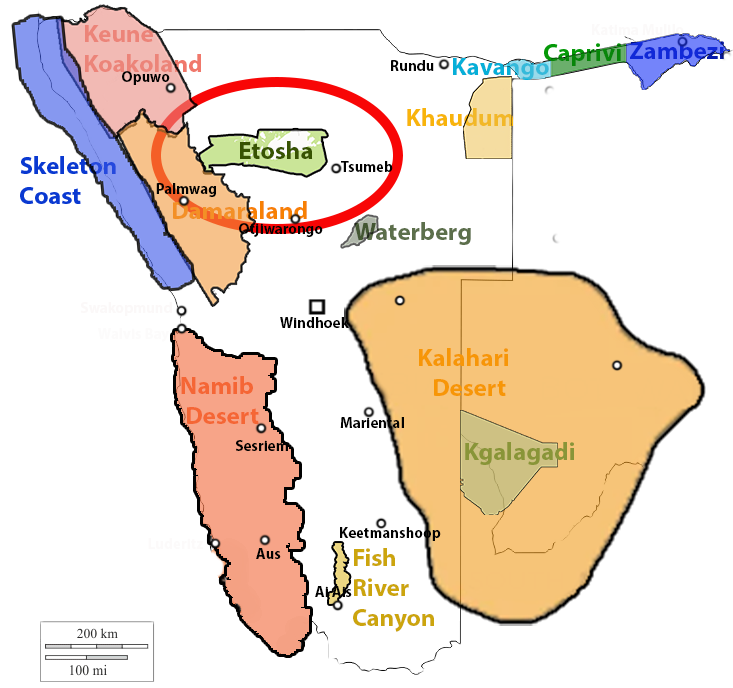
Self-driving is straightforward: from Windhoek it's about 673 km south on paved roads (the B1 and B4) — allow 7–8 hours. A normal sedan is fine, as the road is paved right to the entrance. You can also fly to Lüderitz Airport and drive about 15 minutes to the site.
Kolmanskop is right beside the B4, so it slots naturally into any southern Namibia road trip — pair it with Lüderitz, Aus and its wild horses, or the Fish River Canyon further east. Guided tours are included with your permit and are well worth taking for the historical detail; we can also arrange your whole southern loop with a driver if you'd rather not self-drive — just ask.
Kolmanskop can only be visited during set hours and with an official permit — the entrance ticket is also your permit for the restricted area. Standard entry runs 08:00 to 13:00 daily, with the included guided tour at 09:30 and 11:00 (Monday–Saturday) and 10:00 on Sundays and public holidays, in English and German. Entry between sunset and sunrise is strictly forbidden — no night photography.

| Permit | Access | Rate |
|---|---|---|
| Standard visitor permit — adults | 08:00–13:00, guided tour included | N$180 per person |
| Standard visitor permit — children | 08:00–13:00 | N$70 per child |
| Photography / day pass | Sunrise to sunset, coded gate access, tours included | N$400 per person |
The photography/day pass is the one photographers want: it gets you in from sunrise, when soft light streams through the sand-filled windows and you may have the town almost to yourself. It must be bought at least a day in advance — at the gate the day before, in Lüderitz, or through us with your booking — and you'll be given a code for the entrance gate. Note that this pass is for amateur photography; commercial shoots need a separate arrangement. Kolmanskop lies within the Tsau //Khaeb National Park, and any future government park fees would be additional. Prices can change — confirm current 2027 rates with us when you book.
There are no hotels inside Kolmanskop itself. Most visitors stay 10 minutes away in Lüderitz, a small coastal town with a good spread of options: seafront hotels with ocean views and on-site restaurants, cosy centrally-located guesthouses within walking distance of the waterfront, characterful B&Bs with sea viewpoints, and self-catering apartments for longer stays.

Lüderitz has limited rooms and a remote location, so last-minute options can be scarce — book in advance, especially during the high season (May to October). Small details make a big difference here: secure parking, early breakfast availability (essential if you're taking the sunrise photography pass), and wind-protected rooms. All the places to stay with price guides are on our Lüderitz accommodation page — or tell us your dates and style and we'll match you to the right one.
Plan around two things: the set opening hours and the desert heat. Most visitors spend 2–4 hours on site — longer if photography is the focus. Aim for early morning, when temperatures are cooler and the light streams dramatically through the sand-filled windows; from November to March especially, midday heat is intense and shade is minimal.
The ideal plan: sleep in Lüderitz, buy your photography pass the day before if you want sunrise access, be at the site early, join a guided tour for the history, then explore on your own — moving slowly from house to house. Bring water, sun protection and comfortable closed shoes: the sand inside the buildings is deep and uneven. One day is enough for Kolmanskop itself, but two nights in Lüderitz lets you add the town, the peninsula and a relaxed pace.
The main activity is exploring the abandoned buildings — and the beauty is in the details: door frames half-buried in sand, staircases leading nowhere, sunlight slicing through empty windows. It's quiet, eerie, and strangely beautiful all at once.

Take your time, house by house
Walk through old homes with rooms full of dunes, the former hospital, the school and the butcher shop. Move slowly — every building tells its own chapter of the town's rise and abandonment, and every doorway frames a different picture.

09:30 & 11:00 Mon–Sat · 10:00 Sun
The guided tour (included in your permit) brings the town to life — how diamonds were discovered, how the residents lived in luxury in the middle of a desert, and why it was all abandoned. It starts among the restored buildings and is offered in English and German.

Near the entrance
The small museum gives helpful background on the diamond mining history and daily life a century ago — from the ice factory to that famous X-ray machine. A good first stop to make sense of everything you'll see among the dunes.

With the N$400 day pass
The signature Kolmanskop experience: sunrise light pouring through broken windows onto rippled indoor dunes, before the crowds arrive. The day pass gets you in from sunrise to sunset with a gate code — for many photographers, this alone justifies the trip south.

Nature reclaiming a town
Kolmanskop is a place in motion — wind pushes sand through doorways year by year, slowly swallowing the town. Watching the dunes advance through German colonial architecture is a lesson in the power of nature you won't find anywhere else.
10 minutes away
Round out your visit with Lüderitz itself: colonial architecture, fresh seafood, the windswept peninsula and the wild Atlantic coastline. Together they make the far south one of Namibia's most rewarding detours.
Facilities at Kolmanskop are basic but organised: a small visitor centre, the museum, a café and restrooms near the entrance, plus a souvenir shop. Food options on site are limited, so most visitors eat in Lüderitz before or after. Fuel, supermarkets and medical services are all in Lüderitz, not at Kolmanskop itself. Note that on Sundays the museum, shop and café are closed — the buildings themselves stay accessible.
There is no public Wi-Fi inside the ghost town — this is a preserved site in the middle of the desert. Download maps, permits and reference information beforehand in Lüderitz, where accommodation and cafés offer Wi-Fi. Then treat Kolmanskop as a built-in digital detox: a few uninterrupted hours to wander, photograph, and absorb the surreal quiet without notifications pulling you away.
Think 'minimal and unpredictable'. Near the entrance gate and parking area you may get light to moderate reception — enough for a quick message — but deeper among the buildings, thick walls and shifting dunes weaken the signal significantly, and it varies by provider. Screenshot your permits, maps and booking confirmations before arriving, and if you're meeting someone, agree on a time and place in advance rather than relying on a call or text.
One of the most fascinating things about Kolmanskop is how the desert and ocean shape the climate together. This isn't typical African heat year-round — the cold Atlantic Benguela Current keeps temperatures cooler than you'd expect and often wraps the coastline in misty mornings, adding a moody, cinematic layer before burning off later in the day.
Generally mild and comfortable days of 15–25°C, chilly early mornings (bring a fleece for that sunrise shoot), clear skies, low humidity and virtually no rain. This is peak season, so book accommodation early.
Warmer, with midday heat climbing above 30°C at Kolmanskop where there's little shade. Early mornings are still pleasant; by midday the sun is intense — serious sun protection and plenty of water are essential. The upside: fewer tourists and dramatic light.
Lüderitz is famously breezy, sometimes very breezy. Strong coastal winds pick up quickly, especially in the afternoons, sending sand swirling through Kolmanskop's empty doorways — atmospheric and beautiful, but secure your hat and protect your camera. Rainfall is minimal all year; this is part of the Namib, one of the driest places on earth. Whenever you visit, plan around early mornings and late afternoons — the most comfortable temperatures, the best light, and the desert at its most magical.
The cooler months from May to September are best: comfortable walking temperatures, dry air, excellent visibility and almost zero rainfall. June through August are especially popular — just remember it's peak season, so Lüderitz rooms book up quickly. April and October are excellent shoulder options: pleasant weather, beautiful golden light and fewer crowds.
Whatever the month, the best time of day never changes: early morning, for softer light through the windows and fewer visitors. Summer visits work too if you're on site early and out before the worst of the midday heat — and afternoon wind.
Start with layers: even in warmer months, mornings are cold and breezy, so a light fleece or insulated jacket is perfect for sunrise hours and easily shed as the day warms — in winter it's essential. Sun protection is non-negotiable: a wide-brimmed hat that fits securely (the wind is real), high-SPF sunscreen, UV sunglasses and SPF lip balm; the desert sun is intense even when temperatures feel mild.
A reusable water bottle is essential — the air is extremely dry, shade is limited, and dehydration sneaks up quickly. Photographers: bring extra batteries, memory cards and a lens cloth, because fine sand gets everywhere when the wind picks up; a small backpack keeps everything secure and your hands free. Download maps and confirmations in advance (reception is patchy) and carry a power bank. Finally, a light scarf or buff protects your face when the desert wind decides to make things dramatic — the elements are part of the experience here, and being prepared means you'll enjoy every sandy, windswept minute.
Comfortable closed shoes — sneakers or lightweight hiking shoes — are ideal. The sand inside the buildings is soft and deep in places, and hides uneven floors and debris; open sandals quickly become uncomfortable and offer no protection. You'll also appreciate sturdy shoes when walking Lüderitz's rocky coastal areas afterwards.
Entrance fees are paid at the gate, where both cash and cards are usually accepted — but carry cash as backup, because the gate's card machines can be unreliable, and you'll want it for small purchases and tips. Both Namibian Dollars (NAD) and South African Rand (ZAR) are accepted at equal value. In Lüderitz, most hotels, guesthouses, restaurants and shops take major credit and debit cards, especially Visa and Mastercard.
Kolmanskop is about 10 km from Lüderitz — roughly a 15-minute drive — and about 673 km from Windhoek (7–8 hours by car). The roads are mostly paved and in good condition, so a standard vehicle is fine, and most guided tours provide transport from town. Access is controlled: you must enter during official opening hours (08:00–13:00 on a standard permit), with the photography day pass allowing earlier and later access from sunrise to sunset.
Nowhere else combines these ingredients: a once-wealthy diamond town, elegant German-style architecture, and a desert visibly swallowing it room by room. The sand-filled interiors are the signature image — but the details reward slow exploration, from the opulent houses of the mine managers to the workshops of the town that once had its own ice factory, casino and X-ray station.
Standard entry (N$180 adults, N$70 children) covers the 08:00–13:00 window with a guided tour included; the N$400 photography/day pass runs sunrise to sunset with coded gate access, and must be bought at least a day ahead — at the gate, in Lüderitz, or through us with your booking. Once you have your permit you're free to explore; just respect the fragile buildings and follow all signage.
Kolmanskop can be a fascinating, memorable destination for children — a real-life ghost town mixing history, adventure and surreal landscapes, where walking through sand-filled houses shows them what life in a diamond town looked like a century ago. Children are welcome and pay a reduced rate (N$70).
Parents should know the terrain is challenging: sand drifts inside rooms, uneven floors and crumbling staircases mean children need close supervision at all times. Closed-toe shoes are a must, and young children may tire quickly in the heat and sun. Treat the visit as an educational adventure rather than a casual stroll — it's also a wonderful chance to teach them about the fragility of heritage sites and the power of nature.
Kolmanskop is a protected heritage site, and the rules preserve its delicate structures and keep you safe:
Following these keeps you safe and helps preserve Kolmanskop's otherworldly charm for the visitors who come after you.
There's a small café at Kolmanskop for light meals and drinks (closed Sundays), but options are limited — carry water and snacks, especially if you're staying several hours or on a sunrise pass before anything opens.
Lüderitz has everything you need: cosy sit-down restaurants serving famously fresh seafood and local dishes, coffee shops for a hearty breakfast before heading inland, relaxed pubs for casual bites, plus a supermarket and local food shops for self-catering supplies, snacks, biltong and bottled water. One tip on the town's relaxed rhythm: many shops close early and on Sundays, so stock up ahead. See our Lüderitz page for where to stay and eat in town.
Exploring Kolmanskop is an adventure unlike any other, and a little insider knowledge makes it smoother and more memorable:
A visit to Kolmanskop is simple to organise compared to Namibia's more remote destinations — a little preparation for the desert conditions and you'll enjoy it fully. Pack wisely, plan your timing, respect the rules, and bring your curiosity: it's a story you'll be telling long after the desert sand has been shaken from your shoes.
Guide read — now the good part
A wind-protected room in Lüderitz with early breakfast, your photography pass arranged for sunrise, and the whole southern loop planned around it — Aus, the wild horses, even Fish River Canyon. One message with your dates, and a real person takes it from there. No booking fees.
You pay each place's own rate — nothing on top.
We know where the value hides at every gate.
First-hand — we've watched sunrise pour through those broken windows.
Real people, replies usually the same day.