madbookings
Real people · No booking fees · 30+ years in Southern Africa

The complete guide · Self-drive & guided

Etosha game drives,
done properly.

In Etosha the game drive isn't just an activity — it's an art form. The park is so dry that the animals must come to the waterholes, turning every drive into a front-row seat at nature's most dramatic theatre. Here's how to choose your ride, plan your route, and be parked at the right waterhole when the lions arrive.

Gates
Sunrise to sunset — strict, no exceptions
Guided drive cost
±N$650–750 pp inside · N$990–1,550+ from lodges
The speed secret
Limit is 60 — drive 30 and you'll actually see things
Night drives
NWR camps only — self-drivers stop at sunset

01Why a game drive in Etosha?

If it's your first visit to Namibia, no trip is complete without a game drive in Etosha. Where other parks make you track animals through thick bush, Etosha's vast salt pan and sparse vegetation make sightings almost guaranteed — elephant, lion, rhino, giraffe, zebra, springbok and countless birds, sometimes all in one afternoon. It's a photographer's dream.

Guided drives add a layer most visitors don't expect: experienced rangers who read tracks, explain behaviour and share the park's conservation story. And whatever you've seen elsewhere, Etosha's scale and accessibility — wide-open space, dense wildlife, dramatic light — make it feel like the classic African safari.

Solo, couple or family: a drive here delivers thrills, education and the kind of memories that outlast the photos.
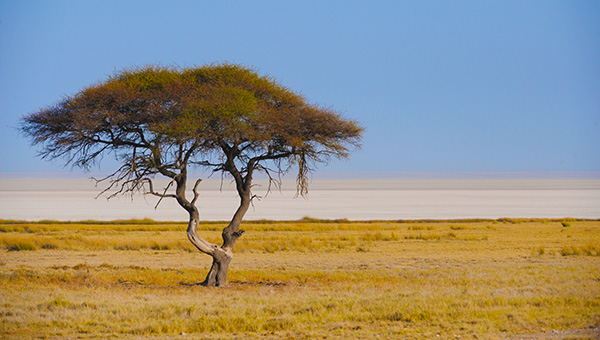
A lone tree on the edge of the Etosha salt pan
Sparse vegetation, vast pan — nowhere for a lion to hide, which is rather the point

02Where Etosha is & how to get there

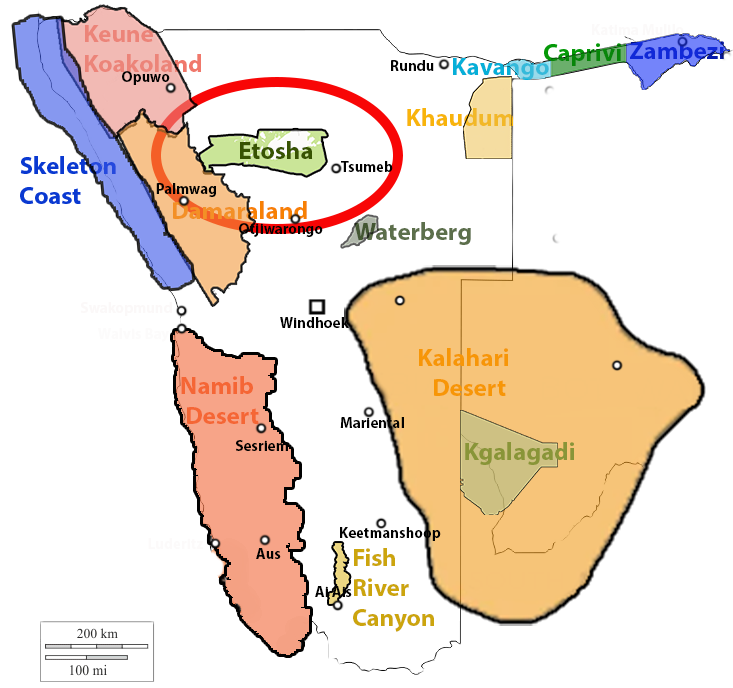
Etosha sits in the centre of northern Namibia, above the Tropic of Capricorn — north of Windhoek, north-east of Swakopmund and Walvis Bay, west of Tsumeb and Grootfontein. The nearest towns are Outjo, Tsumeb and Khorixas.

Self-drive (our recommendation)

Well-maintained tar roads connect the major hubs to the park, and a rental vehicle gives you total freedom to chase sunsets and linger at waterholes on your own schedule. See our full self-drive planning guide.

If you'd rather not drive

  • Private transfer: door-to-door and efficient, but expensive over these distances — use a reliable company, and remember you'll still need to book game drives from your accommodation
  • Go2 shuttle: reliable and cost-effective with set times and routes; drop-off is at a designated lodge, so factor a transfer if you're staying elsewhere
  • No Uber, Lyft or taxis operate anywhere around Etosha — plan accordingly
Map of Namibia showing Etosha's location relative to Windhoek, Swakopmund, Tsumeb and the main regions
Northern-central Namibia — Outjo is the classic last supply stop from the south

03Choose your adventure: self-drive vs guided

Self-drive — the freedom

Etosha's roads are well-maintained gravel, so you don't need a serious 4x4 — though height helps you see over the tall grass, which is why SUVs and bakkies rule here. Set your own pace, linger at a waterhole for hours, enjoy the privacy of your own car. You pay park entry, and the rules apply: gates close at sunset, no exceptions.

Guided — the expert eyes

From the camps you can book a seat on an open-sided vehicle with a ranger who knows where yesterday's lions went. Morning drives leave at or just after sunrise; afternoon drives run to near sunset; half- or full-day options stretch 3–10+ hours. There's no fixed route — guides adapt to recent sightings, and they're in radio contact, so a lion spotted five miles away is a lion you'll probably see.

The guided trump card: night drives, forbidden to self-drivers and run only by NWR from inside the park. Spotlights, silence, and your best shot at leopard and hyena on the hunt. Do at least one.

SUNRISE PEAK · BE AT THE GATE 12–15:00 SHADY WATERHOLE — THEY GET THIRSTY TOO DUSK SECOND PEAK · THEN NWR NIGHT DRIVES

Animal activity through the day — plan drives for the peaks, park at a waterhole through the dip

04How to book a game drive — and what it costs

Staying inside the park (NWR camps)

At Okaukuejo, Halali or Namutoni, drives are run by Namibia Wildlife Resorts. Book in person at camp reception on arrival or the evening before — or far in advance by emailing our reservations team. Pay at reception by Visa/Mastercard or cash (NAD/ZAR). Expect around N$650–750 per person for a morning, afternoon or night drive.

Staying outside the park (private lodges)

Most lodges near the gates — Etosha Village, the Gondwana properties, Onguma — run their own professional safari vehicles. Book via the lodge or through us; book early for the July–October high season. Pay in advance by secure link or transfer, or simply charge it to your room. Drives run N$990–1,550+ per person, usually including snacks, drinks and more comfortable open-air vehicles.

Park fees are extra everywhere: roughly N$150 per adult per day for foreign visitors, paid at the gate by cash or card — it can't currently be pre-paid.

NWR DRIVE (INSIDE) N$650–750 LODGE DRIVE (OUTSIDE) INCL. SNACKS & DRINKS N$990–1,550+ + PARK FEE, ALWAYS ±N$150 /ADULT/DAY AT THE GATE

Per-person game drive costs — inside is cheaper, outside is plusher, the park fee is universal

05Where to stay for the best drives

Only six camps exist inside the park, all NWR-run, and each unlocks a different slice of it. Staying inside means being on the roads the moment the gates open — and back in time for the floodlit waterholes, often the best viewing of the whole day.

  • Okaukuejo — the most central, and the first-timer's pick: its famous floodlit waterhole pulls in elephant, rhino, lion and antelope even when you never leave camp, with the productive central waterhole network on the doorstep
  • Halali — halfway between Okaukuejo and Namutoni, on the park's busiest wildlife corridors, with its own floodlit waterhole and a strong reputation for rhino
  • Namutoni — the old German fort in the east, overlooking open plains that are prime lion and cheetah country
  • Dolomite — the remote west: fewer vehicles, sweeping views from its rocky outcrop, sightings that feel earned
  • Olifantsrus — camping-only in the west, with a two-level hide over its waterhole that no other camp can match
  • Onkoshi — on stilts at the very edge of the pan, unfenced so wildlife wanders through; no floodlit waterhole, but a setting nothing else touches

Every camp, with prices and video tours, is on our NWR page — and every private lodge outside the gates is compared on the Etosha page.

Onkoshi Resort on stilts at the rim of the Etosha pan
Onkoshi — unfenced, on the pan's edge
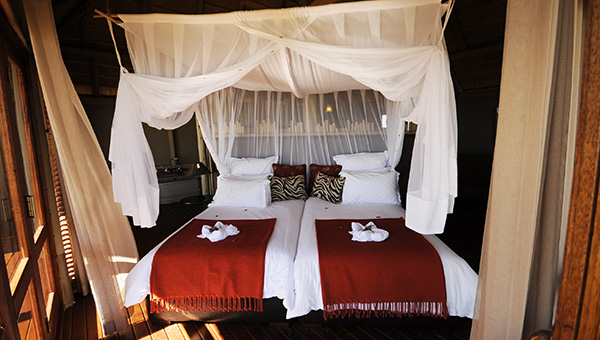
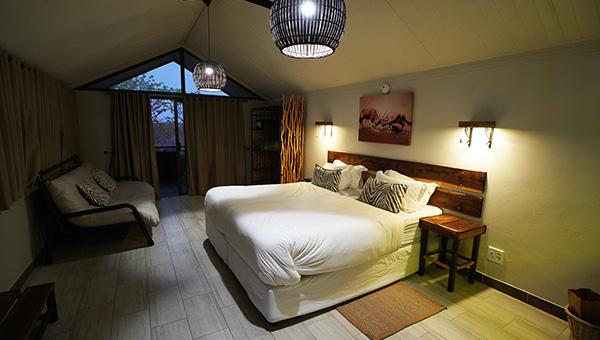
Etosha Village lodge accommodation near Anderson Gate
Or comfort just outside the gate — with the lodge's own drives

06The best waterholes, camp by camp

The park is massive, so don't drive aimlessly — plan your route from one waterhole to the next, and let the map at the top of this page set the geography.

Central · from Okaukuejo

The classic circuit

Okaukuejo camp waterhole
Floodlit and often called the world's best place to watch black rhino — no driving required
Okondeka
On the pan's edge; prime lion-pride territory
Nebrownii
Big elephant herds splashing and dust-bathing

Middle · from Halali

The predator belt

Moringa (camp waterhole)
Floodlit, rocky, quiet — the leopard-spotter's patient bet
Rietfontein
Big and reliable: lion, elephant and serious birdlife in one sitting
Goas
Often overlooked; excellent for black-faced impala and the predators that follow them

East · from Namutoni

Plains & specials

Chudop
A floating spring drawing crowds of giraffe and eland
Fisher's Pan
The rainy-season (Jan–Mar) star: flamingos and waterbirds
Klein Namutoni
Scan the surrounding bush for the tiny Damara dik-dik

07Weather, seasons & the best time to go

Dry season — May to October

The game-drive season. Rain all but stops, the bush thins, and animals crowd the waterholes. Days run a comfortable 20–28°C, but June and July mornings can touch freezing — layer up for that sunrise drive. June to September is peak, with the most consistent sightings and the floodlit waterholes at their busiest.

Green season — November to April

The park transforms: afternoon thunderstorms from November, heavier rain January to March, temperatures of 30–35°C, and after good rains the pan itself can hold water. Game spreads out and asks more patience — but migrant birds pour in, antelope calve, predator activity rises with them, and the skies are pure drama.

In one line: concentrated, easy sightings → dry winter. Dramatic skies, baby animals, birds and fewer vehicles → green season. There's no wrong Etosha, just different ones.

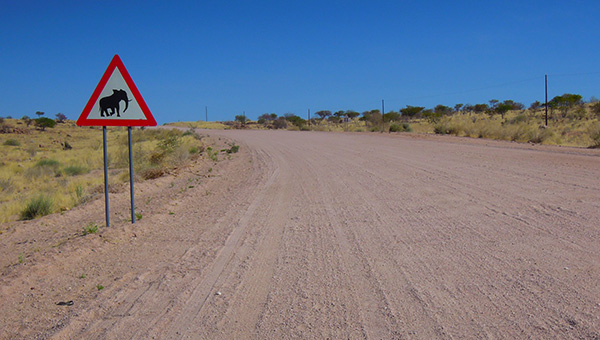
Elephant warning road sign in Namibia
Dry season: the traffic gets bigger and thirstier

08Facilities: food, Wi-Fi & staying connected

Food & supplies

The three main camps — Okaukuejo, Halali, Namutoni — each have a restaurant (buffet or à la carte, all three meals), a small shop for snacks, water and drinks, clean restrooms, swimming pools for the midday heat, and picnic spots dot the park (stay within the designated areas). Heading west? Stock up first — Olifantsrus is self-catering only and the remote camps carry little. All camps allow your own supplies and most sites have braai facilities. Fuel is currently not available at the main camps — fill up before entering.

Wi-Fi

All NWR camps offer basic Wi-Fi at reception or the restaurant — enough for WhatsApp and email, not for video calls, uploads or streaming, and generally not available in rooms. Most visitors treat the park as a chance to disconnect; we recommend it.

Cell reception

The main camps have signal of varying strength; the western camps (Dolomite, Olifantsrus) are weaker; and out on the drive routes between camps, expect little to none. Download offline maps and documents before the gate, and tell someone your plans.

09Distances & the four gates

Etosha stretches roughly 350 km east to west, and with wildlife stops and enforced speed limits, crossing it takes far longer than the map suggests. Halali sits roughly halfway between Okaukuejo and Namutoni — the natural overnight if you're traversing the park.

  • Anderson/Ombika Gate (south) — closest to Okaukuejo; the usual entry from Windhoek or the coast
  • Von Lindequist Gate (east) — closest to Namutoni; suits routes to and from Tsumeb
  • Galton Gate (west) — the door to the quiet western section, Dolomite and Olifantsrus
  • King Nehale Gate (north-east) — the quieter entry from the north

Full lodge-by-gate comparisons live on our Etosha accommodation page.

10Rules & restrictions — strict, and for good reason

  • Never leave your vehicle except at camps, designated picnic sites and hides — the lions are experts at blending into yellow grass
  • No walking in the bush; stay on marked roads
  • Gates: sunrise to sunset. Be in a camp or out of the park by closing — they mean it
  • Speed limits enforced; no drones; no feeding or disturbing wildlife
  • Single-use plastic bags are banned in the park — vehicles are checked at the gate; bring reusable bags or boxes
  • Unfenced camps limit movement after dark — follow staff instructions and signage

The meat rule (veterinary "Red Line")

To control foot-and-mouth disease: you may bring raw meat into the park from the south, but you cannot take raw or red meat out through the southern, eastern or western gates — even vacuum-packed. Officials search vehicles and fridges at exits and confiscate what they find. Buy only what you'll eat inside, or braai every last chop before you leave.

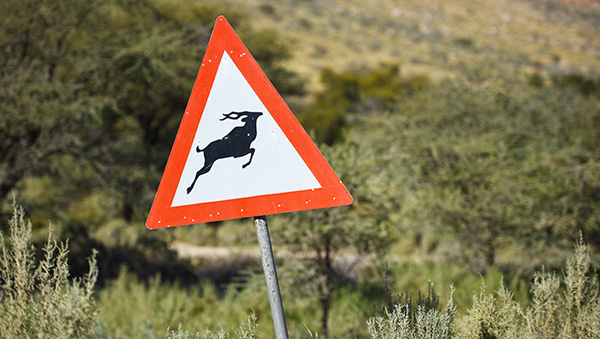
Caution kudu warning sign on a Namibian road
The rules protect them and you — and they're genuinely enforced

11Is Etosha child friendly?

Yes — and mostly because it's a self-drive park. In your own vehicle, the family sets the terms: your start times, breaks when needed, back to camp for a swim when energy dips, drives as short or long as small attention spans allow. The floodlit waterholes are a genuine children's highlight — wildlife theatre with no driving at all.

Guided drives usually carry a minimum age, often 6 or 10 — check each lodge or camp's policy before booking. When kids qualify, they tend to love them: guides who point out animals, explain behaviour and tell the stories you'd drive straight past.

12Field tips — the difference between a drive and a great drive

  • Timing is everything. Be at the camp gate the second it opens at sunrise; dawn and dusk are the activity peaks. Through the midday heat, find a shady waterhole and park — the animals get thirsty then too
  • The 30 km/h rule. The limit is 60, but at that speed you'll miss everything. Cruise at 30 and you'll spot tracks in the dust and camouflage in the scrub
  • The 20-minute rule. An empty waterhole isn't empty — it's waiting. Sit quietly for at least 20 minutes; the silence brings out the shy ones
  • Silence is golden. Engine off at the waterhole, voices down — noisy vehicles drink alone
  • Check the sightings board. Every camp keeps a board or scrapbook where travellers log the day's predator sightings — read it before you head out
  • Lower your tyre pressure a touch for the gravel — comfort and grip both improve
  • Fuel, water, sun. Fill up before the park (no fuel at the main camps currently), carry plenty of water, and respect the sun — Etosha is hot and dry most of the year

13Practical FAQs

How much does a game drive cost?

NWR drives from the camps inside the park: about N$650–750 per person (morning, afternoon or night), paid at reception by card or cash. Private lodge drives outside the gates: N$990–1,550+, usually with snacks, drinks and plusher vehicles. Park entry (±N$150 per adult per day for foreign visitors) is always extra, paid at the gate.

Can I self-drive at night?

No — self-driving ends at sunset. Night drives inside the park are NWR-only, from the camps, with spotlights; they're your best chance at hunting leopard and hyena. Outside lodges offer sundowner drives on their own reserves instead.

Do I need a 4x4?

No — the gravel is well maintained and a normal car copes. Height is the real advantage: an SUV or bakkie sees over the tall grass.

Can I take the kids?

Absolutely — self-driving makes Etosha one of Africa's most family-flexible parks. Guided drives usually set a minimum age of 6 or 10; check the specific policy before booking.

When's the best time?

Dry season (May–October) for concentrated, near-guaranteed sightings, with June–September the peak. Green season (November–April) for birds, babies, storms and solitude. Different parks, same gate.

Section 14 · Tick it off

The game-drive checklist

The day pack

Clothing & footwear

Before the gate

Gate rule worth repeating: sunrise in, sunset out, no exceptions — build your day backwards from closing time.

↑ Back to contents

Rather have it all arranged?

We'll book the camps, the drives and the dates that matter

The camps inside Etosha sell out months ahead and the good guides go first. Send us your dates and a real person who has sat at these waterholes will build your Etosha — camps, drives, route — at the properties' own rates, no booking fee.

Plan my Etosha    or WhatsApp us directly

No extra fees

You pay each place's own rate — nothing on top.

Best prices

We know where the value hides around every gate.

Expert advice

First-hand, from people who drive these waterholes.

Friendly, fast service

Real people, replies usually the same day.