Real people · No booking fees · 30+ years in Southern Africa
The complete guide · Research → plan → book → drive
How to plan a Namibia self-drive trip.
Freedom, huge skies, red dunes and wide empty roads — Namibia is one of the world's great self-drive destinations. This guide walks you through the research, planning, booking and preparation to drive its highways, gravel and desert tracks with confidence, from people who've done it for thirty years.
Plan 4–6 hours max — gravel is slower than maps say
Gravel speed
50–80 km/h depending on corrugation
Fuel rule
Never below half a tank in remote areas
The golden rule
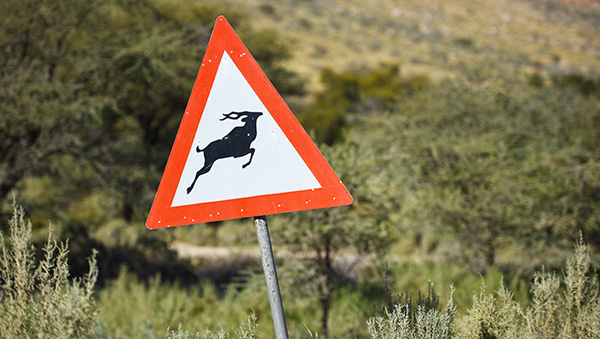
Don't drive at night — kudu own the roads
01Why choose a self-drive trip in Namibia?
Self-driving Namibia gives you unmatched flexibility: stop for sunrise dunes, pull over for a lone oryx, linger at rock art sites, and take each moment at your own pace. Low traffic, well-maintained main roads and friendly tourism infrastructure make it exceptionally suited to independent travel.
Unlike many destinations, Namibia rewards slow travel — the journey is the trip. That said, the country is big and remote in parts, and it asks for respect: distances, fuel logistics and basic vehicle sense all matter.
This guide keeps the romance — the photographable moments — while making the practical side easy.
The office for the next two weeksMap first, bookings second
02When to travel
Dry season — May to October
Cooler mornings and evenings, excellent wildlife viewing as game concentrates at waterholes, and predictable roads. The classic window for Etosha and for tracking desert elephants in Damaraland; days are comfortable for hiking and photography.
Green season — November to April
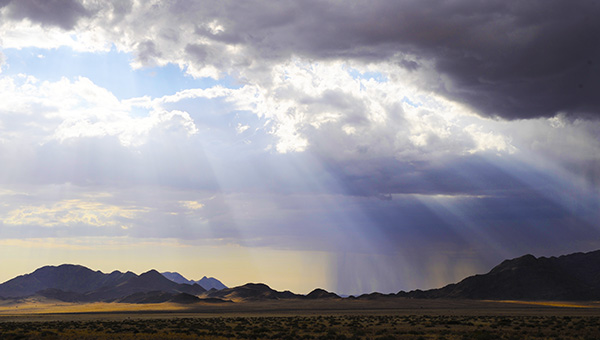
Warmer, with brief dramatic afternoon storms, lush scenery and fewer tourists. Dirt roads can turn muddy after rain and some remote tracks become impassable; birdlife is abundant and some years bring wildflowers.
Shoulder months — April & November
Lower prices with a good weather balance — a sweet spot for photographers who want dramatic skies without peak-season rates.
Our rule of thumb: desert photography and predictable roads → May to September. Lower prices and green landscapes, with some washout risk → November to March.
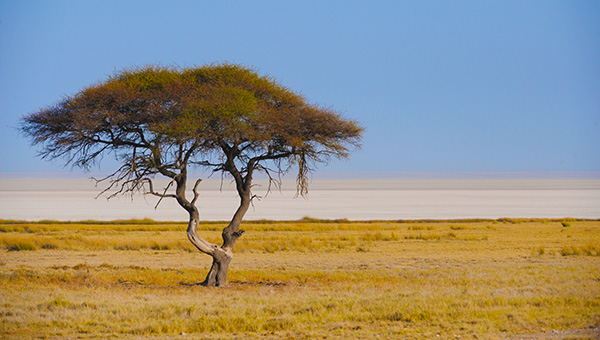
Etosha in the dry — game finds the water, you find the game
03Research: understand the scale, learn the roads
Namibia is huge. Distances between highlights often run 300–500 km, and at gravel speeds progress is slower than any map suggests. Plan realistic daily drives — 4–5 hours is a comfortable maximum for most travellers.
Then decide what you're really there for — wildlife, dunes and photography, cultural encounters, or deep wilderness — because that choice shapes both your vehicle and your route. The common loop is Windhoek → Sossusvlei → Swakopmund → Damaraland → Etosha → Windhoek; extended trips add the Skeleton Coast, Kaokoland, the Zambezi strip, Fish River Canyon, Lüderitz, the Kalahari, Aus or Waterberg.
Namibia's three road types — the letter on the map tells you what you're in for
300–500 km between highlights — the emptiness is the point
04Planning your route and daily rhythm
Map first, bookings second. Sketch a rough route before you book anything: start and end points (usually Windhoek in and out), the major stops, and where fuel, supplies and food happen along the way.
Gravel averages 60–80 km/h in good condition — often slower
4–6 hours' driving a day maximum for comfort and photo stops
Add slack for punctures, scenic pull-overs and wildlife on the road
14 days (comfortable): a day extra at each major stop, plus Skeleton Coast or Waterberg — full day-by-day below
21 days (explorer): add Kaokoland, Fish River Canyon and the Zambezi strip
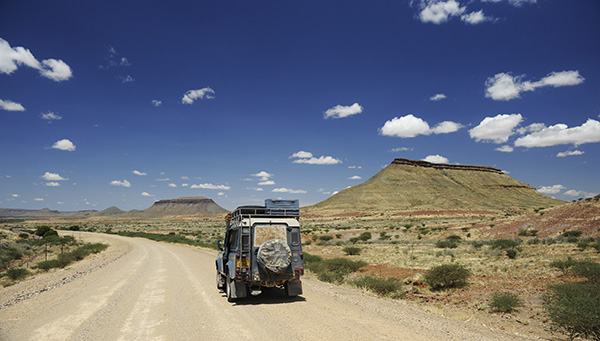
Kaokoland — explorer-itinerary territory, and proper 4x4 country
05Vehicle & rental — the single most important decision
2×4 or 4×4?
A 4×4 (Toyota Hilux, Ford Ranger class) is our recommendation for most trips: higher clearance, capability on rough tracks, tyre-pressure flexibility for sand, better game-viewing height and more space. A 2×4 or SUV manages the main roads and headline sights — Sossusvlei, Etosha — but rules out the Skeleton Coast interior, Palmwag, Kaokoland and remote riverbeds.
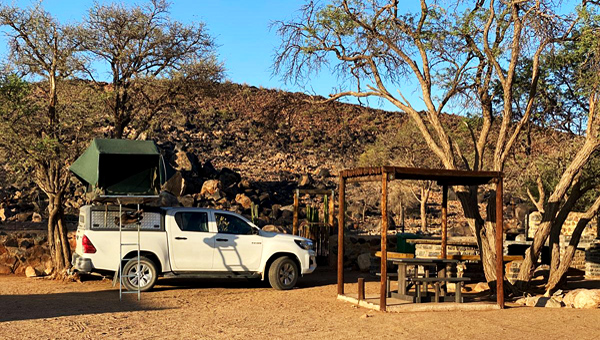
For camping road trips, look for a properly camping-equipped vehicle: dual battery system, a decent fridge, two spare tyres and a rooftop tent.
The rental features that matter
Unlimited kilometres — distances here eat capped deals alive
Super insurance (collision & theft): take the maximum cover offered and check the excess
Recovery kit: a jack rated for the vehicle, two spares, wheel spanner
Long-range or dual fuel tanks for the remote legs
On collection, take your time: test brakes, lights, spares and tools; photograph every existing scratch into the contract; and for camping vehicles, have them demonstrate the tents, gas and batteries. A good rental company will insist on showing you — that's a sign you chose well.
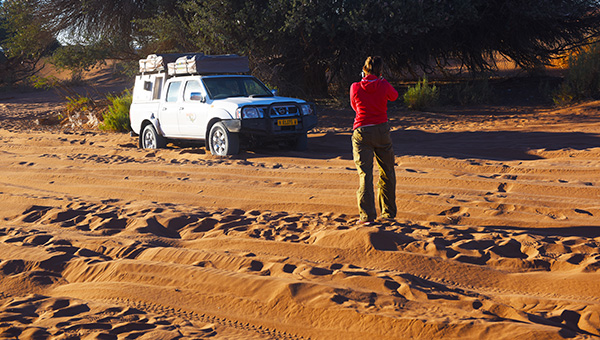
Why the vehicle decision matters — deep sand at Sossusvlei collects the optimistic
06Booking — accommodation, tours & permits
Book these early
Inside Etosha: only six places to stay exist inside the park — the NWR camps fill months ahead
Inside the park at Sossusvlei: two lodges and two campsites, heavily booked May–October
Damaraland: the popular camps have very limited rooms
The coast in December: everyone heads to the sea for the holidays
Mix your stays: park restcamps for early gate access, private lodges for comfort, campsites to save money and sleep closer to the wild.
Activities that sell out
Hot-air ballooning over the Namib
Sandwich Harbour 4×4 & boat combos from Swakopmund / Walvis Bay
Guided desert-elephant or rhino tracking in Damaraland / Palmwag
Scenic flights over the desert, Skeleton Coast or Damaraland
Permits
Etosha, Skeleton Coast and Namib-Naukluft (Sesriem/Sossusvlei) entry fees are paid at the gates — there's currently no way to pre-pay. Special permits for the northern Skeleton Coast, Sandwich Harbour and the Sperrgebiet are only issued at MEFT offices — plan those in advance.
Private lodges for comfort……camps and guestfarms for value — mix both
07Preparation — documents & admin
Passport: valid 6+ months, two clear pages, plus photocopies
Driver's licence: an English-language licence is generally fine for Namibia — check whether your rental company also wants an International Driving Permit
The credit card used for the rental deposit — some companies insist on seeing that exact card
Travel insurance with medical evacuation cover — most lodges won't refund cancellations or delays
Emergency contact list: insurance policy number, booking agent, rental company
One insurance rule that surprises people: don't buy car cover from home. Namibian rental companies only rent vehicles with their own Namibian insurance, designed for the country's unique conditions — take their super cover for peace of mind, and if you're towing, confirm the trailer is covered.
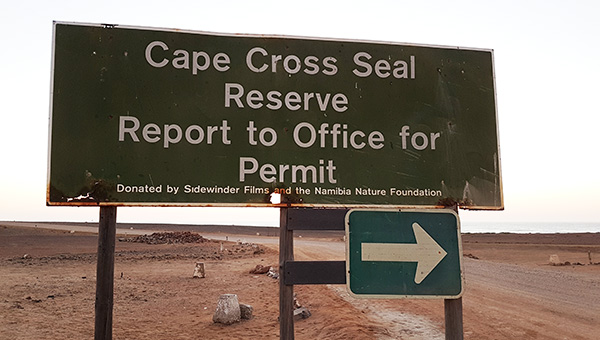
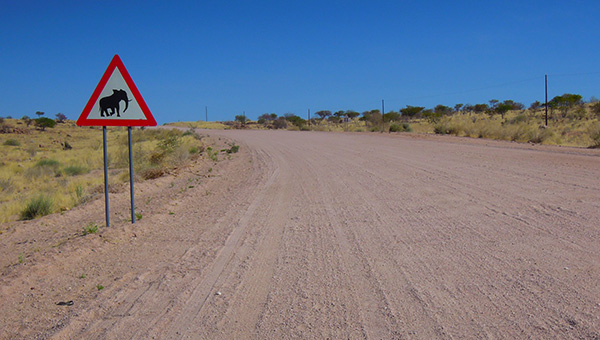
Paperwork done, signs like these stop being stressful and start being photogenic
08Packing & vehicle gear
Clothing: layers for hot days and cold desert nights — lightweight long-sleeved shirts for sun, trousers for dust and thorns, a proper warm jacket for early mornings and winter nights, plus hat, sunglasses and high-SPF sunscreen. Closed walking shoes and light hiking boots cover the ground.
Electronics: camera with backup batteries and big memory cards, phone, power bank and cables, Type M (South African) plug adapters, and a headlamp with spare batteries.
First aid: a comprehensive kit including supplies for infection management, electrolytes, anti-diarrhoeal, any antibiotics your doctor recommends, and prescriptions carried with a copy from your doctor.
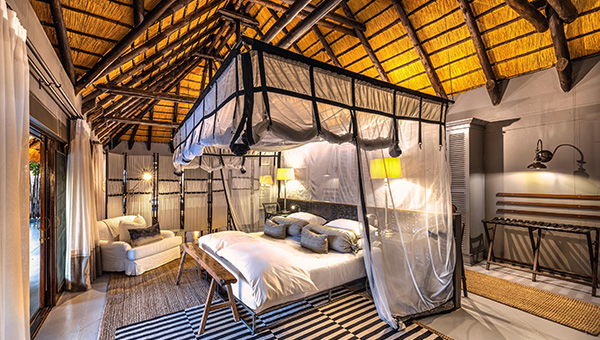
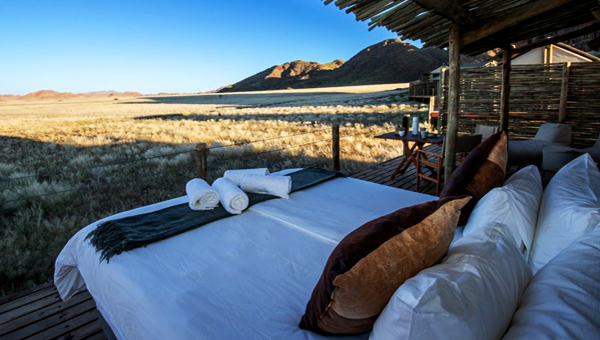
Camping kit done right — the checklist below covers every itemOr let the camp bring the canvas
09Final checks
Reconfirm the car: booking, pick-up and drop-off times, insurance level
Reconfirm key stays and activities: balloon, Sandwich Harbour, guided tracking
Print or download offline copies of every voucher — car hire, activities, accommodation
Vehicle familiarity: know how to change a tyre and the basics of gravel driving before you need to
Leave your itinerary at home: share the day-by-day plan and vehicle registration with a reliable contact
The 72-hours-before list — bank notifications, charging everything, the waterproof document envelope — is its own section of the checklist below, printable on its own page.
10On the road — driving habits, safety & troubleshooting
The daily routine
Start early — sunrise starts beat the heat and catch the best light
Check tyres every morning and after long gravel sections
Walk around the vehicle daily: loose bolts, fluid leaks, tyre damage
Fuel above half a tank in remote areas — top up whenever you can
Gravel driving basics
Lower tyre pressures for comfort and grip on corrugated washboard — and lower your speed to match conditions (50–80 km/h); excess speed is what breaks vehicles
No sudden braking or sharp steering — loose gravel halves your grip
Blowout? Pull over safely, triangles out, chocks under the wheels, gloves on
Wildlife & park etiquette
Inside Etosha you may not leave your vehicle except at restcamps, designated toilet stops and the gates
Keep a respectful distance — never drive right up to an animal, never feed wildlife
Stay on marked roads in all parks and nature areas
Avoid night driving. If you truly must: slow right down, scan for animals, dipped lights in fog
If you break down
Stay with the vehicle — it's your shelter and your water supply. Call the rental company's assistance line; with no reception, do not walk for help — wait, flag down a passing vehicle, and have them carry a message to the rental company or your next accommodation.
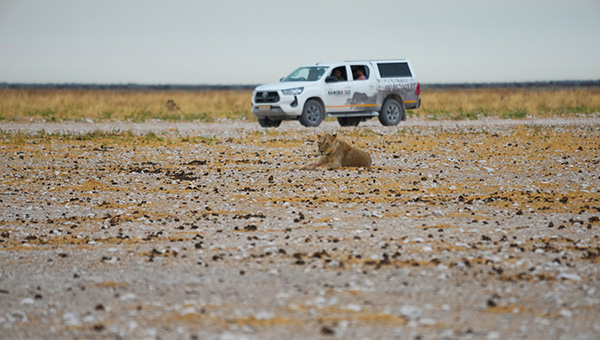
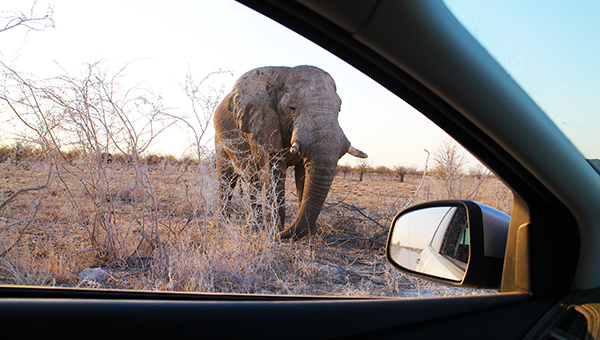
The reason for the no-night-driving rule, on a signpostSome traffic outranks youRespectful distance — sometimes they set it, not you
11Accommodation & food logistics
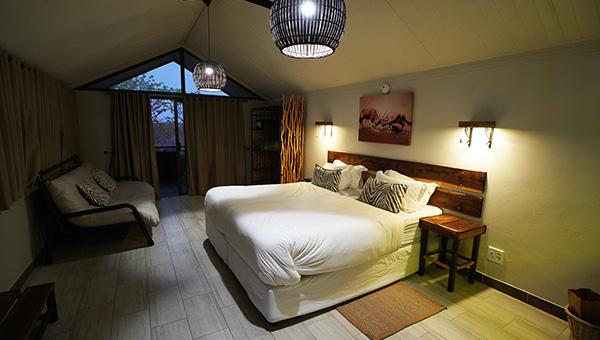
Park restcamps (Etosha, Sesriem) buy early gate access and honest comfort; private lodges add polish, guides and often meals; campsites are the budget-friendly, often most scenic option. The best trips mix all three.
Stock up in the bigger towns — Windhoek, Swakopmund, Outjo — for groceries
Many lodges welcome campers to their restaurant — check each place; it's the best of both worlds
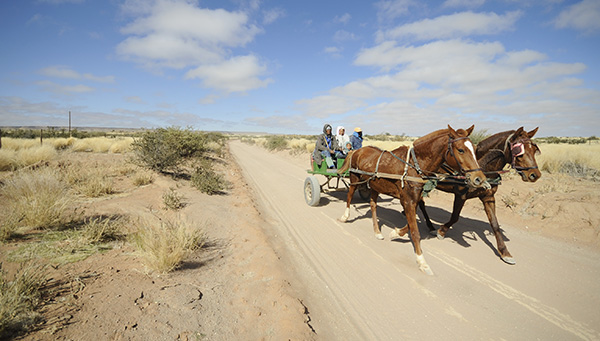
Town stops are for supplies — and for everything you'll meet on the way
12Budgeting — what to expect
The big costs, in order: car rental and insurance (the largest single item), fuel (distances are vast), accommodation (a huge range — this is where an agent who knows all the good places earns their keep), park fees (per person and per vehicle, per 24 hours in the park), and activities like ballooning, tracking and scenic flights.
Rough daily bands, per person, including car hire — Namibia scales from backpacker to once-in-a-lifetime
13Practical FAQs
Is self-drive safe in Namibia?
Generally yes — it's one of Africa's most self-drive friendly countries. Safety means preparation: a reliable vehicle, adequate water, respecting wildlife and distances, and not driving at night.
Do I need a 4×4?
For the classic routes (Sossusvlei, Etosha) a 2×4 works. For Damaraland's rough tracks, Kaokoland, the Skeleton Coast interior and remote riverbeds, a 4×4 is strongly recommended — and it makes all the gravel more comfortable.
How common are tyre punctures?
More common than you'd think, especially after rough gravel. Carry at least one spare and know how to change it; for remote routes choose rentals with a second spare or roadside assistance included.
Can I cross into Botswana or South Africa?
Usually — but only if arranged with the rental company at booking. Border paperwork, cross-border fees and one-way rentals all cost extra and can't be sorted at the border post.
Can I use my phone's GPS?
Offline maps work well — download Google offline areas or Maps.me before leaving town. Signal disappears for long stretches, so never rely on live coverage, and keep a paper map as backup.
14The balanced 14-day itinerary
The loop from the diagram at the top of this page, day by day — a classic Namibia self-drive that we tailor endlessly for travellers. Use it as your base.
Day
Where
The plan
Day 1
Windhoek
Arrive, collect the vehicle, last supplies — and a first kudu steak
Day 2
To Sossusvlei
3–5 hrs via Solitaire to Sesriem; sunset at the dunes
Day 3
Sossusvlei
Sunrise at Dune 45 or Big Daddy & Deadvlei; Sesriem Canyon in the afternoon
Day 4
To Swakopmund
The scenic C14 via Solitaire — stop for the apple pie
Day 5
Swakopmund / Walvis Bay
Sandboarding, boat trip, Sandwich Harbour — or just relax
Day 6
To Damaraland
Via the Skeleton Coast or Spitzkoppe
Day 7
Damaraland
Twyfelfontein rock art, Organ Pipes, Burnt Mountain
Day 8
Damaraland
Desert-elephant tracking in the Palmwag area
Day 9
To Etosha
Enter via the western (Galton) or southern (Anderson) gate
Days 10–11
Etosha
Game drives — self-drive the waterholes or join guided drives
Day 12
Central Namibia
Waterberg, or Otjiwarongo's optional cat rescue centre
Day 13
Windhoek
Return, relax, eat out, final shopping
Day 14
Depart
Drop the vehicle, fly home planning the next one
This is the trip we tailor most — more dunes, more cats, more coast, more wilderness, whatever your version looks like. Send us your outline and we'll shape and price it free of charge.
Section 15 · Tick it off
The self-drive Namibia checklist
Documents & admin
Vehicle & recovery gear
Camping & sleeping
Personal & clothing
Health & first aid
Electronics & navigation
Food & water
Miscellaneous
Last 72 hours
Glovebox rule: keep the vehicle manual, registration and rental contract in there for the whole trip. Fuel above half in remote areas. If stuck: stay with the vehicle, conserve water, make yourself visible.
If you'd rather not research, plan, book and pay each place individually: send us your outline — must-see highlights, number of people, rough dates — and with 30+ years of living and working in Namibia we'll build the itinerary and price it for you, free of charge. We handle every reservation and payment.
Oh Namibia! I fell in love with your barren harsh beauty, the vast empty wilderness contrasted with the abundance of wildlife, where deserts teem with life and skeletons litter the coastline. Namibia showed me how nature thrives in the harshest areas, and each sunrise and every sunset takes my breath away. Namibia changed my life — now I want to help you visit this amazing country and change yours.
Simon & Jen · Madbookings founders