Real people · No booking fees · 30+ years in Southern Africa
Safari guide · Filming from the vehicle
Safari videography
Wildlife video is the moment before the moment: the tail flick, the head turn, the walk into shade. Cameras that are ready, tripods that are beanbags, engines that are off. Here's the craft — sequences that cut, sound that matters, and the ethical lines that keep the animals safer than your footage.
The shot-type ladder — grab all five at every serious sighting and the sequence edits itself
Rule one
Sequences beat clips — five shots per subject
Rule two
Engine off — vibration is the video sniper
The support
A beanbag on the sill beats any tripod
The ethic
Never geotag a rhino — post the footage, not the pin
01Why safari video is its own thing
A photograph is a decisive moment. A wildlife video clip is the ten seconds around it — the walk in, the pause, the ear-flick, the walk out. Editing wildlife means having the room around the moment, which means holding shots longer than feels comfortable and cutting between deliberate frames, not shaky ones.
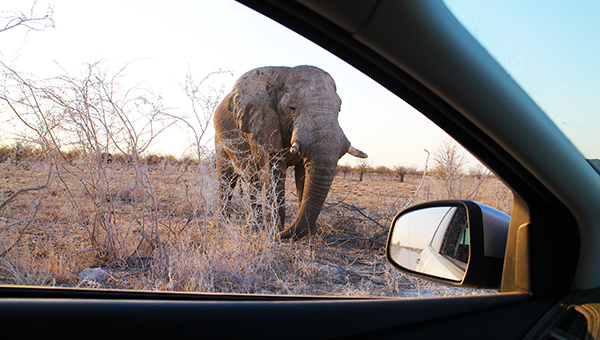
The vehicle is the second big difference. On foot you wouldn't get close enough, from a car seat you're a stationary hide with wheels — a stability platform when the engine's off, a rolling dolly when it isn't. The rest of this guide is about using both properly.
[ 8s clip — elephant walking into frame at a waterhole, wide ]
The hide at work — they see furniture, not filmmakers
02The golden rules of wildlife video
Record more than you need. Ten seconds before the action, ten seconds after. Editors need the tail of the shot; you can always cut, you cannot uncut
Sequences, not clips. Wide, medium, tight, detail, motion — the ladder above. One sighting, five shots, one sequence that cuts
Engine off means camera on. Vibration turns a 400mm clip into abstract art. The engine-off rule from the game drives guide is a sharpness rule for stills and an existence rule for video
Hold longer than feels right. Fifteen seconds locked on a resting lion is far more useful than three seconds of everything
Sound matters more than you think. Ambient birdsong, distant elephant rumble, hooves in dust — capture 30 seconds of wild track at every sighting, even if you never plan to sync it
Shoot behaviour, not existence. "A lion" is a nature-documentary blank. A lion yawning, panting, marking territory or listening for something you can't hear is a scene
03The vehicle is your hide — and your dolly
Beanbag on the sill. Silent, stable, instantly repositionable. Buy a bag of rice or beans at the first supermarket; decant later. A folded fleece over a half-raised window is the emergency version
Engine off, ignition off. Vibration wrecks telephoto video worst of all; a running diesel make even 200mm unusable
Stay inside the vehicle silhouette. Animals see the car as one harmless shape — a human head or long lens leaning out breaks the illusion, and often the park rules
Turn the vehicle into a dolly. On a private-reserve drive, ask the guide to crawl the vehicle at 5 km/h parallel to a walking herd for a smooth tracking shot no tripod can match
ND is your friend. Bright bush + 1/50 shutter = blown highlights unless you cut light with a filter. A variable ND is the one-thing-if-I-had-to-pick answer
Dust wake discipline. Another vehicle's dust hangs for a minute — wait it out before rolling, and keep the camera under a cover between sightings
Tell the guide you're filming. It changes how they park — for light, for angle, and for how long they'll linger. A photographer briefing at the start of the drive is worth more than any lens.
[ Photo — beanbag on window sill, long lens resting on it ]
[ Photo — tracking shot from a slow-moving vehicle beside a herd ]
04Sound — the half of your film you can't see
Wildlife video without proper sound is a screensaver. The good news: Namibia and Botswana are quiet countries, and a modest audio kit goes a long way.
An on-camera shotgun with a fluffy windshield ("dead cat") is the single biggest upgrade under $100 — wind noise otherwise ruins every open-vehicle clip
Wild track at every sighting: point the mic away from the vehicle, roll 30 seconds of nothing. Birds, wind, distant water — pure gold in the edit
Kill camera vibration to the mic: a soft mount or even a hand under the camera cuts a lot of low-frequency rumble
Record ambience separately if you can — a small recorder on a beanbag while you shoot with the camera gets you a stereo scene, not a mono clip
Never bait, whistle, clap or play calls to get a reaction. It's harmful, banned, and instantly obvious in the edit anyway
[ Photo — camera with shotgun mic and windshield on the dashboard ]
[ Photo — small field recorder on a beanbag, wearing headphones ]
05Settings & tactics by kit
The ladder at the top of this page is what everybody climbs. How you climb it depends on the tool in your hand.
🎥 Cinema / mirrorless shooters
Frame rate: 24 or 25 fps as baseline; 50 or 60 fps for smooth conform slo-mo; 100 or 120 fps for the tail-flick, dust-kick, action-freeze inserts
Shutter = 2× fps (180° rule) — 25 fps → 1/50s, 50 fps → 1/100s, 120 fps → 1/250s. ND filter to hold those speeds in bright bush
Log profile for dynamic range on dark manes against bright pans; grade in post
Continuous AF + animal-eye if your body has it; otherwise pre-focus and hold
Two cards a day, offload every evening, never wipe until offloaded twice — Namibia dust is not the same as home
Timecode across cameras if you shoot with two — hours saved in the edit
Rain cover doubles as dust cover — use it around gravel roads and dry pans
Lens hood or Matte box — Essential to keep that stray sunlight from hitting the front of the lens
📱 Phone / vlog shooters
Shoot horizontal 4K at 24 or 30 fps, even if the edit is vertical — you can crop to 9:16, you can't uncrop
Lock exposure & white balance per clip (tap-and-hold) — auto AWB will strobe as pale sand fills the frame
Optical zoom only. Digital zoom mush is the #1 phone safari heartbreak; get closer with the vehicle or crop later
Both hands, elbows in, breathe out on record — phone stabilisation loves smooth pans and hates twitches
Small gimbal transforms phone safari video; a pocket tripod on the sill lets you set-and-let-roll for locked shots
Waterholes are your friend: game comes to you, well inside phone range — especially the floodlit camp waterholes at night
Pull frame-grabs from 4K for social stills — the phone's video stabilisation often beats its zoomed photos
Clip-on wired lav mic is transformative if you talk to camera; on-camera phone mics are your film's ceiling
06Ethics — the footage that shouldn't exist
Never geotag rhino footage. Location metadata on rhino video has been used by poachers to find animals. Strip GPS from every file, never name the waterhole, and delay posting from the road by a day. Post the footage, not the pin — same rule for every endangered species
The animal is your director. If it stopped what it was doing to watch you, you're too close — end the shot, back off, and if it walks away don't chase it. No clip is worth a stressed animal or an abandoned kill
Never bait, call, or play sound to trigger reactions. Banned, harmful, and lazy craft — real behaviour is far more compelling anyway
Drones on safari: no. Banned in Etosha and every Namibian national park; banned or heavily restricted in most Southern African reserves. Even where legal, never fly at a wildlife sighting — the sound alone panics ungulates and predators
People aren't wildlife. The ask-first rule from our Namibia photography guide applies in every village and at every roadside — with cameras rolling, filming children needs a parent's explicit yes
Tick it off
The safari videography checklists
The rig
In-vehicle setup
Shot list · Etosha waterhole (day)
Shot list · Floodlit waterhole (night)
Shot list · Okavango mokoro / boat
The morning ritual worth memorising: fresh cards · full batteries · lens wiped · ND ready · frame rate + shutter set · beanbag on the sill · shotgun on. Then be at the gate at sunrise.
07Safari videography FAQs
What camera settings for wildlife video?
24 or 25 fps for cinematic base, 50–60 fps for smooth slo-mo when conformed, 100–120 fps for dramatic action inserts. Pair with a shutter roughly double the fps (180° rule): 25 → 1/50s, 50 → 1/100s, 120 → 1/250s. Add a variable ND to hold those speeds in bright bush.
Can I film wildlife well with a phone?
Yes — especially at waterholes and floodlit camp waterholes where animals come close. Shoot horizontal 4K, lock exposure and white balance per clip, avoid digital zoom past optical range, and pull frame-grabs from 4K for still-quality photos as a bonus.
Do I need a permit to film in Etosha or other parks?
Personal holiday video, no. Commercial filming in national parks and on NWR properties needs a MEFT/NWR permit and fee arranged in advance. Pro-looking rigs can prompt questions even for personal use — carry a short written statement of purpose.
Can I fly a drone on safari?
No — banned in Etosha and every Namibian national park, prohibited or heavily restricted in most Southern African reserves. Elsewhere in Namibia needs NCAA prior authorisation. Never fly a drone at a wildlife sighting anywhere; the sound alone panics animals.
Why shouldn't I geotag wildlife footage?
Location data on rhino and other endangered-species video has been used by poachers to find animals. Strip GPS, keep the waterhole name to yourself, and delay posting from the road. The footage is the trophy — the pin is a threat.
The best camera position is the right lodge
We build safaris around what you're filming
Floodlit-waterhole camps for the night sequences, private reserves where the guide will crawl the vehicle for a tracking shot, hides at eye level, permits sorted where needed — tell us the film you're making and a real person will build the trip that makes it possible. No booking fees, ever.