Namib desert waypoint guide · 2027 edition · free & printable
Most people stop in Solitaire because they have to — it's one of the only reliable fuel points between the Sossusvlei dunes and the coast. They stay longer because it feels good to. A handful of buildings at the C14/C19 junction, rusted vintage cars sinking photogenically into the desert, and a bakery whose apple pie has become a genuine Namibian road-trip ritual. Here's everything about Namibia's most character-filled waypoint: the stop itself, every bed in and around it, and how it fits your route to the dunes.
A settlement born of necessity
Solitaire grew out of necessity rather than ambition: a fuel pump, a bakery and a handful of buildings serving travellers moving between Windhoek, Swakopmund, Sossusvlei and the Namib-Naukluft. There are no bustling streets, no shopping centres, no long list of activities — and that's exactly the point. What Solitaire offers is a reliable refuelling point in a remote stretch of Namibia, a chance to rest before or after long gravel driving, one of the country's most famous road-trip rituals in the apple pie, and a slow, grounded pause in an otherwise vast landscape.
It's tiny, but it has personality to spare. The rusted vintage car wrecks scattered beside the road have become one of Namibia's most recognisable photo stops. McGregor's Bakery has turned pastry into legend. And the setting — arid plains, rocky foothills, unfenced wilderness where oryx and springbok wander free — means every direction you look feels like an open-air painting of sand, sky and light. Come dark, the remoteness pays its real dividend: some of the clearest night skies on earth, made for astrophotography or simply looking up from a lodge courtyard.


The desert pivot point
Solitaire sits at the junction of the C14 and C19 gravel roads, about 250 km south-west of Windhoek and 80 km from the Sesriem/Sossusvlei entrance — a true desert pivot point where you refuel, grab coffee, check the map and reassess before pushing on. Public transport is effectively non-existent out here, so how you arrive shapes the whole trip.
Self-drive is by far the best and most common way: roads are well signposted, traffic is light, and a rental gives you the freedom to stop at the scenic passes. A 4x4 is ideal but not required — in dry conditions a carefully driven sedan handles the main gravel, though deep sand beyond Sesriem makes a 4x4 valuable if Sossusvlei is next. Go slow, allow extra time on corrugations. Guided multi-day tours from Windhoek and Swakopmund include Solitaire en route to the dunes and remove the driving entirely. Shuttles exist only as pre-booked private transfers through lodges; informal minibuses don't reliably serve Solitaire; and there's no commercial airport — even fly-in guests finish by road.
The two approach passes from the coast — Gaub and Kuiseb on the C14 — and the Spreetshoogte Pass from Windhoek (steep but spectacular) are highlights in their own right. Gravel technique and route planning live in our self-drive guide.
Fuel availability is what makes Solitaire strategically important — one of the few reliable pumps in the region, which is why every route seems to funnel through here. Never pass it below half a tank.
Everything you actually need
Roll into Solitaire and you quickly realise the whole place exists to support travellers crossing the sands — and does it with more charm than size. It isn't a town, but it has everything you realistically need.
Solitaire Petrol & Diesel is the essential stop — truly one of the only fuel points between the Namib dunes and the coast. Fill up if you're continuing to Sossusvlei or beyond, and use the moment well: tyre repairs and basic service are usually available too, handy if the gravel has claimed a flat. The attached general dealer stocks water, cold drinks, ice cream, snacks and basic supplies for the road or a low-running camp fridge.
McGregor's Bakery is the legend: freshly baked bread, pastries, sandwiches, proper espresso — and the iconic apple pie (technically closer to a strudel) that turns a fuel stop into a highlight of the journey. Best enjoyed warm, with coffee, at an unhurried pace, with desert vistas all around. For a fuller sit-down meal, the restaurant near Solitaire Lodge — Café van der Lee — serves lunch and dinner: salads, pizzas, burgers, fish and chips, wine and draught beer with sweeping desert views. The lodge-area shop adds more groceries, cold drinks and even wine or beer for those staying nearby.
Cold drinks and bakery treats go fast on hot desert days — plan your stop earlier in the day if you can, and note that services keep limited hours, especially weekends and holidays. This is not a 24/7 place; that's part of its charm.

The art of the pause
Solitaire's activity list is short and perfect. Eat the apple pie — McGregor's has earned its legend, and the ritual matters as much as the pastry. Refuel properly — tank full, tyre pressures checked, breath taken; distances are long and fuel stops few. Photograph the vintage cars — the rusted wrecks tell quiet stories of time, weather and desert life, and they've become Solitaire's signature image, best in the low golden light.
Then the underrated ones. Sit and observe: this is not a rushed stop — watch travellers come and go, listen to the wind, and notice how silence feels when no traffic breaks it. And look for wildlife: birds and small desert animals move through in the early morning and late afternoon, and the unfenced plains around the settlement carry free-roaming oryx and springbok. Solitaire teaches the skill every Namibia trip rewards: slowing down.
Sleep at the junction — or just beyond it
Solitaire itself offers very limited accommodation — most travellers sleep in the beautiful desert country nearby, choosing a bed based on where they're heading next rather than pure proximity. Everything here puts you within striking distance of a dawn start at Sesriem. Options are few and fill quickly, so book ahead. We book them all at the properties' own rates, no fees on top.
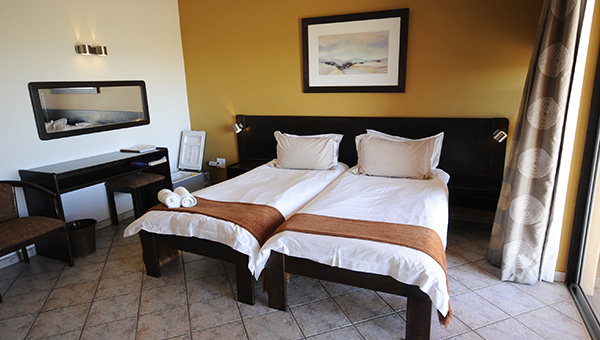
Ideal for travellers who want to refuel early and roll out at sunrise. Simple, comfortable desert-style rooms rather than luxury — with the bakery and fuel pump on your doorstep.
Check rates & book →
A simple campground behind the Roadhouse with shared bathrooms — and full use of the café and shop a short stroll away. The budget way to wake up at the junction.
Check rates & book →
A popular overnight for travellers heading to the dunes — an early start the next morning while avoiding the busiest accommodation hubs closer in.
Check rates & book →
Comfortable rooms in the hills near the settlement, with wide views over the desert plains — close enough for a bakery breakfast, quiet enough for the stars.
Check rates & book →
A relaxed lodge and camping spot on the route between Solitaire and the dunes — desert chalets, sundowner views and an easy run to the Sesriem gate.
Check rates & book →
Classic Namibian guest-farm hospitality beneath the Naukluft mountains — home cooking, walking trails and the unhurried rhythm of a working farm.
Check rates & book →
A warm, family-run guest farm on the road to the dunes, long loved by self-drivers for its hospitality, farm dinners and honest desert quiet.
Check rates & book →
A well-equipped lodge set dramatically at the foot of the ancient Namib's fossilised dunes — pool, restaurant and sundowner drives onto the petrified sands.
Check rates & book →
The modern, stylish take on the desert lodge — cool design, a famously photogenic sundowner terrace, and pink desert light that made it Instagram's favourite on this road.
Check rates & book →
Campsites in the fossil-dune country with the neighbouring lodge's facilities within reach — camping with a comfortable safety net.
Check rates & book →
Fully equipped, pre-pitched tents — beds, bedding and camp kitchen ready on arrival. All the under-canvas atmosphere with none of the packing.
Check rates & book →
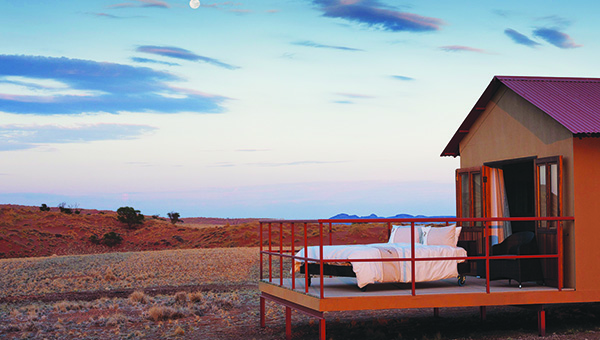
Cabins on a dune ridge where the beds roll out onto the deck — falling asleep under the full Namib sky is the whole, unforgettable point.
Check rates & book →Rule of thumb: book well ahead in peak months, choose your bed by tomorrow's destination, and always factor fuel, daylight and road conditions into the plan. All rates and availability on our Sossusvlei & area accommodation page, or just ask us.
Big skies, dramatic light
Solitaire runs a classic central-Namibian desert climate: very dry, endlessly sunny, with strong swings between day and night. The dry season (May–October) is winter and arguably the most comfortable time — sunny days of 18–25°C, ideal for road-tripping and coffee outside the bakery. But mornings and evenings turn properly cold, especially June to August, when nights can approach freezing: campers need warm layers, a real sleeping bag, maybe even gloves for sunrise. Rain is virtually unheard of, and the crystal-dry air makes for phenomenal stargazing. This is peak season on the Sossusvlei route.
Summer (November–April) brings heat — often above 35°C, with January and February the fiercest — plus short, dramatic afternoon thunderstorms between January and March that briefly green the desert and pile the sky with cloud. It's a beautiful, moodier side of the Namib, though heavy rain can occasionally affect the gravel routes.
What makes the climate here special is the swing — hot afternoon to cold evening in the same winter day — and the light: the desert atmosphere produces deep, rich golden-hour tones that photographers plan whole days around. Whenever you come, early mornings and late afternoons are best for rest, photos and pie.
The full month-by-month national picture is in our When to Visit Namibia guide.
Self-sufficiency is the rule
Even an hour in Solitaire rewards preparation, because everything around it is long, dry and remote. The essentials: drinking water (more than feels necessary), cash (card machines aren't always reliable), sun protection — hat, sunscreen, sunglasses — offline maps or GPS, and a fuel buffer if you're covering long distances. Self-sufficiency isn't a virtue in this part of Namibia; it's the entry requirement.
The season doesn't change the one universal rule: pack layers. Even summer evenings cool sharply, and winter delivers proper cold after dark. The Namibian sun is strong in every month, so the hat-sunscreen-sunglasses trio rides along year-round.
On your feet: the terrain is classic desert — loose gravel, sandy patches, rocky outcrops, baked earth that gets hot in the sun. Sturdy closed shoes or light hikers are perfect for desert walks and give grip on gravel while keeping dust, pebbles and heat out. For popping into the bakery or the shop, comfortable sneakers or solid sandals are fine on the uneven ground. Flip-flops earn their keep at the lodge or campsite afterwards — not on walks, where they offer no support or protection.
The practical realities
Connectivity: major lodges around Solitaire offer Wi-Fi in common areas — sometimes rooms, more often near reception or the restaurant — at speeds fit for email, messaging and light browsing, not streaming or big uploads. Smaller camps and guest farms run satellite or limited rural links; slower still. In the settlement itself, mobile reception exists but is hit-and-miss: MTC generally does best, with at least intermittent signal at the fuel station and main buildings, fading fast as you move into the surrounding desert or off-grid campsites. The playbook: buy an MTC SIM in Windhoek or Swakopmund before you come, download maps, plans, tickets and contacts ahead, and then — honestly — enjoy the break. Being a little offline is part of Solitaire's charm.
Money: think friendly desert pit-stop, not banked town. Cards (Visa and Mastercard most widely) work at the fuel station, McGregor's and the larger lodges — when machines and signal cooperate, which isn't guaranteed. Bring cash (NAD or ZAR) for small purchases, fuel, snacks and roadside treats, and know that ATMs are limited to nonexistent here: draw enough in Windhoek, Swakopmund or the last major town before the desert routes. The national money picture, tipping included, is in our money & costs guide.
Bring the kids?
Happily yes — for families who enjoy nature, wide-open spaces, storytelling and simple pleasures. There are no playgrounds or kids' menus; instead the dusty open landscape becomes a giant natural playground for little explorers who love collecting rocks and clambering around old car wrecks (supervised — rusted metal and small hands need watching). The bakery is a guaranteed hit — apple pie is universal childhood joy — and the quiet roads make strolls around the settlement easy and stress-free.
The things to plan for: shade is limited, so hats and sunscreen are essential kit, and the strong desert sun and heat drain small batteries quickly — build in water breaks, shade time and unhurried stops. In short: great for adventurous, outdoors-loving kids with responsible supervision; younger children need closer support given the exposure and limited infrastructure.
Common sense, desert edition
Solitaire is relaxed, but it sits inside a fragile desert environment with a few expectations that keep the place functioning and beautiful. Much of the surrounding land belongs to local farms and businesses — stick to marked public spaces and don't wander uninvited into farmland. Stay on the main gravel and tar routes; there's no off-road playground here, and even barren-looking ground hosts delicate desert ecosystems that tyre tracks scar for decades.
Don't disturb plants, animals or heritage features — including the famous car wrecks, which are for photographing, not souvenir-hunting. Littering is a serious matter in Namibia: bins are few and service sparse, so carry trash bags and take everything with you. And if you're stopping anywhere outside a formal campsite or lodge, the default is no open fires — the vegetation is tinder-dry and sparks travel; always ask locally before lighting anything.
None of these are heavy-handed penalty rules — they're the common-sense code of a tiny place that survives because travellers treat it gently.
From people who never skip the pie
Quick answers
The apple pie at McGregor's Bakery, the rusted vintage car wrecks, and being one of the only reliable fuel stops between the dunes and the coast. Tiny place, outsized character.
About 80 km to Sesriem — 1 to 1.5 hours on generally good gravel — which is exactly why the lodges around Solitaire make such a smart base for a dawn start at the dunes.
Not to reach Solitaire — a carefully driven sedan manages the main gravel in dry conditions. A 4x4 adds comfort on corrugations and earns its keep beyond Sesriem, where deep sand guards the final stretch to Sossusvlei.
Cards work at the pump, bakery and bigger lodges — until the signal drops, which happens. Carry cash (NAD or ZAR, small notes) and draw it before the desert: ATMs here are effectively nonexistent.
Both are right. The hour gets you fuel, pie and photos; the night gets you a quieter, often better-value bed and a 1–1.5 hour run to the Sesriem gate at dawn. Book ahead either way — beds are few.
May–October for comfortable days and starry, near-freezing nights; summer works with early starts and respect for 35°C+ afternoons and the dramatic Jan–Mar thunderstorms.
The pie is waiting
The right bed at the junction for a dawn run to the dunes, the fuel stops mapped, the whole route paced for daylight — one message with your dates and direction of travel, and a real person who never drives past without stopping for pie takes it from there. No booking fees, ever.
You pay each place's own rate — nothing on top.
We know where the value hides in every region.
First-hand, from people who drive these roads.
Real people, replies usually the same day.