The complete guide · Malaria · Vaccines · Water · Sun · First aid
Namibia is one of Africa's healthier travel destinations — dry, low-density, well-organised — but "healthy" is not "no precautions". This guide covers where malaria actually is (not everywhere), which vaccines matter, what water to drink, how to survive the sun, and what belongs in the first-aid kit. Practical advice, plain language, doctor-caveats where they matter.
Malaria in Namibia is a northern issue — schematic, not to scale · confirm current advice with a travel doctor
Malaria in Namibia is caused mainly by Plasmodium falciparum, transmitted by Anopheles mosquitoes that bite between dusk and dawn. It is a serious illness — but for travellers to Namibia specifically, it's a geographically limited one. The country's dry southern desert is genuinely malaria-free; the risk is in the wetter northern strip.
The three levers you have are, in order of importance:
Symptoms can appear weeks or even months after you return home. If you get "flu" within three months of a Namibia trip that included a risk area, mention Namibia when you see your GP. Same-day blood tests exist and treatment when caught early is straightforward.
Read across the country north to south, high risk to none. If your whole itinerary sits in the malaria-free zone, prophylaxis isn't recommended — most classic Namibia self-drive trips fall entirely here.
High · Prophylaxis strongly advised
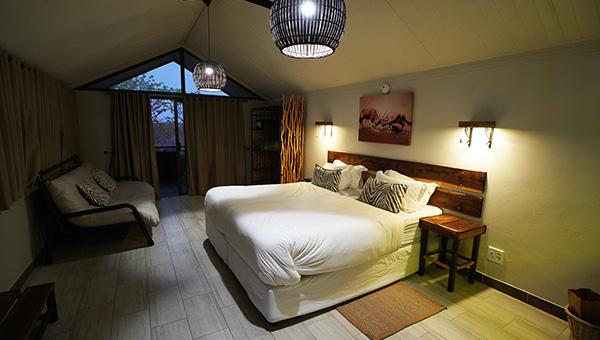
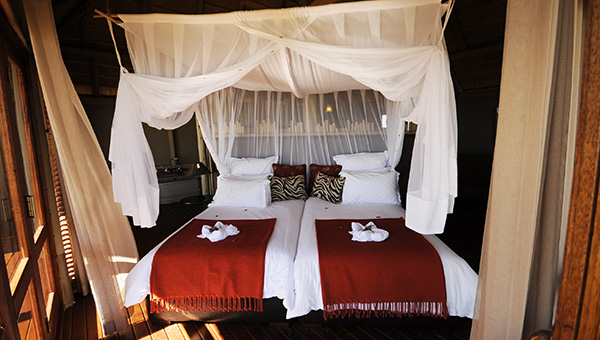
The wettest, greenest part of Namibia — perennial rivers, wetlands, mosquito habitat. Highest risk in the country, seasonal but present most of the year. If you're going to the Zambezi (Caprivi) or Kavango, plan on prophylaxis.
Katima Mulilo · Rundu · Mahango · Bwabwata · Nkasa Rupara
Moderate · Prophylaxis advised in season
The far north-west including the Kunene River, Ruacana, and the Ovamboland region north of Etosha. Wet-season risk is real; dry-season risk drops sharply.
Ruacana · Opuwo (seasonal) · Ondangwa · Oshakati
Moderate · Prophylaxis advised in season
Etosha straddles the risk boundary. The park's northern gates and camps (Namutoni, Onkoshi, King Nehale entry) sit in the seasonal risk zone during Nov–May. Southern camps are lower risk.
Namutoni · Onkoshi · Halali (seasonal) · northern gates
Low seasonal · Discuss with doctor
Okaukuejo, Dolomite and Olifantsrus sit in a low seasonal-risk band — real during peak rainy months, negligible in the dry. Many travellers here don't take prophylaxis; check your travel doctor's current guidance.
Okaukuejo · Dolomite · Olifantsrus · Otjiwarongo · Waterberg
Malaria-free · No prophylaxis needed
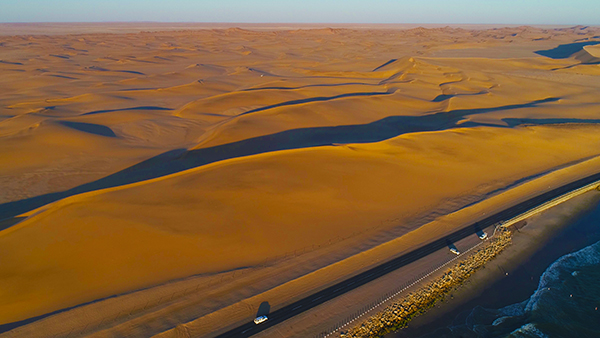
The whole classic Namibia self-drive corridor — desert, dunes, canyon country. If your trip is Windhoek → Sossusvlei → Swakopmund → southern Etosha → Windhoek, you're malaria-free the entire way.
Windhoek · Sossusvlei · Sesriem · Damaraland · Swakopmund · Walvis Bay · Lüderitz · Fish River Canyon
Malaria-free · No prophylaxis needed
The cold Benguela coastal strip is essentially mosquito-free. The desert south (Aus, Karas, Kalahari) is arid enough that malaria doesn't transmit.
Skeleton Coast · Cape Cross · Aus · Karas region · Kalahari
Even in risk zones, transmission is highly seasonal — it follows the rains. The dry winter (June–September) is the country's lowest risk period even in the north; the wet summer is when protection matters most.
| Month | Season | North (Zambezi/Kavango) | North Etosha | South/central |
|---|---|---|---|---|
| January | Wet · Peak | High | Moderate | None |
| February | Wet · Peak | High | Moderate | None |
| March | Wet · Peak | High | Moderate | None |
| April | Rains ending | High | Moderate | None |
| May | Dry begins | Moderate | Low | None |
| June | Dry winter | Low | Negligible | None |
| July | Dry winter | Low | Negligible | None |
| August | Dry winter | Low | Negligible | None |
| September | Dry winter | Low | Negligible | None |
| October | Dry ending | Moderate | Low | None |
| November | Rains begin | High | Moderate | None |
| December | Wet | High | Moderate | None |
The strong pattern: November–May is transmission season and January–April is peak. A June–August trip through Zambezi and Kavango is still lower risk than a January visit to just the northern edge of Etosha. Prophylaxis decisions should factor month as well as region.
Three drugs are commonly prescribed to travellers for Southern African malaria zones. Your travel doctor will pick based on your medical history, your route, your budget and what's tolerated well. In plain English:
If your route is partly in risk zones — say two nights at Namutoni in the wet season and the rest of the trip in the desert — prophylaxis still typically covers the whole trip window, not just the risk days. This is because the drugs need days before and after exposure to work, and you can't switch on and off. Your doctor sorts this out.
No prophylaxis is 100%. In risk zones, avoiding bites in the first place is the primary defence.

Namibia has no mandatory vaccines for arrival from most countries — the exception is the yellow-fever certificate rule below. What follows is what travel doctors typically recommend; your personal picture may adjust it.
Tetanus, diphtheria, measles-mumps-rubella (MMR), polio, chickenpox — the standard childhood shots. Check the dates; boosters may be due.
Recommended for essentially all Africa travel — food-borne, and a real risk on trips. Two doses usually give long-term protection.
Recommended for most travellers, particularly if visiting rural areas or eating outside upscale lodges. Injection or oral course available.
Worth considering for longer trips, any medical/dental contact, or if you might need medical care abroad. Increasingly given as routine at home too.
Worth discussing for long or remote trips, cyclists, or anyone likely to be near wildlife. Doesn't remove the need for post-exposure shots if bitten — just buys time and simplifies treatment.
Not required unless you're arriving from — or transiting through — a yellow-fever country (including a layover in one). If your ticket routes through Nairobi, Addis Ababa or another yellow-fever hub, you need the certificate. Check with your airline.
Namibia's entry rules have changed over time — check the current status when booking. A recent booster is generally sensible regardless.
Rarely recommended for a standard Namibia holiday. Discuss with your doctor if your trip is unusual — refugee zones, long remote stays, meningitis-belt overland travel.
Namibia is lower-risk than many African destinations but not zero-risk. Standard toolkit: oral rehydration salts (electrolyte sachets), loperamide (Imodium) for symptom control on long drive days, and a short course of antibiotics from your travel doctor for the "still going after 48 hours" case. If bloody or with high fever, see a doctor.
Namibia is at the same latitude as central Australia, at altitude for much of the interior, with almost no cloud cover. The UV index reaches "extreme" for hours a day even in winter. Sun and heat cause more traveller problems here than any pathogen.
Confusion, stopping sweating despite heat, headache, nausea, weakness — get to shade, cool water, wet cloth on neck and wrists, and take it seriously. Untreated heatstroke is life-threatening. If someone stops sweating and is confused, that's an emergency, not a "let's push on".

Gravel-road accidents cause more traveller fatalities in Namibia than any illness. Everything in our self-drive planning guide is a health precaution: the 80 km/h gravel rule, never driving at night, the 5 L water per person per day, and the "know how to change a wheel before you need to" habit. The whole set matters — but the two that shift the risk curve most are:
If you take one thing from this section: comprehensive travel insurance with medical evacuation cover is not optional. Serious accidents in remote Namibia often need airlift to Windhoek or South Africa. Confirm your policy covers evac before you fly.
A rental car and a lodge won't have all of this. What we recommend for every Namibia trip.
Antiseptic wipes, plasters in a range of sizes, gauze pads, medical tape, small scissors, tweezers (also for thorns and splinters — dozens of them by the end of a trip).
Paracetamol / acetaminophen, ibuprofen, antihistamines (bites and reactions), loperamide (Imodium), oral rehydration salts, motion-sickness tablets, throat lozenges.
From your travel doctor: a short course of antibiotics for travellers' diarrhoea, malaria prophylaxis if needed, any personal medications with a doctor's note listing generic names.
SPF 50+ sunscreen (extra), SPF lip balm, hydrocortisone cream (bites, irritation), aloe gel or after-sun, moisturiser (desert air is drying).
DEET repellent 30–50%, permethrin spray for clothing, itch-relief cream or gel, tick-removal tool (rare but useful in the north).
Emergency triangle bandage, elastic wrap, blister plasters, disposable gloves, a small torch or headlamp (in the kit, not the boot).
A pre-assembled travel first-aid kit from a good outdoors shop makes a decent starting point; add the prescription drugs, sun and repellent on top. Keep it in the car, not buried in a suitcase.
If you booked your trip through us, we're on WhatsApp for the whole trip. If something goes wrong medically, we can help coordinate: contact your insurance, arrange transfers, rebook flights, rearrange onward stays, or just talk to a lodge about extended stays. Thirty years of relationships mean things move faster when you need them to.
Partly. The southern two-thirds of Namibia — including Windhoek, Sossusvlei, Swakopmund, Damaraland and most of the classic tourist corridor — is malaria-free year-round. Risk is concentrated in the north (Zambezi, Kavango, Kunene River, northern Etosha), mainly November to May. Talk to a travel doctor about prophylaxis if your trip includes any of those.
No. Windhoek, Sossusvlei, Swakopmund, Damaraland and the whole desert south are considered malaria-free. Prophylaxis is only recommended if your itinerary includes the northern high-risk regions during transmission season (roughly Nov–May).
Most travellers need current routine vaccines (tetanus, diphtheria, MMR, chickenpox) plus hepatitis A and typhoid for general Africa travel. Hepatitis B for longer trips or medical contact. Yellow-fever certificate only if arriving from a yellow-fever country including a layover. Rabies pre-exposure for long remote trips. Confirm the exact list with a travel doctor.
Windhoek and Swakopmund tap water is treated to a good standard and is generally safe for most travellers. In remote lodges, camping and rural areas, drink bottled or filtered water. Ice follows the water it's made from — safe where the water is safe.
Statistically: sun, heatstroke, dehydration, road accidents on gravel and travellers' diarrhoea — bigger risks than malaria. Sensible precautions (sunscreen, water, driving slowly, food hygiene) reduce almost every one to background level.
Yes, for every visitor. Serious injuries in remote Namibia often need airlift; ambulance coverage in the bush is limited. Comprehensive insurance with medical evacuation cover is one of the few things we consider genuinely non-negotiable.
Ideally 6–8 weeks before departure — some vaccines need multiple doses spaced weeks apart, and Malarone/doxycycline courses need to start before you enter the risk area. Later is better than never; even a two-week head-start helps.
Section 13 · Tick it off
The three-line rule for a healthy Namibia trip: see a travel doctor before you fly, buy proper insurance with medical evacuation, and take the sun and gravel roads more seriously than the mosquitoes.
A real person, on WhatsApp, for the whole trip
Route planning that avoids high-risk zones if you'd rather not take prophylaxis. Lodges with proper mosquito nets in the north. Fly-in options for travellers avoiding gravel. And if something does go wrong, someone at the end of a WhatsApp who knows exactly which lodges and clinics to call. No booking fees, ever.
You pay each place's own rate — nothing on top.
The right route for your health picture and priorities.
First-hand, from people who travel these routes.
Real people, replies usually the same day.