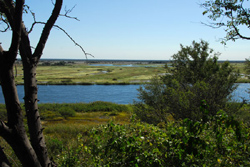
Situated on a large forested sand dune and one of the very few high points along the Okavango River, Shamvura Camp offers spectacular views over the river and surrounding flood plains.
The Treetop cottage affords the visitor a birds-eye view of one of the last remnants of natural riverine forest comprising mainly of "Knobthorn Acacia" (Acacia nigrescens).
Shamvura Camp has an elevated location, overlooking the Okavango/cuito floodplain and does not flood during the rainy season making it easily accessible all year round.
Malaria is present in the area, and visitors are advised to take the necessary precautions. Shamvura Camp offers six different accommodation possibilities. All units have spacious shaded parking areas and all-weather roads leading to them.
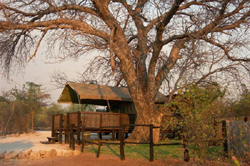
The surrounding flood plains comprise of Phragmites mauritianus reeds and patches of papyrus, and are vital breeding areas for almost 90 species of fish and a habitat for over 60 species of wetland birds. Shamvura Camp is strategically located approximately 110km east of Rundu, just off the main B8 tar road to Katima Mulilo.
Shamvura Camp Accommodation
General text about the accommodation. Introduction to what type of accommodation is offered at Shamvura Camp and any particular selling points. Highligh standard facilities available in all room types, for example fans, air-conditioning or tea and coffee stations.
Accommodation Options at Shamvura Camp
- Tree Top Cottage
- Maroela Tent
- Combretum Tent
- Mangetti Tent
- Ushivi Tent
- Camping
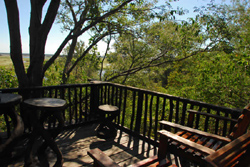
Tree Top Cottage
Elevated on a raised wooden platform, constructed from wood and thatched, it is situated in the forest giving a splendid view from its spacious veranda.
It has one large main bedroom with a double and a ceiling fan and en-suite bathroom. The open-plan dining/kitchen/living area provides space for up two additional beds, with a bedside lamp and shelf which although not private is quite cozy.
The kitchen is fully equipped with crockery and cutlery for four people and includes a fridge/freezer and stove. There is also a private enclosed and grassed braai area. The cottage is supplied with electricity.
Tree Top Cottage Facilities
- Double bed
- Ceiling fan
- En-suite bathroom
- Openplan dining room
- Space for two additional beds
- Bedside lamps
- Fully equipped kitchen
- Stove
- Fridge and freezer
- Electricity
- BBQ area
Maroela Tent
A cabin tent on a raised wooden platform with en-suite shower/toilet facilities and a large spacious covered veranda and an excellent view of the river from behind the forest fringe.
It is situated next to a large Maroela tree (hence the name) and has a large enclosed grassed braai and washing area. There is a large parking and turning area, partially enclosed. There is no electricity but battery lamps are provided.
Maroela Tent Facilities
- 2 bed unit
- En-suite bathroom
- Covered veranda
- Excellent view of the river
- Large enclosed BBQ area
- Partially enclosed parking area
- No electricity but battery lamps are provided
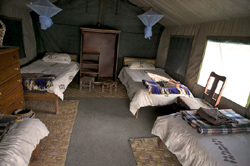
Combretum Tent
A cabin tent on a raised cement base with a covered veranda. The shower/toilet facility is not en-suite but close by and there is a braai and washing area. This tent is situated under a large combretum colonum tree with dense shade.
The whole unit with large parking areas is enclosed with a reed and pole fence, offering a good view of the Angolan floodplains. There is no electricity but battery lamps are provided.
Combretum Tent Facilities
- 3-4 bed unit
- Private ablution close by
- BBQ area
- Washing area
- Densely shaded
- Enclosed parking area
- View of Angolan floodplains
- No electricity but battery lamps are provided
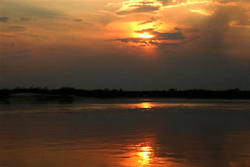
Mangetti Tent
A cabin tent on a raised wooden platform with a veranda offering a good view of the Angolan floodplains. Shower facilities en suite. It has its own grassed and enclosed braai and washing area with a partially enclosed large parking and turning area for vehicles. There is no electricity but battery lamps are provided.
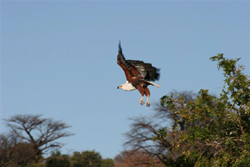
Mangetti Tent Facilities
- 3-4 bed unit
- En-suite bathroom facilities
- Private enclosed BBQ and washing area
- Partially enclosed large parking area
- No electricity but battery lamps are provided
- View of Angolan floodplains
Ushivi Tent
Is near the main complex with a large, very spacious reed enclosed area giving absolute privacy, but unfortunately no view. A braai area with firewood and outside lighting with fully equipped kitchen, crockery and cutlery for up to 8 people are available within this enclosed area.
A fridge/freezer and stove is provided. It has ablution facilities within the enclosed area. Ushivi has electricity and a plug point. Fresh drinking water, mozzi nets and mosquito repellents are provided. This unit also has an adjoining "guides nook" with its own electrical point.
Ushivi Tent Facilities
- 4 bed unit
- Large reed enclosed providing absolute privacy
- No view
- BBQ area with wood provided
- Fully equipped kitchen
- Fridge, freezer andstove provided
- Ablution facilities within enclosed area
- Electricity and plug point
- Fresh drinking water
- Mosquito nets and repellents provided
- Has adjoining guides nook with own electrical point
Camping
Available at either Ushivi or Combretum, which have outside ablution facilities. The extensive enclosed parking areas allows for the erection of additional tents etc. These facilities are only available when the main tents are not occupied and are only offered to guests making use of our additional activities or groups of more than 4 persons.
Camping Facilities
- 4 bed unit
- Large reed enclosed providing absolute privacy
- No view
- BBQ area with wood provided
- Fully equipped kitchen
- Fridge, freezer andstove provided
- Ablution facilities within enclosed area
- Electricity and plug point
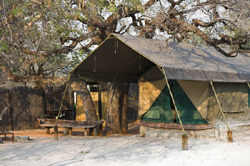
Shamvura Camp Amenities
The small Shamvura team is committed to providing personalised attention to guests at all times. The facilities offer privacy and cater for small, self-sufficient parties who are interested in a quality experience. We will adapt and customize our services, whenever possible, to suit your needs and include catering on special request for small groups.
Facilities at Shamvura Camp
- All units serviced dayly
- Swiming pool
- Deck with bird feeder and birdbath
- Firewood provided
- All units connected by weather roads
- Bar and Lounge with DSTV available to guests
What To Do at Shamvura Camp
From here we offer you outstanding freshwater fishing, game-viewing, nature walks, cultural activities, microlight flights and a once-in-a-lifetime birding opportunity.
Activities
- Freshwater fishing
- Game viewing
- Nature walks
- cultural activities
- Birding
- Hiking
- Guided trip in a wato (traditional dugout canoe)
Things to See
- Floodplains
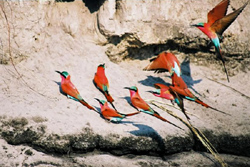
- 400 birds species
- Smaller mammals